
What happens if your internet provider gets the blame for what you download? This week, the panel unpacks a billion-dollar copyright battle at the Supreme Court that could upend how we all use the web.
- Justice Alito Makes The Most Sense, Or This Week At The Supreme Court In The Cox-Sony Copyright Case
- First Porn, Now Skin Cream? 'Age Verification' Bills Are Out of
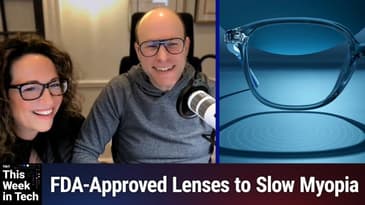
- These new FDA-approved glasses promise to slow nearsightedness in kids. Here's how they work
- Amazon Tests U.S. Ultrafast Delivery Offering
- What the heck is going on at Apple? | CNN Business
- Meta's Zuckerberg Plans Deep Cuts for Metaverse Efforts
- Meta acquires AI device startup Limitless
- Instagram mandates total return to office for employees in 2026
- Is Netflix Trying to Buy Warner Bros. or Kill It? - Slashdot
- School Cell Phone Bans and Student Achievement
- RoboCop statue rises in Detroit: 'Big, beautiful, bronze piece of art'
- People who talk with their hands seem clearer, more persuasive - Fast Company
- (a petition to cancel Twitter's trademark for abandonment)
Host: Leo Laporte
Guests: Amy Webb, Cathy Gellis, and Brian Woolf
Download or subscribe to This Week in Tech at https://twit.tv/shows/this-week-in-tech
Join Club TWiT for Ad-Free Podcasts!
Support what you love and get ad-free shows, a members-only Discord, and behind-the-scenes access. Join today: https://twit.tv/clubtwit
Sponsors:
[00:00:00] It's time for TWiT This Week in Tech. Great panel for you. Kathy Gellis is here, our favorite attorney. She is admitted to the bar for the Supreme Court, has something to say about a big copyright case that's up right now. Also, Amy Webb Futurist is here. And yes, a surprise visit from Amy's crazy husband who explained how me made a completely anonymous computer. That and all the tech news coming up next on TWiT.
[00:00:29] Podcasts you love. From people you trust. This is TWiT. This is TWiT. This Week in Tech, Episode 1061, recorded Sunday, December 7th, 2025. Amy's crazy husband. It's time for TWiT This Week in Tech, the show where we cover the week's tech news. Hello everyone, so glad you're here. You'll be glad too.
[00:00:56] When you find out who's on the show today, Kathy Gellis is joining us. Our favorite attorney. She is a contributor at Tech Dirt and has been following closely the latest from SCOTUS. We'll talk about that in a moment. Hi Kathy, good to see you. Thanks for having me.
[00:01:17] The latest from SCOTUS, the Supreme Court of the United States. Amy Webb is also here, our favorite futurist. She is with the future founder of and CEO of the Future Today Strategy Group, where she advises corporations, government, and the military on how to plan, how to plan for the future strategically. Also, a Broadway producer. Congratulations. Thanks.
[00:01:41] On the success of chess. I couldn't, you could have knocked me over with a feather when I got an email from you saying, oh, and by the way, among all my other major accomplishments. Well, no, no, no, that's not, it was more like, hey everybody, there's this really cool thing happening in New York. Come to New York. No, you didn't say it that way, but I'm thinking, gosh darn her. Is there anything she can't do? If I can ever get you out of the state of California, not on a cruise ship. I would come see chess. I would love to come see chess. I will take you. You should come.
[00:02:08] Yeah. I'm a huge fan of Broadway musicals for one thing. So I'm glad to hear it's a, it's a huge success. Yeah. Yeah. Can that, can you get me tickets? I will absolutely. I'll get you. Okay, good. Then I'll come out. I would love to see it. I'm a big, as some know, I'm a serious chess. I'm a chess player. I used to play tournament chess in my youth. And nowadays it's all online. I wish I, I wish I could find people to play with in real life, but this game, this is not really a show just about chess.
[00:02:35] It was kind of, I think inspired by the Fisher Spassky world championship in 1972. No, actually I'll tell you exactly where it came from. Where? So, so if you're familiar with the Phantom, the Phantom, that's how my grandmother used to say it. Did I just, I'm losing my mind. The Phantom. Phantom. Thank you. My grandmother used to say Phantom of the Opera. Phantom of the Opera. So the person who wrote what's called the book. So not the music, but the. Tim Rice.
[00:03:04] Tim Rice. The story. The legendary Tim Rice. Yeah. Yeah. I think in like the late sixties, he must've had a fever dream or I don't know. And was like, really wanted to do a musical on the Cuban missile crisis. Yeah. It was having a hard time getting a jolly topic. Good. Yeah. Um, so. Mr. President, I hate to wake you up, but there's Mrs. in Cuba. Well, this is Hamilton in some respects. That's true. You know, it could have been if he'd made it wrap, it would have worked. Okay. It was too early. It was really. Too early.
[00:03:32] Um, so obviously that didn't fly. He went to one of the two bees in ABBA. So Bjorn and Bjorn. Yeah. And, and was like, Hey, I've got this idea for, you know, war and, and musical. And instead it wound up being a concept album. And that concept album had some of the best music on it that you could possibly imagine. Most of which made it to the charts. You just don't realize that's where it came from. I didn't know that. What's the name of the concept album? Uh, that's a great question. I don't remember what the whole concept.
[00:04:01] I should know that I don't. Um, but a lot of songs like one night in Bangkok, I knew him so well, have been covered over and over and over. Murray had had a hit with that. Yeah. Yeah. Um, that eventually became chess, which is a geopolitical musical. Stay with me here. Um, Pid, Pid, it's like start talks. Yes, of course. Yes. Us versus USSR, um, two troubled, uh, chess players, obviously the Russian wants to defect. So there's that storyline and they're both in love with the same woman.
[00:04:30] And, um, it's also somewhat a commentary on American capitalism and power set against the backdrop of a worldwide chess tournament. It's kind of timely really. So it, it did pretty well on the West in the West end for two years, came over to Broadway. They changed the book, the storyline to make it more rah, rah America. And even though it had some incredible stars, uh, it, it failed. Um, but it's been this cult classic. So it keeps popping up all over the world.
[00:04:58] And for the first time since that first run 37 years ago, I think, um, it is now back on Broadway. It has Aaron Tveit, who has a phenomenal voice. Uh, Leah Michelle, who a lot of people know from Glee and funny girl and other shows on Broadway. And then this breakout star named Nicholas Christopher, who I don't, I don't care what, look, most of the time I'm listening to metal, uh, and grunge.
[00:05:21] Um, wow. This does not match that. Yeah, no, but like, like the songs in this show, they, they like stripped everything away and they're basically just on stage having sort of a, again, like a geopolitical argument against some phenomenal, phenomenal music. So, uh, highly recommend it really is awesome. It's great.
[00:05:43] And it is a hit. Yeah. Sold out. It's already set. It's at the Imperial theater and it has already broken records for the first time there. So I, um, I would be, I would be going crazy even if I wasn't an investor. And honestly, I didn't invest to make money. I invested cause I wanted this thing to have. Well, that's okay. That was it. You're leaving out the humble brag. Well, but that's. I was having dinner with, uh, Benny and Bjorn of ABBA. And they said, you know, what would it be fun?
[00:06:12] Uh, they actually, actually it was Bjorn and he wanted to talk about AI and all I wanted to talk about was chess, which I'm sure. Uh, but anyhow, it was a good dinner. Cause you had played in the pit of the Chicago touring version of chess. That's another thing I didn't know about you. You must be a pretty good clarinetist. Um, I started out in music school. We can have, we're like pouring everybody to death. Do you still play? Um, I actually play all woodwinds, but double reeds and piano. And I'm, I'm not great at any of them. So I, I, you know, whatever for fun.
[00:06:40] Just the, just last night, Lisa and I were saying how much we love oboe, uh, and bassoon. So those are tough instruments to play. Very tough. Yeah. Uh, okay. And people have tuned in for Twitter going, what the hell just happened? Damn. Amy Webb is on again. And this whole, I want to go to see this show. I'm dying to see the show. So I will, I will make my way out. Uh, it's hard to get tickets. It's, uh, just give me, let me know when you want to come you or Lisa or you and Lisa.
[00:07:08] Lisa and I will come out. I have to come out anyway. Cause my son has the hottest sandwich shop in New York city and I still haven't been there. So I need to kind of make an effort to get out there, uh, and do that. Anyway, welcome to both of you. Uh, I wanted to ask you about chess. Cause I, I was, I was very excited when you sent that email out. I just thought that was hysterical. I couldn't, I couldn't wait.
[00:07:30] Um, now let's talk about the Supreme court. Another fascinating. Now the big story, Kathy, uh, is this Cox Sony copyright case, right? This is the one about Sony, the record label suing Cox, the internet service provider saying, no, it's your fault. You need to shut down these pirates.
[00:07:54] Alleged pirates. Um, well, alleged IP addresses behind which piracy is occurring. Well, now you're speaking on behalf of Cox. You're saying it's not our fault. Your honor. How do we know? Well, I, I did full disclosure. I wrote an amicus brief in this case on the side of Cox, but some of what I'm here to say is I, I'm also really annoyed with Cox.
[00:08:17] I think they're, they made a choice in how they were litigating this case. And it, I'm not entirely sure it's entirely the best choice. I'm so surprised the music industry is still on about this. I thought they gave up. Well, after the embarrassment of the Napster case, one of the things is this litigation goes back. Um, there was a case that you may have heard of a number of years ago.
[00:08:41] And I, I'd have to look up what year it was, but it was pre COVID. There was a number, there was a number one and how we counted our years at the, at that point. And, um, there was an original case called century. Yeah. Yeah. I mean, it was 21st century, but, um, but it was like 2015, 2017. I don't know. Something like that.
[00:08:59] There was a case that came earlier, um, BMG versus Cox. And these cases were, um, an agency called rights Corp had sent a whole bunch of let's phrase these things, not as takedown notices. Let's phrase them as, um, infringement notices.
[00:09:18] They were notices of, we think there's infringing activity going on at this IP address. But let's also talk about that Cox is when you get a takedown notice, a takedown notice goes to a certain type of internet provider that uses the 512 C safe harbor of the DMCA.
[00:09:35] And what that means is these platforms store, uh, information at the direction of their users. So this tends to be your social media platforms, your YouTubes, your things where somebody has put a file up and maybe that file is infringing or they've put a message up or a picture up or something like that. That's the DMCA takedown notice. Yeah. And a takedown notice is all designed to make sure that the platform has note that platform doesn't have to police for piracy. Uh, but the deal is if they are told there's piracy,
[00:10:05] at these, at certain places, locations, not IP addresses, but like locations on their services, then they have to act on that knowledge, even though it's really just an allegation, but let's all pretend there's never any false takedown notices. The platforms have to react and they have to take it down. If they do it, they get to keep their safe harbor protection, which means that if there's any liability going on, they don't have to answer for it.
[00:10:30] Um, but meanwhile, Cox is not that kind of platform. Cox is a conduit platform. They use the five, 12, a safe harbor. They're just getting access to the internet. Yeah. And they, they're a conduit and takedown notices are not a creature of the five, 12, a safe harbor. You don't have to respond to a takedown notice, but rights corps sent them anyway.
[00:10:51] So anyway, so rights corps sent a whole bunch of notices, many of which were actually discovered by courts in the BMG Cox case that they weren't valid. Uh, but let's ignore that. The rest of them were John Doe's and one of the things the music industry gave up on it is because they ended up going after a single mom for millions of dollars.
[00:11:13] The optics are terrible. It's terrible. You're going after your customers, uh, you know, and it's just, yeah. So the music industry realized it was a blight on their name. Could I ask for a TLDR on this one? So what was there a single event that happened or what, what predicated the, there's a lot of history here because I remember the, the ISPs tried to do it. Three strikes.
[00:11:38] No, no, I get all that, but what was the thing that wound up getting them, uh, Sony. So, no, so, so the, the, the, this background is important because of what is happening now and why this case is where it is because this earlier case with BMG trying to sue them for not having acted upon these notices. And what would they need to do? They're not takedown notices. So they wouldn't have had to take down information. Like there's nothing to take down. They're a conduit provider.
[00:12:06] The issue is every platform, whether they use the 512 A, B, C, or D safe Harbor has to have a policy for terminating repeat infringers. So the argument that BMG was bringing then is that, well, um, we gave you all these notices and you didn't terminate anybody. And so because you didn't terminate anybody, you lost your DMCA safe Harbor.
[00:12:29] So now we get to sue you for secondary liability for the infringement you helped cause because you didn't turn off the users that we alleged were, uh, infringing.
[00:12:42] And that happened at the BMG case where they lost the safe Harbor. And then that case, that case technically settled, but the upshot with, uh, Cox having lost at safe Harbor is it became open season where everybody started suing Cox and the other broadband providers who weren't terminating their users as much as they needed to.
[00:13:02] But think about what that means. And one of the arguments that Cox brought up is they'd get these notices that said there's infringement happening at this IP address, but they pointed out an IP address is not a person. It might be a whole household. It might be a coffee shop. It could be a wifi access hospital, a university. Um, and that actually came up in the oral argument where even justice Alito, the title of my tech trip post is justice Alito made the most sense in this entire oral argument.
[00:13:30] You don't hear that. You don't hear, I, I, I, there you go. I mean, these strange times and copyright is just so weird in terms of everything upside down. Um, because this whole principle there, there's a couple of things at issue here. Before you go too much further, because it's a copyright case. Now this goes even beyond music and ISPs. This is, does this change? Does this impact copyright law in general?
[00:13:57] Um, maybe, um, because, so there's a couple of things going on here. Um, the major legal question, uh, is whether, so secondary liability, let's talk about that a second. So if you do something wrong, you're liable for what you did.
[00:14:14] But if a third party can share in liability for what you did wrong, that's a, that's secondary liability. And this case and the way Cox was litigating, it was really just driving down the middle of the road of that principle of when can a third party be secondarily liable for somebody else's wrong.
[00:14:33] And that applies not just in copyright that applies in all sorts of tort cases that applies to everything. Um, and that's the way they litigated it kind of full bore. But the problem is this is a copyright case and copyright makes everybody lose their minds because, and you could tell, you could hear this in particular from Justice Sotomayor.
[00:14:52] And I think some of the other liberal justices, ooh, file sharing, that's icky. How could these companies let file sharing happen on their platform and not do anything? And how can they not possibly no trouble for them? Because this is all on their users. And they did not like that as a, as a matter of justice.
[00:15:10] But the problem is, is what should Cox have done to address the allegations of infringement, terminate users and kick them off the internet. And the conservative justices did a better job recognizing that that might be a problem. And they have a case from years ago called Packingham, where they said that kicking people off the internet is not an acceptable remedy, even when the people involved had like sexually abused children.
[00:15:38] And so if kicking people off the internet is not an appropriate remedy for that type of wrong, how can it be appropriate for people who are just alleged to have file shared, in addition to all the perfectly lawful things that they've done? And at these IP addresses where it isn't even a specific person alleged to do a specific infringing act, it is everybody, including people who are not infringing at all as they use that IP address, whether they're at home or at a coffee shop, university, hospital, et cetera, et cetera.
[00:16:07] So like, I don't think a lot of the justices liked Cox's argument. They didn't really like the shouldn't you have to do something about the file sharing. And they were looking for doctrinal reasons, like standing things that go way back in law, like 500 years to common law and the way the judges were thinking things through. And they were thinking that through about whether secondary liability is appropriate here. And I think that's kind of good.
[00:16:36] But let me get to my criticism in a second. But the problem is, is Sony's argument for, oh, no, of course you should totally be on the hook for what your users are doing is so under theorized. It would basically like, you know, if Cox had to turn off the file sharers, did their local electric company also need to turn them off because they were using power to do their file sharing?
[00:16:57] And I think most people think the answer should be no, but you need sort of some legal coherence to say, well, why should the electric company be able to still provide power to people who they may know are infringing? But the broadband provider can't. But my criticisms here are I think that's all well and good to view this case through the lens of some common law doctrine. But this is a speech case.
[00:17:24] These are Internet platforms facilitating the ability to express themselves online. And my criticism to Cox, who's the side that I'm rooting for and wrote a brief to support, a very nice, robust First Amendment brief talking about all the First Amendment problems with the theory of liability that would get Cox in trouble, is that nobody talked about the speech issues. I can't believe we may get another major copyright decision where the words First Amendment don't show up at all because they did that oral argument.
[00:17:54] And other than my brief and an ACLU brief and maybe the government's brief, nobody's talking about it. They're trying to decide, you know, whether it should whether there should be severe and expensive, like massively expensive liability attaching to a third party over how their users are using the Internet. And nobody is talking about that. People use the Internet to connect with other people and speak and express themselves. And somehow we're just glossing over that as if it's not an element to consider.
[00:18:23] And I think that is a big mistake for any judge and justice who adjudicates this and also any party who happens to be actively litigating it. They really I think this really should have been brought more to the fore. It's always difficult to figure out what the court's going to do based on oral arguments. Sometimes they set up straw men. Justice Sotomayor, you point out, Internet access was kind of like providing someone a gun, that that's why they would be liable because they've given.
[00:18:49] So the theory of like that form of secondary liability that you knew the person was going to go shoot somebody and you gave them the gun anyway. Shouldn't you be liable for the for the harm that resulted? Maybe in that example, Cox was basically trying to litigate to say, yeah, that might work in that example. But this is something completely different. But they never brought up what makes it so completely different is that this is about speech. This is about platforms facilitating online expression.
[00:19:15] And if you have these liability regimes where this massive liability can attach on these basic allegations, then no, this isn't going to work. And I just don't think that like there's pushback to Sotomayor, but they didn't really I mean, they may push back, but they didn't bring that to bear. And I think that's a mistake. When so it could be not till the spring that we find out what happens here, right? I mean, who knows?
[00:19:43] They there they've got I feel like this is the line from the Princess Bride where the guy talks about, like, I've got my wife to kill and the war to plot. I'm swamped. So, you know, they've got a whole bunch of things that they need to do. And I don't know when they'll just to be clear. We don't think any of them are trying to kill their wives, just to be clear. No, no, no. But I'm, you know, this I know it's a princess bride. It's a movie. All these things I got to do that are all terrible. And I don't know when I'm going to squeeze in this terrible. So busy. I'm busy. I'm busy.
[00:20:13] I'm busy. But we don't know. I mean, they heard this one relatively early in their term. And maybe this isn't actually going to be contentious because the upshot may be that they just remand this down to the other side. I mean, one thing that's a lot, haven't they lately? I this court and dodging the bullet by saying, well, let the lower court decide. This court has a very strange relationship with Supreme Court procedure. And a lot of the issues that we keep running into are a byproduct of that.
[00:20:42] But it may not necessarily be bad to remand it. But basically, the Fourth Circuit used the standard. The court says, no, that can't possibly be the right standard. And as long as they come up with a good standard, you know, that makes sense and is scalable and send it back to remand. That may be fine. But who I don't know. I was very nervous with the Cox argument. But then Sony made their argument. And I don't think anybody like that one. So I'm a little less nervous.
[00:21:10] But interestingly, the government also argued on the side of Cox and they wrote a really good brief. I mean, it's weird. It's coming out of Trump's solicitor general's office, who I wouldn't trust the First Amendment in any respect. But I think there were some career attorneys who had the opportunity to write it. And it's a very good brief that actually stands up for the First Amendment principles. And even they did try to bring it up a little bit during oral argument. But that's kind of it. It was the Trump administration who made the strongest argument on that front.
[00:21:40] I know we're not going to make this the Supreme Court show. But are there any other cases in front of the court this semester that you think are important for the Internet or for technology in general? I feel like there's something in the back of my mind. And the answer is yes. But I think basically. This is the big one. This is the big one.
[00:22:01] This is the one that I mean, I've been watching this brew for years and could not wait for this to happen because this is just such a everything that we've been talking about for years and years about online platform liability finally has percolated up into a Supreme Court case. And it's the first time they've considered this. Yeah, this this took a while to it took a while to. I mean, that's why I said this original case was 2015, 2017. It's an old case and it takes a while to go through the motions.
[00:22:29] But it sort of feels like this is where all the cool toys were that I've been playing and this would be so important. And I think that's why I'm a little disenchanted that I wrote a brief that I have waited my entire career to write. I make three discrete arguments for why there's a First Amendment issue with the DMCA operating this way. And then I talk about how copyright exceptionalism shouldn't force us to stray from our principles, etc., etc. I'm so pleased with this brief. And I feel like it was shouting into the wind and nobody read it.
[00:22:58] Nobody's going to read it. And and we'll just be going around in circles and have to clean up the mess. Just to give you the history, the TLDR for you, Amy, that this this case in 2019 was resolved by a jury which ordered Cox to pay a billion dollars. They appealed it. The Fourth Circuit overturned the damages verdict. But they did find that while Cox didn't profit directly, there was willful contributory infringement. That's what that's what this is all about. Cox has gone to the Supreme Court saying we want it.
[00:23:28] We don't want we're not have we don't have to pay the billion dollars. OK, fine. But we also want to be cleared of the willful contributory infringement. If the record labels win, then they would have a ruling that would allow them to say to ISPs, hey, kick this guy off the Internet. This this guy's stealing records. Right. If Cox loses, the consequences of what this means for the Internet are really awful, like showstoppingly bad and in a way that just nobody is grappling with.
[00:23:58] But one interesting thing is so there's actually two questions and I'm fudging them. Like some of it is really the contributory liability and some of it is the willfulness. But interestingly, Sony had also petitioned the Supreme Court because they didn't like certain rulings that the Fourth Circuit made. And the Supreme Court did not grant Sony's appeal. It only granted. That's interesting. Cox's appeal. So there already was a billion dollars and the Supreme Court said no.
[00:24:27] Yeah, I forget their question. But but sometimes what the court will do is when both sides are appealing to them, they'll just take the case and they'll they'll do both. In this case, no, they shut down the Sony argument and they and they it looks like, you know, maybe they thought there really was a problem with with what happened to Cox. But, you know, it only took four justices to grant cert. So we can't really say that. But they picked this case.
[00:24:51] And I mean, that gives me some hope that they will, you know, reverse it in a way that will be usable to Cox. But I just think that there's such bigger issues here and we're not addressing them. The court isn't addressing them. Cox wasn't addressing them. And but if this goes bad, we'll be cleaning up. I don't I don't know what we'll do. But watch with interest. And we'll watch with interest when they decide. Yeah. And just as a footnote, the Cox attorney's name is Rosencrantz, but the Sony attorney's name is not Guildenstern.
[00:25:19] So an opportunity missed. They were alive, too. So that's yeah. Well, that's right. And Tom Stopper just passed. So I think it's appropriate. We're going to take a break. Oh, I was going to say, can I ask a quick? Yeah, yeah, yeah. Please. OK, so. I still didn't get clarity on what kicked this whole thing off, but I think we should move on. That's fine. Here's the question. So let's say that I'm the college student in the town at the university that everybody. The Sony is very upset about.
[00:25:48] And I VPN myself and I go through India or somewhere else. Is the VP in the argument that one might make is that VPN is also an exercise of my free speech? No. That's an interesting question. I know why you're asking that, Amy, because VPNs are under assault. We're going to talk about that in a little bit. I mean, as relevant to this case, it feels a bit. Well, forget the case.
[00:26:17] Just like, I mean, like, can't we just couldn't everybody just like fire up a VPN and say. And then doesn't a VPN become. Well, yeah. So basically the VPN ends up in the position that Cox is in. So this is that's the question I'm asking.
[00:26:35] If you zoom out on this, there are the sort of supply chain of credentialing and information between the consumer and the end bit of content at this point has many, many more parts of that chain than have ever existed before. That's right. So one way to look at this. I never went to law school. I decided not to go at the last minute. So I'm talking out of my ass here.
[00:26:57] But it seems like one one way to look at this is it's not a definitive end to end easy linear connection. There's a lot of different things that are involved along the way.
[00:27:10] Not to mention, sometimes people hop on and off Wi-Fi and 5G depending on where they are and the strength of that connectivity, which means that their ISP could also somehow be, you know, if it's not if it's like not wireline, that they could somehow be involved. So that, you know, the broader question is like, is the entire thing speech that's protected? Like every single piece of that entire value chain?
[00:27:37] I mean, I don't think I'd answer the question like that. But there are free speech issues implicated at various points. We in the Moody versus Net Choice case, the court kind of finally connected two dots to say that platforms themselves have editorial discretion and therefore should not be liable for the things that they're they can't be forced to moderate in a certain way.
[00:28:03] I think what happened in that case is very connected to this case because the Internet only works with helpers. I write this in my briefs all the time. We need helpers to get a message from somebody's brain into somebody else's brain. And it goes through a variety of the way down. Yeah, a variety of services, whether it's going direct with no VPN or AWS is responsible for all of this.
[00:28:27] Yeah, there's and so this principle of you have to protect the intermediaries or you don't get an Internet, including all the speech that it facilitates. That's really what these what these cases are about. What was frustrating with how this one got litigated is nobody really confronted the fact that that really is the issue underlying here.
[00:28:46] They instead kind of I mean, they kind of took a very, very, very high level thing and addressed how law in general addresses third parties who interact with somebody doing something in some way, which would apply to the VPN provider that they're providing access to somebody who's using their service. Cox is providing access to somebody who's using their service.
[00:29:08] Because that's the intermediary and the third party is basically like the principles for when do we hold the third party responsible for something somebody else does is a general principle that we do need to get right at law. I just think that this one paid more attention to the oh, my gosh, they're file sharing rather than the huge speech implications that are that are raised by this case.
[00:29:28] And to answer the question of what kicked it off, this is basically people were file sharing the the copyright companies had like to keep pressing and pressing and pressing. And they brought these cases against these broadband ISPs and accidentally succeeded when when Cox lost his DMCA protection. So they're just seeing an opportunity that they've been pressing one litigation, one legal argument after another. And they finally got some traction, which led to a billion dollar judgment.
[00:29:58] So that's what this case is about that they think like. They think this works for them now. We're taking a little break. We come back. We can't talk about VPNs under assault. We also have lots of other issues to talk about with Amy Webb, who is always a welcome. Should I show all your books now? I'll show your books now. The latest is really good. I highly recommend it. The Genesis Machine, Our Quest to Rewrite Life in the Age of Synthetic Biology. She's also the author of The Big Nine. This was prescient.
[00:30:28] You wrote this five or six years. You wrote this before ChatGPT took over the world. But it's all about AI and the big nine who are doing it. And of course, when we first met, when you had written The Signals Are Talking, Why Today's Fringe is Tomorrow's Mainstream. Great to have you, Amy. Thank you. Kathy Gellis, who, if she wanted to, could replace Rosencrantz because she is admitted to the Supreme Court.
[00:30:56] She could bring a case there. You ever want to do that? Oh, I mean, I have the daydream of someday arguing an argument before the Supreme Court. Oy, oy, oy, oy. It'd be fun to do that, I think. Or interesting, anyway. I mean, fun by some definition. That's a big show. I mean, I think for the people who are like, oh my gosh, never that. For the people for whom it's enticing, yeah, that would be enticing in a way that computes as fun. Yeah. Yeah. Anyway, have you written more than a few amicus briefs as well?
[00:31:26] Do you have to be admitted to write the amicus briefs? No. Well, I mean, well, you have to be admitted to file them. There's always an attorney of record. But you'll see on a lot of the briefs that there may be a lot of names there, especially for groups where there's a lot of sign-ons. So their VP of legal may have been on it or something. And then, you know, who actually wrote it could be anybody. But, you know, the person responsible for it. Yeah, you have to be admitted.
[00:31:52] The one of our Discord people is making the excellent point that the next step would be to make phone providers responsible for illegal conversations. Right. I mean, it's just as absurd as that. I mean, the general tort principles will scale. Like, the reason why they brought up the electric company is because, you know, we kind of feel it would be wrong for the electric company to be responsible for how electric company customers used electricity. That bothers us. Like, we get it that that would be wrong.
[00:32:22] So what Cox was basically arguing, and I don't fault them for making this part of the argument, is that it's the same principle that, you know, we can see why it'd be wrong for the electric companies. To be responsible for or have to terminate the electric company users in order to avoid liability. Like, that would be bad. So we just need to see that the same legal principles, which would say, no, no, that's not how our law works, also have to apply that. Cox couldn't be held liable for it.
[00:32:50] But I did not feel very comfortable with how the justices understood the DMCA and the statutory history. And that's going to be a thing. Yeah, I we may come out of this OK, but I don't have warm fuzzies. And I'm just annoyed because even the justices I like and I'm counting on to save democracy were just oh, my gosh. And then the ones that I'm like, the biggest problem child or children were the ones who were like kind of honing in on what the issues were going to be.
[00:33:19] Last time we had you on, it was it was like, you just can't tell. You really can't tell. And we'll see what the what the ruling will be and how upset I'll be at that point. We will have more in just a minute with Kathy and Amy and you. Glad you're here, too. Our show today brought to you by Miro. I've used Miro. Miro is amazing. Mike and I used to use it to do our show, Ask the Tech Guys, because we were in two different places. We wanted to collaborate on a show where we'd get together every Sunday to to answer your questions.
[00:33:49] And Miro was a great place for us to put our ideas, our thoughts, to work together, to to take the idea and take it to fruition. It's something that perhaps you and your company are also doing. The gap between idea and impact could be killing your team's progress. You can't just throw AI at the problem, especially if you don't have some clarity about what the problem is. Miro has changed the game.
[00:34:14] Powered by AI, teamwork that typically takes weeks is now completed in days. So your team can focus on building the right things and then having AI available in a in a contextual, informed, easy to apply way. It really solves a conundrum a lot of us have with using AI. How? Where? What's the prompt? Miro helps teams get great done. Your second brain with Miro AI sidekicks.
[00:34:40] AI sidekicks think like product leaders, like agile coaches, like product marketers. They can put on that hat to review your materials, to recommend areas to double down on, to clarify the inputs. What does this mean? Is this important? Or to add direct feedback. They can do or all three. You can build custom sidekicks that integrate into other workflows for exactly what your team needs.
[00:35:05] Think of it as an extension to your team's capabilities, not a replacement, an extension. It's taking the inputs, all the information that your team has provided and creating meaningful insights into where to go next. And you do this faster by eliminating the need to switch between tools with Miro's insights. Miro AI sorts through everything you input, all of the stuff in that board.
[00:35:32] Even if it's different formats, you've got sticky notes, you've got research, you've got ideas. Miro combines them. It's always been able to, you know, kind of put it all in one place, but now it can combine them into structured research summaries, product briefs, sentiment analysis, all this stuff that you need. You know what? You can even, this is so cool. You could take your concepts and test them. You could test like 20 concepts. We got these ideas with Miro prototypes.
[00:36:00] You could generate instant and contextually embedded prototypes from your board without needing to do it anywhere else and importing it. It's all there. You can iterate rapidly on near limitless variations. So you really get to kind of prototype and test and think, and it's expanding what's possible, right? And then you can feel confident before you even, you know, start the high fidelity builds. You can feel confident about the feasibility. You can have visualized this.
[00:36:29] You know where you're going before you really start to dig in. Spend time on building, not digging for information. Miro doesn't replace the design tools your team loves. It's aligning them before you need them. Miro's got blueprints and spaces to organize your team's work in an intuitive and easy to follow format. I've just given you a kind of overview of all the different capabilities. What I want you to do is check them out. Go to Miro.com and try it today.
[00:36:57] Help your teams get great done with Miro. Check it out. Miro.com to find out how. That's M-I-R-O, Miro.com. We thank them so much for their support. And for all the tools they've given us, we've used. It's really remarkable. Very, very powerful stuff. All right. Moving on from the Supreme Court. There are other things to talk about. EFF.
[00:37:27] First porn, now skin cream. Age verification bills are out of control. And this actually ties into the VPN thing because what some state legislatures are realizing is, oh, we made this rule that requires, for instance, Mississippi that says you have to be an adult to use Blue Sky. But now all people have to do is use a VPN and we no longer know you're in Mississippi.
[00:37:56] This has really become a problem. And now the EFF points out it's more than just protecting kids from porn. You're basically creating age verification systems that collect vast amounts of personal information and not just from teenagers or kids, but from everybody. Because we all would have to verify before we could use any of these platforms. The EFF quotes one sponsor of an age verification bill in Atlanta or I'm sorry, Alabama saying,
[00:38:26] I knew the tough nut to crack that social media would be. So I said, take first one bite at it through pornography. And the next session, once that got passed, then go to work on the social media issue in California. I'm going to finish in a second. I got to tell you this one. AB728. California mandates age verification for anyone purchasing skin care products or cosmetics that contain vitamin A or alpha hydroxy acids.
[00:38:57] A person trying to buy face cream, if this law passed, which I hope is impossible, but anyway, you never know, could be forced to go through age verification before they could buy skin cream. This makes no sense at all. New York is working on a bill that would mandate age verification for online dating services, dieting products in Washington state.
[00:39:25] Now understand the motivation is let's protect kids from dangerous skin cream and dieting products, but there is no good way to do this age verification. So I'll go ahead. Well, I'll just say the next step is, oh, now we got to ban VPNs because people are going around our laws. There was a piece in tech dirt. Lawmaker. I won't read the department.
[00:39:56] Sometimes the departments are the best part. I know. This is a Rindala Alajaji writing. Lawmakers want to ban VPNs and they have no idea what they're doing. Lawmakers. We talked about this on security now in Wisconsin and Michigan are thinking about, well, we got to ban VPNs. Otherwise, people don't have to use these age verification systems. They could just pretend they're in California. Oh, no way. But I bought it by skin cream. I'll pretend I'm in Alabama for that. I mean, at a certain point, the skin cream has to get mailed to an address.
[00:40:25] Like one of the problems with all these policies is they're confusing. There's old school cases about being able to restrict the sale of certain physical products to miners who ventured a store. Yeah, people often use that. Well, you can't go in a store and read a Playboy because the guy will say, get out of here. And they've extrapolated that to the Internet and lost their minds because, I mean, to the extent that there's a physical product involved.
[00:40:54] Well, at some point, the rubber is going to hit the road somewhat literally. And, you know, that physical product needs to go somewhere. You know, so there might be some opportunities to regulate there. But they just they don't like the Internet. It's big and scary. And that's really the problem. Things that they don't like. And sometimes it's big and scary and they're talking about things that they need to. The Internet brings the real world into your home. And that's what scares people. Right.
[00:41:20] And so they completely miss out on just this is so fundamentally toxic to being able to express oneself online. All of these age things end up doing things where they've also eliminated privacy online. They've eliminated anonymity online. And then they're also driving kids off of being online and access to all sorts of information, which they have their own First Amendment rights to access. These things are really undercooked.
[00:41:50] And I have a tech dirt post that basically says it's book banning and it's just book banning that Democrats can get. It's another kind of book banning. Yeah. Amy, do you when you do your clients ever say to you, what are we going to do about this? I mean, does this come up? If I were running a business, I'd be worried. Only with one. And it is a company in a space that that's primary constituency, our children. Yeah. If I were Roblox, although Roblox doesn't really seem to care all that much.
[00:42:20] I'm not saying that's your client by any means, but look, there's I think that there's an altruistic. We want to keep bad stuff away from kids point of view on this. Understandable. Right. There are lots of other dimensions where knowing exactly who your end consumer is gives you a much better ability to market. So there's incentive.
[00:42:43] I mean, I would argue there's enormous incentive, but ultimately, look, I don't whether it's privacy, generally speaking, or age verification or, you know, anything else that's designed as a prophylactic. No dollars will get spent because it becomes a cost center that everybody deems is unnecessary.
[00:43:04] So unless there's like a regulatory push and if you're somebody who cares a lot about privacy, then your best bet probably is to align with business, which you may or may not like. Because for different reasons, everybody is aligned against less regulation because it hurts rather than helps.
[00:43:27] I was, you know, in the past, I've always been kind of not so worried about privacy because I've always said, well, big deal. So a marketing company knows better what ad to show me. And that didn't seem to bother me so much. And then people say, what about insurance companies denying you insurance? To which I would say, well, they already know everything about me. And if I lie on that application, then they're going to deny me anyway. So I'm not too worried about that.
[00:43:53] But then when you start talking about other kinds of companies learning about me or worse, law enforcement learning about me or even worse, the government learning about me. Now I'm starting to say maybe we do have to do something to protect our privacy. Can I tell you about a computer? Hang on a second. Let me. Would you mind if I invited Brian in for one minute to this conversation? And don't let him go because I have another question for him.
[00:44:20] He's an ophthalmologist and I have this question about these eyeglasses that are supposed to be good for kids to prevent its FBA approved glasses to slow nearsightedness. So we got two questions for Brian. So go ahead. He's about to walk in. Come here, Brian. He's coming. We've never, you know what? I don't think you've ever allowed Brian on the show. Funny, I haven't. He actually is an engineer, even though he's an eye doctor. Oh, interesting. All of his friends are folks who listen to this.
[00:44:49] You're the techiest family I've ever met. Do you have like five minutes? Okay. Can you please come on to the show and tell Leo about the computer that you built from scratch? And just it's, it'll be worth it. I promise. Come here. Just you got to give him headphones or something. This is not. He's just going to sit down. I'll sit next to him here. Can you hear what's going on? Yeah. Yeah. Just start from the explain like the tour de France thing. And then this is Brian. First of all, great to meet you. Finally, after all this time. No, no, I'm a big fan. Big fan.
[00:45:19] This is a kind of, I'm a little excited. Oh, that's great. Well, we got two questions for you, but first of all, you, you just built a computer. We're talking about privacy and we're talking about privacy and how lots of regulations are on the books, trying to ban kids from like age, but you built something that circumvents everything. And also relevant to the point, you have a teenage daughter. So true. But you're also parents.
[00:45:44] What happened was Amy wanted to watch the tour de France and she didn't like the American commentators. And so we kept, so we'd paid for all the logist legal access to it and everything else, but you got the American version of it. And so I took it upon myself to figure out if I could get her the European version. And so relatively straightforward set up, put in a VPN, figured it out, got ourselves an
[00:46:12] account over in England and then proceeded to get it to stream, which was a small technical problem, but, but solvable. But that got me thinking, could I make a laptop that was completely disassociated to myself? Oh, interesting. Interesting. So could I create a laptop that had no back connection to me? And that started a process.
[00:46:38] Actually, this was my experiment of using ChatGPT to see, you know, so I would, I would use it as kind of a planner and whatnot. And I learned that ChatGPT makes many, many mistakes very confidently. Yes. And so there was a lot of debugging that, but basically I figured out how to set up a laptop from scratch. Now I didn't want to go into a- So if you're using Windows, you got to use a Microsoft account, which immediately identifies you. It turns out you don't. Right. There are ways around that. A trial account.
[00:47:08] So anyway, through a long process of back and forth, and I wasn't going for nation state security. The insane things that you did though, because that's- So one of the problems is- Amy's coaching you. Well, she's right. Because one of the problems is getting the VPN set up. You have to buy access to the VPN. So how do you do that? Right. So it turns out- There are some that take crypto, I think. Some that take crypto. I wasn't ready to tackle the crypto beast. That's not something I'm familiar with and I didn't want to take it on. Right.
[00:47:36] But it turns out a company called Molvad will allow you to buy prepaid Molvad cards anonymously through, I got mine through Best Buy. And you just walk in and pay cash. So you go to Best Buy, you buy a card, but you don't want to associate- You have to buy cash. And you have to buy it with cash. Looking down. No pictures. No, no, no pictures. And you go in and you get your Molvad VPN- And you pay cash for it? Of course. Okay. Otherwise the credit card's attached to it.
[00:48:05] No, no credit cards. And then once you have the VPN access through the credit card, now you have to somehow get this laptop online. By the way, Joe says you can also send Molvad cash in an envelope. You can, but then you have to provide an address to send it back to. Oh, that's right. I thought about that. So one of the tricks is you now have this Molvad VPN access. So you're able to mask your computer, but how do you set it up for the first time?
[00:48:32] How do you get this laptop online just enough to get it to log into Molvad and then go silent? And that was a bit of a puzzle. And it turns out public libraries. Ah. So I spent some time and I drove around to several public libraries before I could figure out, because I kept getting locked out for various reasons of extra security.
[00:48:57] But anyway, I managed to finally get online, finally get into Molvad with a totally private, untraceable back to myself account. And then once Molvad was installed, now you're masked behind their VPN and they have a very aggressive VPN structure with multi-hop and various other things that hide you quite well. Uh, so once you were then cloaked behind the VPN, then the next step was setting up everything else.
[00:49:25] And so you had to get a windows version that was, um, stripped down and all the bloatware was removed. You had to get a Firefox extension with all the phone home stuff shut down and all the whatnot. So that's actually been sort of auto figured out by a lot of people before me. Um, and I was just following their, their tasks, but the hard part was trying to figure out how to get that initial contact. So now I have this laptop that technically is not traceable back to myself. Well, wait a minute.
[00:49:52] He had, so Leo, Brian's little key base group. You guys had your geek friends over. Oh yeah. I didn't want to. They're well, some of them listen. Shout out, shout out to them. They were amazing. They came over and all it took was some barbecue and, uh, they were willing to, uh, penetration testing. And they, they set it up and did a pen. So they, oh, they actually tried to attack you. Try to try to de-anonymize you. Yeah. So they set up a ghost, uh, wifi account that was on one of their sniffers things. And I'm probably using some of these words out of alignment, but you get the general idea.
[00:50:22] And so I connected to this ghost account that they were sniffing and it turns out Mulvedad is really, really good at blocking everything. So even on a reboot and a fresh startup, it would never, um, expose the IP or anything address. No, no leak, no leaking IP leaking. No, I also found out modern laptops. Don't let you do, uh, IP Mac address changing. No. Um, they're built in to prevent it.
[00:50:47] So I use a, uh, USB plugin one that is capable of doing Mac address hiding. Cause, um, apparently that's what it's basically built for. So every time. So that was a wifi adapt, a blue, a USB wifi adapter that did allow you to rotate Mac addresses. But now I've got a stealth Mac address hooked up to a stealth laptop. And then I got a little crazy. I set up a cell phone modem so that theoretically it could only get tracked to a cell site.
[00:51:16] You couldn't get it close enough to the house. But again, if you get into the nation state level security, you've got to basically build the laptop, use it once and then shred it. I've read it immediately. If you're trying to just add a curious, first of all, Brian, what's your last name? So we can give you a lower third when we, when we edit this. Wolf. W O O L F. Brian Wolf. W O O L F. Twice as good. Okay. And what do you want in your lower third?
[00:51:44] Uh, ophthalmologist, uh, privacy advocate, uh, crazy, crazy geek. Yeah. How about just, you know, Amy's crazy husband. Amy's crazy husband. Okay. Uh, wow. That is so, I mean, it does beg the question. What the hell do you need that for? Nothing. It serves no general purpose at all. It was just an exercise. It was just a fun game of trying to separate out. But the, yes. And the, you are not an engineer. No.
[00:52:14] So the fact that he was able to build this, I mean, he can buy all the skincare products in California that he wants as a 11. You can have retin A up your wazoo if you wanted to. But he, he was able to do this. You know, he's got a lot of background, but like he was able to do this on his own. It's interesting. Thanks to AI. No, legitimately. It was my experiment with chat GPT. I wanted to learn how to, like, I know some people are, uh, what's it called? Assistant programming. There's a term for it. Vibe coding.
[00:52:45] Vibe programming. Yeah. And, uh, so I'm not a programmer, but I was like, uh, using it as a tool, um, to see. This is really an interesting area now because people are doing things that they couldn't do before. You know, earlier, uh, we're going to talk about Ram prices. And I was curious, uh, what percentage of the market, uh, Micron had. And I just add, ask Gemini. It's on my Google voice, all my Google devices now. And it told me, oh yeah, it's 20%.
[00:53:12] I mean, it's really facts are at your fingertips in a way that we never have before. What really amazed me is how confident GPT, chat GPT. That's the problem. It's confidently wrong. So if you don't know enough to know that it's snowballing you, for example, it gave me, uh, I was trying to set up a stealth profile under Firefox and there was someone who's already figured this out and you run a script and that script then strips out all the bad stuff. And anyway, so it said, okay, here's the website to go get this script.
[00:53:41] And I click on it and it's all in Thai, the language of Thailand. And one night in Bangkok, you know, people in Thailand, my friend. All right. Well done. Well done. But just ask Murray head. He can tell you. I go back to chat GPT and I'm like, um, this is all in the language of Thai. Are you sure this is right? And of course it goes like, oh, no good catch. You know, that kind of site's been compromised, but multiple times, if you didn't have a good
[00:54:11] background structure of what you wanted it to do, it was very easy to be led astray. And that was really interesting to me, kind of proving what AI can do. And again, it was a tool I could never have done this without, but at the same time, if I didn't have the base knowledge to play with it, uh, it would have left me. So it just kind of showed me a little bit about what AI is capable of and what it is not capable of. Yeah. Very interesting. It's one of the reasons I like to use AI orchestrators like perplexity or Kagi assistant,
[00:54:36] because they are much more, um, uh, focused on actual resources and they always give you links to the information and so forth. And, uh, I find it a lot easier to vet the information I get from them than just raw chat GPT or although Gemini has become awfully good. I have to say thanks to Google's backend of search. All right. Hang on. Brian, cause I do have another question for you. Okay. Uh, and you're, I'm giving, I'm unfortunately launching this at you without any, uh, preparation,
[00:55:05] prior preparation, but there, uh, I saw a story in fast company. In fact, I, when I put it in, cause I thought, oh, I wonder if we can get Brian to talk about this. There's a new FDA approved glasses by Essilor, of course, uh, to slow nearsightedness in kids. And I'm just curious. Oh, that is so funny. Tomorrow. I actually have a meeting with Essilor set up to discuss that very product.
[00:55:31] Ah, so I can give you the basic background of how the concept works. I don't know how this particular paragraph. Good. Let's hang on. Cause we're going to take a break, but I would like to talk about that. Just give me a minute to do an ad. Uh, Brian Wolf is our guest along with Amy Webb and Kathy Gellis. It's great to have all three of you on the show. And yes, I think father Robert, you know what? We maybe should get Brian and father Robert together.
[00:55:56] Our, we, our favorite hacker is actually a Vatican priest, uh, who is an expert in fuzzing his identity online. He's, he actually intentionally creates multiple identities to fuzz information gathering about him. He's become quite adept at it. I think maybe we should get you two together and do a little special. I could definitely use a lot of tips. I think it'd be, well, I think it'd be interesting to talk about. We will, uh, we'll get on, get on that job before we switch topics is to make sure that
[00:56:26] legal process can't undo what you're trying to do to subpoena you. Right. Can they, and anybody, again, Amy talked about the links on the chain. Any of those links on the chain are in theory targets that somebody will try to use legal process to find whatever footprint you have left. And then they'll go up the stream to see if they can put together an identity. So to, to frustrate that technically is great, but that may not be enough.
[00:56:52] And my job is to make sure that the first amendment act acts to protect things because anonymous speech is lawful and only undo. So yeah, it's, it's, it's protected by the first amendment and there's not enough case law that has fully cemented that protection from the practical incursions of legal process, search warrants, subpoenas, grand jury subpoenas, all sorts of different things. And this is an issue that needs more attention too. I agree. I agree.
[00:57:23] I think Brian's done everything he can to be non subpoenaable. Because if there's no information about your identity. Well, if he's just come on a big show and admitted it, but. Well, that's true. I mean, you've, you've ruined the whole thing, Brian. We now know your name, your address, your phone number. So don't try anything. Okay. Yes. That's just what I'm saying. If we're trying to make sure that the law works in this regard is really tricky, even as a practitioner and even where the law should work, it doesn't always work well.
[00:57:52] So if you can, if you can make it that no, none of these links in the chain have something useful to disclose. Great. You're much better off than somebody who just has to hope that it won't get disclosed. Right. Very good. We will be back with more in just a bit. Completely coincidentally. Our show today brought to you by express VPN. Who I might add, you can also pay for completely anonymously. It's the VPN I use.
[00:58:19] And I really like more than a sponsor. You know, it's, it's actually what I use going online without express VPN. It'd be like driving without car insurance. You might be a great driver, but with all the crazy people on the road these days, why would you take the risk? Everyone needs express VPN. Every time you connect to an unencrypted network, whether it's a hotel, a cafe, an airport, a library, your online data is not secure. Any, and Brian, you learned this.
[00:58:47] Any hacker on the same network can do what those guys who came over did. They can gain access to and steal your personal data. It doesn't take a lot of knowledge to hack somebody. A wifi pineapple. You can buy it for about a hundred bucks. You can impersonate. This is the great trick. If you're not using a VPN, you're sitting in a cafe on an open hotspot. They set up the wifi pineapple. They can see.
[00:59:12] They can't get into your computer yet, but they can see what wifi access points your computer has joined in the past and impersonate your home access point to, at which point your computer will say, Oh, we're home, daddy. Let's join the easy closest access point, which happens to be the hacker's laptop next door. A smart 12 year old could do it. Now they can see into your computer because you're on, they're on the same network you are and all your data is going through them.
[00:59:41] And that data is valuable. Hackers can make about a thousand bucks per person selling your information on the dark web. Not to mention all the other people trying to find out everything there is to know about you. Express VPN stops bad guys from stealing your data by creating a secure encrypted tunnel between your device and the internet. And the VPN you use, the choice you make is super important because you have to trust. Express VPN because they go the extra mile to make sure your data is absolutely invisible.
[01:00:06] And I didn't ask Brian, but I can guarantee you he knows better than using a free VPN. Those guys make no effort to protect your privacy. You have to trust the VPN because you're going through them. They're trusted server technology, which runs in Ram. When you press that big button on the express VPN app and says, you know, it says, put me in the VPN, it spins up the server in Ram on the express VPN servers. It's sandbox. It can't write to the hard drive.
[01:00:35] And as soon as you close the connection, it's gone. No trace of you exists. One of the many reasons express VPN is the best VPN. As if that weren't enough, express VPN runs a custom version of Debian. Every time they reboot those servers, which they do every morning, it wipes the hard drive, starts fresh. Even if it had been able to write to the hard drive, there's no trace of you left. It's super secure. Of course, they use strong encryption. It would take a supercomputer more than a billion years to get past it. It's easy to use.
[01:01:04] You fire up the app. There's one button to get protected. Although while it will with that one button, always choose the fastest nearest server. You can also, there's a little dropdown, choose servers in, I think it's 90, more than 90 countries. You can go anywhere in the world. So if you want to watch the Tour de France in France, you can just push that button and now you're in France. And it works on everything. You've got phones, laptops, tablets, and more so you can stay secure on the go.
[01:01:32] Rated number one by top tech reviewers like CNET and The Verge. It's what I use when I travel to catch my, you know, my Miners game or the F1 race or my shows. And it keeps me secure at the same time as I am able to travel back and forth without making a move. Secure your online data today by visiting expressvpn.com slash twit. That's E-X-P-R-E-S-S-V-P-N dot com slash twit. Find out how you can get up to four extra months. Expressvpn.com slash twit.
[01:02:00] And yes, you can pay anonymously. They take crypto. There's a whole bunch of ways you can pay. Expressvpn.com slash twit. We thank them so much for their support of this week in tech. Most people aren't as privacy focused as you are, Brian. And I admire your, it's an interesting exercise. Most people should be. Amy reminds me to remind you that I am not trying to build a nuclear weapon.
[01:02:28] I am not trying to gain access to things that you shouldn't have. And you are a citizen of the United States of America. Are you not? But it was just a simple experiment to see if I could do it in a way to play with Chet. And our attorney is here. Kathy, it is perfectly legal for him to do this. Is it not? I am a lawyer. I'm not your lawyer. This is not legal advice. But constitutionally, theoretically, it damn well should be. But damn well should be.
[01:02:58] That's the right answer. And my job is to try to keep it that way. All right. Did you get a screenshot of that, Amy? Yes. Okay, good. Damn well should be. So I'm going to ask you, it's interesting, you're meeting with SLR tomorrow. Stellist is the name of this. FDA approved to slow myopia progression in children. Now, I had an eye doctor at one point who said, Leo, if you are willing to do these exercises religiously for six months, we can set your, I'm very, very nearsighted.
[01:03:27] I have a diopter of minus five. He said, we could cure you of your myopia. But then he told me what I'd have to do, like a lot. And I thought, I'm going to wear glasses. So is this even possible that you could slow myopia in kids? So let's start with some basics. This is a technology that came out of China. China has a genetic propensity to be very nearsighted. Oh, interesting.
[01:03:57] I didn't even know there was a genetic component. Very much so. So for you being a minus five, which is clearly a big deal, Chinese traditionally tens, twelves, fifties, eighteens. That's legally blind, isn't it? Oh, beyond. Beyond. And so what happens is the physical eyeball, the organ in your skull gets bigger. And as it gets bigger, everything inside gets stretched, taut.
[01:04:21] And so when you get minus five, minus 10, minus 15, it's very, very tight on the retina. And therefore, your risk of retinal detachment goes up significantly the higher nearsighted you are. Interesting. I've also heard, let me parenthetically, that screens are also a reason for myopia, that we are more myopic than we have been in the past because we don't look in the distance very often. We don't change our focal length. Is that true? Very much so.
[01:04:49] And we're seeing a huge explosion of acquired nearsightedness because of screen and, you know, computer use. It's best for your eyes to have a variety of focal lengths and not to be... What we do in my office a lot is we prescribe a separate pair of glasses specifically for the computer. Yeah. So that it focuses at that 22 inch depth instead of at 20 feet. I have computer glasses. They're basically like reading, kind of a little bit like reading glasses. They're a little bit stronger. Yeah.
[01:05:19] Okay. So you've got this problem where the physical eyeball keeps growing bigger and bigger and bigger through this stimulation of the muscles inside it and some other things. And we keep, as a profession, trying to figure out why this happens. And we sort of stumbled across this weird fact that if the periphery of the retina, so not the part you look at dead straight ahead, but if the periphery of the retina is in sharp focus,
[01:05:45] it will cause a stimulation of a feedback loop to cause the eye to grow bigger, which then makes you more nearsighted. Oh. This was discovered relatively recently. And so my belief is, and now again, I'm going off script on this one because I haven't talked to them yet. That's tomorrow. But I believe what the technology of the glasses does is, and we certainly can do this with contacts, and we can do it with medications. You keep the center vision sharp, but you blur the peripheral of the vision
[01:06:11] in a way that you kind of get a sort of tunnel vision-y, but it's not that bad. But this breaks that feedback loop, and it is very effective at stopping this myopic progression. I have several patients I've put in contact lenses that do the same effect, and it has absolutely slowed it down. And it was kind of a, oh, this is snake oil, and it's all BS. And then I tried it, and I was like, oh, my God, it actually seems to work. What does the patient feel, though? Do they feel like they're losing a little bit of their peripheral vision?
[01:06:40] Maybe a tiny bit, but at the end, you tend to be doing this in relatively young kids anyway. That's why you do it with little kids. Okay. You know, they're not driving. They're not, you know, they're not doing that sort of precision adult vision stuff. These are like middle schoolers and whatnot. And that is the prime growth time for when your eye really will crank up the nearsight. And I'm sure many of your listeners know every year. Oh, yeah. That's when I started wearing glasses. Stronger and stronger and stronger. Yeah, yeah. And that's been downhill ever since. Yeah. And so it doesn't cure you. It doesn't go backwards.
[01:07:09] Once the eye has grown, you can't ungrow it. But it seems to break that feedback loop that does it. Now, there are other ways of doing this besides glasses. There's specialty contacts that do it. There's something called, oh, brain just dropped out for a second there. But there's specialty contacts you wear at night and then in the day. Hey, what about all these connected glasses that are supposed to be coming to market? So, right there. Yeah, is that going to be, by the way, look at your lower third, Brian. Sorry.
[01:07:37] Amy's crazy husband is on the lower third now. Okay. Thank you. Thank you, Benito. Yeah. These, I know what you're talking about, Amy. I've got these Ray-Ban, meta Ray-Bans. And now we've got meta Ray-Bans with little displays in the screen. How's that impacting people's vision? So, I mean, I believe you would put a Stellist lens in that product and that could conceivably,
[01:08:05] you know, offset the issue. Again, and I haven't had the conversation with the company yet. That's tomorrow. But that would be certainly a reasonable thing to do. So, we would put, I tend to put most of my patients in some kind of computer assist glasses anyway. Really? And it's just the next evolution. Well, because there's so, everything is school and screen time now. I mean, no one looks at the board anymore. It's all on their iPads or their tablets or whatever. It's true.
[01:08:34] And all their entertainment at night. When I used to watch TV on the far side of the room and my brother would make me get up and change the three channels, you know, nowadays, everything is up close. So, you're talking about it. I like how you use the dial for that to really drive home how old school that was. Like, that wasn't a button that you pressed. My mom used to yell at me because I'd sit up and press. She said, you're ruining your eyes, Leo. Get your eyes. She wasn't totally wrong.
[01:09:00] Is there a difference in, because you're talking about risk factors for the myopia and the glasses that we have these days, like Leo is modeling for us, are the thing that you're looking at that it's, that the augmented vision is much closer to your range of vision than say Google Glass, I think. Because Google Glass was, you had your glasses and then it stuck a little appendage that you would look out to go look through.
[01:09:27] Is there some reason that maybe we should like that Google Glass application more than we like this type of application for purposes of eye health? That's a, so the issue you're discussing there is where the projection is coming from. But the light that is projected onto your retina, the ones that you actually get to see, is as though that light was coming from very far away. Ah. So you're, you're not focusing sharply on it. Like you're looking at something up close. You're actually, your eye actually thinks it's coming from far away. They have to do that.
[01:09:56] You would get a headache if you were constantly shifting back and forth, back and forth. Or if you were over the age of 30, you couldn't do it at all. You couldn't read it at all. You'd have to take off your glasses to see your glasses. And that way. We're talking about, ultimately, we've got to find a better way to make those heads up displays work on these glasses. We want a larger field of view.
[01:10:25] I would like to be able to have a floating bubble over everybody's head with information about them. Are there technologies like aiming lasers into your retinas that would make this work better? So yes, I currently use in my office a tool called an Optos retina scanner, and it is capable of taking a picture 230 degrees of the entire inside of your eyeball. Yeah, I've had that scan. And undilated pupil, little tiny pupil.
[01:10:52] So it can get the laser in and into your eye. But if you remember from the test, you have to sort of mush your whole face up against it, and it's a large piece of equipment. Yes. So the technology is technically there. It's just not scaled down to the part where it can get. So nobody wants to watch a video with the face, the machine up against it. Well, maybe you haven't used the Vision Pro from Apple yet, but that's kind of what it's like.
[01:11:18] There is no question there will be a point when we could bounce lasers off of something off your retina and then paint your retina with whatever image you want it to see. Because it's already being done now. It's just being done with a large, bulky physical device. It's like a little house or something. I can't remember what it was, but you see a little thing. Next will be some sort of glasses sized something once the technology has shrunk down and whatnot, and then you just paint the inside of the retina with the laser.
[01:11:45] Well, I have fun with Essilor tomorrow. That's Luxottica, right? That's their... That's Luxottica is the new official name. And they're a... They own everything. Yeah, they may sort of do. They kind of have the monopoly on the glasses. And while I'm on the air, I will stop talking about that. Yes. Can I ask an eye medicine question? It's a different form of technology. So if you're new, so I have ovarian cancer and I'm on chemo again.
[01:12:15] But one of the next drugs that if this doesn't work or it comes back again, that I might be on is something called Eliheer. And it's a folate alpha receptor drug. But one of the things that it does is it's kind of... The nice thing about that drug is it looks for the particular thing that the cancer cells are displaying that other cells in the body aren't, except apparently it goes after corneal stem cells. So I was just curious if...
[01:12:42] So apparently there's ways of managing it and the damage gets rolled back once you're off of it. But I'm kind of like, oh, that doesn't sound too much fun. But I've also kind of been bumping into that getting the ophthalmological support from the profession is difficult if the doctors aren't familiar with this form of drug toxicity. And I have a sense that it's coming down the pipe, not just for this drug,
[01:13:09] but a lot of new adjuvant treatments and stuff like that that they've got. So I was just curious if you would come across it and knew anything about it, because that's like it's a different form of technology that is playing with the eye. So I am not familiar with that. And I would not claim to be an expert in that area. But well, I mean, sort of in that sub genre. But I do know that you can grow an entirely new cornea in about three days. It's one of the fastest growing tissues in the body.
[01:13:38] Only the stomach lining is faster. And so those stem cells that are growing that cornea rapidly, if they were compromised or damaged, you would end up with slowing that process down and getting probably my, and I'm just guessing off the top of my head, like recurrent corneal erosions where chunks of the surface of the eye are kind of coming off and then exposing the nerves underneath, which is that intense. I mean, we've all felt that if you get like a bit of sand in your eye or something like that,
[01:14:05] if it breaks through the outer surface, you get that intense nerve response. So there are treatments for that. And my guess would be we would just manage you as an abrasion, a corneal abrasion or a recurrent corneal erosion patient waiting for the drug to work its course and then go from there. Again, but that's my sort of... That seems to be what I'm hearing. But I was curious if sort of as the profession where I'm getting the... It's a fairly new drug that's come out. It's a fairly new strategy.
[01:14:33] And what I'm hearing is that there's some gynecological oncologists who will have relationships with particular eye doctors, and they're all about it. And they've seen lots and lots of patients. But in terms of going out in the world, it seems like something that the eye doctoring profession may be new to. Definitely. I mean, you know, any of those synthetic biology, newer things are coming out that are new. But that's why we go through continuing education processes
[01:15:02] and all that to sort of get brought up. But I will tell you, those do tend to lack a few years behind. So it wouldn't surprise me if that would confuse a couple of... But we've partnered with diabetic retinopathy for years. Anyway, so... But I'm, you know, not entirely sure, but I'm sure if you came in, we could figure it out together. Oh, nice eye doctors will figure it out and stuff like that.
[01:15:27] But yeah, I think that obviously this is an area of evolving technology that I'm looking very closely at because it's really exciting and I may need it. But yeah, maybe Johnny Appleseed to sort of spread this around that for other parts of the medical profession, we'll need support from peers one. And so... Well, I'll leave you on one last thing. I believe the first use of synthetic biology, I'm not entirely sure of this,
[01:15:55] so I apologize if the comments will yell at me later, but was used in the eye. And it was curing a genetic disease called retinitis pigmentosa. Not all retinitis pigmentosa, a very specific rare sub-branch of it. And it was the first use of genetically altering the patient with a synthetic biology drug to rewrite their DNA to solve the genetic error and actually cure this blinding disease. Now, again, you have to be genetically tested for it
[01:16:24] to see what flavor you have. You can't just have retinitis pigmentosa. So, you know, make sure you... Page, it's a page 273 of Amy's book, The Genesis Machine. I never read it. Hey, Brian, thank you so much. Hi, guys. I think you have to go make dinner. Thank you, Brian Wolfe. Amy's crazy husband, everybody. Thank you, Brian. We could have talked about the Tour de France. We didn't get that story. Well, I'm sure there's more to the Tour de France that Amy could talk about as well. All right.
[01:16:54] I mean, shall I lead off that? You want to talk about technology and bicycles and doping and I can go... Hold on. We will. We got to take a break, but we will get to that. I don't know why I even prepared any stories for today. I should have known better. Amy Webb and Kathy Gellis are here and we're learning so much. Kathy, thank you for bringing in Brian. I really appreciate it. No, Amy brought in Brian. I just picked in random other questions that happened to have met my own personal agenda.
[01:17:22] And just as you said that you're not his lawyer, he's not your doctor. So we just got to make that clear. Right, right. Yes. So you are two degreed professionals exchanging knowledge in a mutually beneficial way. Exactly. Exactly. Well, I just want to brag that on the Tour de France, I saw a stage that finished on Montfambe 2 and I wanted somebody to be impressed. I'm very impressed. Okay, cool. Also that you got up there. Oh, yeah. Oh, boy. The story. It was great. It can't be much, though, to watch
[01:17:52] because they just... They're not going in a circle. They just go by and it's done, right? Well, they were going uphill. So as fast as they are... Oh, okay. You want to watch them on a hill. Yeah. Get a little more time. Except it was still a pretty fast race up the hill. Like, yeah, if you turned your head, you would... At least when I went to a Formula One race, they come back around. They're going fast, but they do come back around. All right. We're going to take a little break. We'll have more with Amy and Kathy and we're glad you're here.
[01:18:20] Our show today brought to you by Bitwarden. Now, I love talking about Bitwarden. As you know, that's the same password manager I've used and recommended for years. They are the trusted leader in passwords, but also pass keys. Increasingly, that's important, right? And this is something very exciting. Secrets management. If you do DevOps, if you... How many times have you read about accidentally people publishing their secret keys, their API keys to GitHub as part of a commit?
[01:18:50] Yikes. Secrets management is very, very important. Bitwarden is consistently ranked number one in user satisfaction by G2 and software reviews over 10 million users now. I think we could take a little credit for that across 180 countries. And this is important. More than 50,000 businesses trust Bitwarden. Now, we are in a very perilous time. The holiday season is really one of the worst for credential risks. Because bad guys know you're going to be going online,
[01:19:19] using your credit cards, and they're going to try to jump you in all kinds of ways. It also happens to be Cybersecurity Awareness Month, not a coincidence. Bitwarden does a poll every December. The latest poll revealed, this is one for parents, 42% of parents, almost half of kids age 3 to 5, little kids, said their child has accidentally shared personal data online.
[01:19:46] 80% of Gen Z parents feared their kids could fall victims to AI scams. Actually, I think the parents are probably even more vulnerable to that. 37%, despite all this, give full autonomy or only lightly monitor online usage of their kids. Cyber threats are becoming increasingly personal. So this is the time to kind of get your kids online with hygiene, with password hygiene. Having a robust identity
[01:20:15] and access management solution is more critical than ever. So whether you're protecting one account, a family account, or you're protecting your business, you want to know about Bitwarden. It keeps you secure all year long with consistent updates. They always add new features because they're open source. So there's a huge group of people contributing to Bitwarden, making it better all the time. They've just added the ability for Bitwarden users to access their vaults in Chromium-based browsers,
[01:20:44] using a Chromium-based extension, using a passkey instead of a master password. Now I've used for a long time with Bitwarden my fingerprint, which makes it so much easier than remembering a long master password. Mine's more than 32 characters. Typing it in is a pain. Now you can use a passkey as well. And the other benefit of that, same thing as a hardware key or a fingerprint, it's phishing resistant. It's an authentication method that protects against credential theft. They also support AI.
[01:21:13] I mentioned this before, they have an MCP server. In fact, they've just released it now officially. It extends beyond vault operations. It lets AI agents assist with organization level administration through the Bitwarden public API. So this is really fantastic. If you're using AI in your business, you don't want those credentials to ever leave your computer, right? Now with the MCP server, they don't have to. According to IBM, the average cost of a data breach
[01:21:41] now tops $10.22 million. That's not just the ransom. That's also downtime, repair time, you know, personnel, IT department hours, and of course, reputation loss, which could be the biggest expense of all. 88% of cyber attacks on basic web apps are tied to compromised credentials. That's a big part of it. Bitwarden, it's a cost-effective solution for any team, whether it's IT and operations, finance,
[01:22:11] engineering, HR, marketing. Bitwarden will enhance your business's security and productivity. Introducing Bitwarden security into your company, probably the most effective investment you can make to safeguard credentials and protect your employees. Stay safe and secure online this holiday season. Bitwarden setup is easy. It supports importing from most password management solutions. And of course, it's open source. That's really important. That means it's regularly audited, not just by you, but even by third-party experts.
[01:22:40] They meet SOC 2, Type 2, GDPR, HIPAA, CCPA compliance, and ISO 27001-2002 certification. They are secure. Get started today with Bitwarden's free trial of a Teams or enterprise plan for your business. And really important, this holiday season, tell your relatives, your friends, your family, I know you're using a password manager. If you're watching this show, you're sophisticated you know that, but I bet they're not. So tell them they can get started for free forever as an individual user, free forever because it's open source
[01:23:10] at bitwarden.com slash twit. Bitwarden.com slash twit. The best way to protect yourself online. That's what I use. Bitwarden.com slash twit. We thank them so much for their support. We thank Amy Webb and Kathy Gellis for being on the show and thank Brian Wolfe for filling in. It's so great. It's so great to see him. So, uh, have you been to a, uh, tour de France, Amy? Have you gone up onto the mountains? No, every year we keep thinking we're going to go.
[01:23:40] I, unfortunately, I have this full-time job that prevents me from, from, um, now I'm in, for me, I'm in some races in, um, training camp in April, races in May and June. And I just, there's only, I just can't. So one of these days I do want to go. And when you can't race anymore, that's when you should go. Not now while you're active. What is, what are the races coming up? I mean, I'm not like, I'm not like racing, racing, like sponsored racing, but, um, no, I've got a bunch of, it's, it's all gravel races
[01:24:10] and some fondos coming up that I train for all year long. And crazy. So don't you get like gravel embedded in your shins? Oh yeah. You, you emerge. The, the, the big event for me is unbound, which happens in Kansas. Um, it's famous. You did that last year, right? Yeah. Yeah. I did it last year. I'll be back this coming year. Um, I went out way too hot last year and going to make some better adjustments, but, um, but yeah, that's exciting. Exciting. Uh, yeah, you get, uh, it's disgusting. You know, you're, it's, um,
[01:24:40] there is no supports. So you have, you are, there's no sag wagon following you along. There's not, you are on your own. If you have a mechanical, whatever else you have to fix it on your own, it's, it's tough. So the grit is on you and it's gotta be in you in order to get through it. Is it, is there overnight involved or as you do it all in one day? Uh, no, I hope I can finish it in one day. No, it's, um, I, you, you're out and it's also just fun. So like everybody, there's like tons of people who come in pros from all over the world.
[01:25:09] So it's a fun cycling community thing, but the race happens in one day. Okay. Okay. I don't do it for speed, but I like to do it for distance. Um, I was really sad that the, um, the AIDS lifestyle, AIDS life cycle ride isn't going to be continued. I did that one year, which goes San Francisco to Los Angeles. And it was like 450 miles or something like that. Part of the, that's a few days, right? That's got the PC one is like, or the, whatever the PCH is still not working. They didn't put you on it for very much.
[01:25:39] Um, yeah, it was really only like heading down to Santa Cruz that I think. Yeah. Pass big sir. It always, every year it goes out every year. Um, but yeah, the, the ride didn't usually, or when I did it, it didn't go on that part of the road. And then my other, um, ride, which was not an officially supported ride was I've done Sacramento to Reno. So I rode through the Sierras. Oh, fun. So that's silly. Yeah. That was silly. Yes. A little bit hilly. Yeah. Um,
[01:26:08] I think I must've climbed 10,000 feet probably over the three days, but, and then, uh, on the third day, um, there was no mechanical support and I rode over a nail and I had to solve the problem by myself. Yeah. Fun. Yeah. Do you bring a little kit? I had a kit or I had, or a spare or something like that. But the problem was at that point in my life, I had never single-handedly changed my own tire. So I did it. I did it. I,
[01:26:37] I got through that crisis and continued to crest up cars and paths and down, down into Nevada. And then, and then up to Reno. I'm pretty sure Amazon is not using bicyclists for their new 30 minute delivery service. Amazon is launching this, getting groceries and other staples to shoppers in as little as half an hour in Seattle and Philadelphia. Uh, uh, you know, they're more and more using drones.
[01:27:06] I'm really concerned that we're going to have a sky full of drones of all kinds, but I don't know if this is probably some guy in a car who rushes over to you. Well, I find several things about this story fascinating because I did live in Philadelphia for a hot minute and you cannot get anywhere in that city in 30 minutes. So God bless. Amazon has figured this out. I am fascinated to, to see how, how, how it'll play out. And, um, I keep coming back to,
[01:27:36] what is the point of blue origin? Just bear with me here as I go off on what seems like a very strange tangent. This is Jeff Bezos is space project, which by the way, got a big government contract. They are, they're, they're under resource compared to SpaceX. They, um, they're not producing this, you know, they've, they've been around just as long, but they're not quite hitting some of the same milestones. You know, what if blue origin repositioned itself as a 45 minute delivery service between any two points on earth?
[01:28:06] I think that has been considered rocket delivery. Yeah. I seem like I remember coast to coast rocket delivery. Somebody was thinking it comes up every now and then. And I know this sounds like how bougie and ridiculous can this American be that we have, you know, but like there are, there's something wrong with us that we have to have. I have to have it. Well, tomorrow, tonight, let me, let me tell you where I think this could help things. Um,
[01:28:34] if we continue to have climate related, you know, catastrophes and issues that is going to make global shipping using the oceans a little bit more tenuous. So there's, there are practical reasons why it's not just about space. But like, it would make sense not to mention there's so much you can manufacture in microgravity. So, you know, if we could sort of figure out how to get the, that, that the literal last mile logistics, um, figured out, you know, then some,
[01:29:04] a patient could be, uh, getting prepped for surgery. They, their replacement knee parts could be printed in, in low earth orbit, you know, in microgravity and brought back down. And then, you know, immediately droned into that, that hospital. It's, it, it starts to change what's, what we could be doing. So it's not just like, how do I get my, I don't know, my like diet Coke faster. Although I do understand for many people that is a dire emergency when it runs out.
[01:29:35] I've seen something vaguely along these lines. And now I have to wonder if I saw it on the show, but, um, it was a service in Africa that was pioneering, um, some very speedy point to point delivery. And it was a way of getting drugs from a centralized warehouse type place to the hospital or clinic. Well, remember that story of Balto, the dog who delivered what it was, the typhus medicine or whatever, uh, in Alaska,
[01:30:04] there are rural areas, distant areas where it's hard to get medication. If you run out and you need it, one of the first people to do this, China has, this is a, uh, a story from, uh, this summer launched a revolutionary rocket delivery test. For packages, commercial space logistics, delivering packages from Tao Bao, one of largest China's largest e-commerce platforms using a reusable rocket. It doesn't seem very economical.
[01:30:33] It doesn't at the moment. It doesn't at the moment, but again, we're, we're right now landlocked. So it's, you know, land and ocean lock. So it's, it's mostly, we still very much rely on terrestrial point to point delivery. Um, which, which means we, it's again, if you think about this beyond speed and what the benefits are of being able to produce things in different places, some of that. So Zipline is the drone company in Africa that was delivering drugs. That is, has been very, very effective.
[01:31:02] So part of this is getting things to places that are necessary that we haven't able, been able to before. Some of this is, you know, um, battle theater logistics and being able to get supplies and other things that might be needed in a war zone, faster, safer, better. And some of this is the very real issue that there's much more that can be manufactured in, in micro or zero gravity than we, we, you know, that that's really beneficial to humanity. We just haven't been able to unlock before.
[01:31:31] So all of those circumstances require. Trent, like technology that exists, but hasn't been deployed commercially for, for those types of purposes. So no, it's not economical right now. Um, but the more use cases, like businesses always waiting for a use case, especially publicly traded company. They don't want to go to market. They don't, they don't want to like start investing in something where they're not going to see some type of return on it within a reasonable amount of time. Um, so the more use cases, the better.
[01:32:01] And all of this, you know, could be, could be in our near future. Apparently, I've been doing a little searching while we've been talking. The U S air force had a proposal of rocket delivery of cargo anywhere in an hour. It was in the air force budget. They want to be able to move a seat, C 17s worth of cargo, which is a lot. That's a very large plane. That's a very big plane, uh, anywhere on earth within an hour using rockets.
[01:32:29] And I could see logistically for, uh, an armed forces. That would be, how is that scalable without destroying the atmosphere? Well, that's the question. I mean, these, the rockets China is using our methane or oxygen and methane powered. I don't think putting a lot of methane into the atmosphere is a good idea. The other issue is, I mean, space is, space is very, very, very big, but, um, I've heard that before. I've heard that before. However, in space,
[01:32:58] teeny tiny microscopic things can cause outsized problems. So every time, like it's like China exploded. No, it was Russia exploded a satellite. They were testing a defense capability, right? Which was a really stupid thing to do because it created a volume of space debris that became, um, truly dangerous for, for everybody else. So, um, honestly, the climate issue for me is a little bit less immediate than, than the Kessler. Yeah, yeah, totally.
[01:33:28] That would be a climate disaster. I know why I'm laughing. Uh, maybe I'm whistling past the graveyard. Uh, moving on. Let's talk about Apple computer. The, one of the big stories this week, uh, was the Alan Dye, who was the, uh, Apple design chief, uh, selected by Johnny. I've been pretty much replaced Johnny. I've, when he left Apple has left Apple for meta, which is like, I don't know. How can I describe that? It's like, leave it leaving Tiffany,
[01:33:58] uh, for JC penny. It's like a big deal. Uh, and it led CNN to the article. What the heck is going on at Apple? They also, uh, lost to retirement. Lisa Jackson, who was the head of their environmental effort. She's been kind of, uh, on the back burner because she was a Biden official and Apple decided not to use her to talk to the Trump administration. Understandably their general counsel, Kate Adams is also retiring next year.
[01:34:28] Maybe Kathy, uh, a job you want to consider. I've never wanted to join the Apple. Called the call. It is a cult. That's why it's so surprising. And then the biggest, uh, departure was John, Jan Andrea, who Apple hired with great fanfare away from Google to lead their AI efforts. Uh, he has been pretty much blamed for the failure of, uh, uh, Siri and, uh, Apple intelligence and, uh, was moved kind of to upstairs.
[01:34:58] And by that, I mean, to the picnic table on the roof. He is, uh, he is now going to, and I'm putting this in air quotes, retire. Uh, he'll be an advisor until later next year. And they've replaced him with somebody from, who was at Google for 16 years, Microsoft for a few months, uh, who is now, uh, moving in, uh, to take over from John, Jan Andrea, probably not an accident. Uh, uh, uh,
[01:35:23] Apple has apparently decided to use Gemini as the intelligence in Siri for next year, giving up on their own plans. And so it makes sense to have the former product manager of Gemini be the guy leading, uh, their AI. Uh, But I, I have to point out, uh, you know, when CNN is saying what the heck's going on at Apple. Yeah. Can I just, um, deflate some of the, the, uh, deflate, deflate away. Well, look, this is Q,
[01:35:53] um, a lot of organizations make big structural changes or organizational changes once, sometimes twice a year. And December end of Q4 is a time when that happens. So, um, hearing, so, you know, if this had been any other company, if this had been like an insurance company, I don't think it would have made CNN. Right. Um, you know, maybe it would have been made like an insurance, you know, whatever. Yeah. But like, it's not gonna make CNN. Right.
[01:36:23] the bottom line is that executive movement among the executive ranks like this happens all the time in, in every industry because it's Apple. And because it's a storied company, that's top five, you know, um, company in the United States. It, it makes it sound like there's some internal problem and therefore there's a mass exodus when in fact, this is just a pretty normal thing that happens in business. Is it normal for Apple? Cause Apple's known for particularly long tenures of people.
[01:36:52] And also these are positions that have a great deal of public focus on them. And so that's happening too. This is something very new for Apple. It may be one of the causal factors. A number of these people are actually retiring because like Tim Cook, they're in their sixties. Right. And so it may simply be because they've been there a long time. Yeah. I'll be honest with you. I think I personally think CNN got this wrong. At least the tone of the article wrong. Um, the facts are many of yes, those people are leaving. Um, many of those people are at the end of tenure and it's December,
[01:37:21] which is when, um, announcements are made throughout the whole company. To me, this is a gigantic nothing burger, honestly. I mean, I would, I would see maybe like, because there's going to be a change from the Tim Cook regime to the next regime that, yeah, long tenured people might be like, this is a good time to check out. And that isn't necessarily anything more scathing than that. But for the company itself, it does seem. It's kind of surprising for Apple, but, but again, they're all older. Uh, the big one that we'll wait and see what happens is Johnny Saruji.
[01:37:52] And the Mark Gurman, uh, in his, uh, Bloomberg newsletter said that Johnny, who's been responsible for the amazing hardware and particularly for the Apple Silicon, uh, is, has told Tim Cook, according to Mark Gurman, that he is thinking about leaving as well. But again, these guys, because of the run-up of Apple stock have a lot of money. Uh, I could see them maybe just wanting to spend more time with their money, frankly.
[01:38:21] Uh, that would be a big deal. If the guy in charge of Apple Silicon decided to, uh, take off, might be a bigger deal than Alan Dye. In fact, Gurman and others, John Gruber, who writes, uh, the daring fireball newsletter, which is for Apple fans, uh, says that there was cheering at Apple when Alan Dye said, I'm leaving. He's the guy apparently responsible for liquid glass, which has not been the most well-received change in Apple's, uh, user interface design. Uh,
[01:38:52] so maybe, maybe Alan Dye leaving isn't a big deal. Johnny Saruji leaving might be a bigger deal, but again, this is just a rumor from Mark Gurman. Uh, it's interesting though, that the story was about Apple versus the story about metas failed, myriad failed attempts at meta things, metaverse. That's been going on forever. It doesn't feel like new, like news. Oh, yeah. All that happened is the shoe drop that we were watching,
[01:39:22] like, you know, just hover for a while. But again, I just, because everybody who listens to this is interested in tech and there's always that sort of, you know, um, soap opera and what's happening in the, in the empire kind of, um, storyline that, that gets everybody interested. Um, this is one of these cases where the Apple piece of the story to me is not interesting. The piece of the story that's interesting is meta. Uh, I mean, didn't they say, didn't they reverse course on? Yes.
[01:39:51] Not metaverse anymore, but we're sort, you know what I mean? Just like, no, that's a, that's one of the stories this week. Uh, and it, by the way, at meta stock went up 7% when this, uh, was reported by Bloomberg that Mark Zuckerberg is apparently cutting meta, the metaverse budget by 30%. Basically, I would say giving up executives. This is from Bloomberg. Uh, let me see who's Kurt Wagner. Who's well connected,
[01:40:18] writing executives are considering potential budget cuts as high as 30% for the metaverse group next year, which includes the virtual worlds product, which you may know the name of, but I doubt you spent any time in meta horizon worlds. That's the one where people have no legs and the meta quest, which I think is more popular. That's their virtual reality, uh, nerd helmet. But what about this? Does this story have legs? Yes. This story I think does have legs, but it's just another, but as you said,
[01:40:48] I think part of the reason there's more reporting about Apple is because I don't think this surprises anybody. No, but it's, it's important for a couple of reasons. First of all, um, you know, people, people who understand technology know that this is not a huge big deal. So they're going to not do anything with their, you know, it can have market implications, I guess is what I'm saying. Um, but the other side of this is you start,
[01:41:13] you start believing that something is true about a company or an entity or a project. And, and it turns out to be a bit of a red herring. Um, so that, that matters within the Apple ecosystem and the people who are partnering with Apple. But again, the, the story at meta is from my point of view, sort of more compelling and more important because you have a seat.
[01:41:39] You have a founder who became a CEO who's been at the helm through how many short term, pretty significant changes in direction for the company, social network to now we're focused on the metaverse. Now we're super intelligence. Wait, now we're just meta without the verse where, you know, I mean, if this, if this was in, in a lot of other companies, it, it's slow whiplash, but it is still swinging a pendulum back and forth. That would be hard to,
[01:42:07] to work within a company like that. That would be, it, it signals somebody who is truly not mapping out the longer term future, picking a North star and heading the, you know, and steering the entire company toward it. That is the bigger story to me. I think that's probably meta meta has lost more than $70 billion. In VR and AR since 2021, when they decided to go all in, it has not been profitable. In other words,
[01:42:35] more than $10 billion a year thrown away. But meta has a very nice, consistent revenue stream. They may not pay a lot of attention to Facebook and Instagram, but that's a steady advertising revenue stream. Somewhat by accident. I mean, one of the other things, just by accident, it's how they started. Right. Well, I mean, I think Amy's point is well taken. And for two reasons, one, just in terms of what it's doing philosophically and in terms of lines of business and how it innovates in the,
[01:43:05] and it's got such heft in the, in the industry that how it wields its heft ends up being very shaping towards everything. But the other thing about meta is it is an, has an unusual corporate structure and corporate governance issues where a very small, select group of people are able to just steer this behemoth without necessarily having the
[01:43:30] business maturity to be able to do it in a responsible and in a fiscally responsible way, but it's constructed in such a way that like they can get away with it because that's the deal of the way the company got started. It's a small group of people. It's Mark Zuckerberg who has super share, super voting shares. He, he gets to do whatever he wants. And I think that's why it has been this kind of seesaw. By the way, I put on my meta glasses just to show the reason I think it's important is
[01:43:59] this to date is the closest we've gotten to any kind of AR eyewear. It's the most successful. It's clearly scared Apple, which has decided to back off on its investment in the vision pro nerd helmet and put more money into spectacles. It's, it's pointed the way for where we're going to go with AI driven, uh, devices. So I think that it would be a shame if meta were to give up on it,
[01:44:27] but clearly they're not giving up on AI. In fact, one of the reasons so many people have left Apple is that Mark's been writing massive checks. I am a little worried. Yes. All of that is true. And, um, while, so Brian, I was, I was kind of like trying to like, um, elbow him and get him to explain why it's hard to get, um, AR glasses, not VR, but AR or mixed reality, um, glasses ready for the market. There are some technical challenges there.
[01:44:57] Um, but there's an entire, there's an entirely other tranche of devices coming to market next year. And those are AI native devices. So I know the humane pin was like a big failure. Um, the R one from rabbit hasn't exactly taken off, but those were very, very early days screen, mostly screenless devices. There was a lot of that coming in different forms over the next 12 to 24 months. Um, which is very,
[01:45:25] very much about AI continual recording. Um, and I'm so excited about that. I couldn't care less about nerd helmets. Yeah. Uh, I just don't want to wear them. They make their nauseous glasses look really, really good on you though. No, you're joking, right? I'm not joking. I think you look great in those glasses. They fit your face really well. Well, yeah, you know, they don't, no, they, you look really good in them. There's certainly aggressive glasses, because they're so big and black and chunky.
[01:45:54] And that's one of the things that we've seen with all of these, uh, glasses is they, because they have to have battery and computing power in here, they tend to be chunky. They tend to be big, but, but chunky glasses are in fashion. That's fair. But, but like, remember magic leap. I mean, you had to wear a battery pack. I mean, I like, I know we have them. You were a fan. I remember how excited to be a fan. I think, I think the tech, what happened to that? Did they get acquired? Are they still around? What happened? No. And I think that they're designed,
[01:46:23] they're more trying to compete against like halo, the Microsoft. HoloLens. Yeah. HoloLens. Thank you. Which is also kind of been backburned by Microsoft. A little bit, but they do have, I mean, they, they have an audience in like manufacturing and enterprise and health, which is where the use cases are. But the point that I was making is that wasn't that long ago. And the battery pack, I mean, it had 30 minutes of battery life. It was enormous, right? A huge headset. So yes, those are still heavy and clunky,
[01:46:52] but look at how much that technology has been able to shrink down in a relatively short amount of time. The, the AI native devices that are coming at the moment require continuous recording, which everybody has bristled about. That's not the, like the, the recording piece is really just a means to the end. So the product isn't like these companies aren't selling a product that will continuously record your life.
[01:47:21] What they're selling is a platform on the other side of it that helps you make sense of and search through and make those data useful. So everybody's kind of squeamish about the privacy as they should be. And they're recording now, but as soon as those use cases start to pop up, where like you can search through your day, literally, you know, the, we're,
[01:47:44] we're having that AI companion that isn't a screen fills in the gaps for you and helps you get the information that you need when you want it. And everything else, like, I think people are going to care a lot less about privacy. I could not agree with you more. I've been saying that. In fact, I'm the idiot that wore the B computer and then the field. Oh yeah, you were, you were doing that for a while. I was wearing all of them.
[01:48:08] I know it made people nervous just as wearing the meta glasses makes people nervous because they see the camera on it. But I agree with you. That's incidental to the real purpose, which is to give me an assistant that knows everything that happened to me and is keeping track of it and can, can be of use to me in analyzing my day. And you're right. We should be concerned about privacy, but I think that the real value there is going to, I am convinced that we've seen this time and time again,
[01:48:37] people make a lot of noise about privacy, but then they get their check from Rakuten and they say, well, that's fine. I don't mind. Do not wear those. If you go to speak to a lawyer, you won't, you'll, you'll waive your privilege. I know we have hosts. Alex Lindsay says I won't have lunch with anybody wearing these things. Well, some of it is in terms of the privacy. I stopped wearing them because it made people upset. It made, I had to stop wearing it because people in my life said, stop recording everything that's happening. My wife. I mean, I don't,
[01:49:06] that's huge, but it, not just in terms of, you know, the people you're communicating with objecting to this, but your own communication and you're, you rely on certain forms of privacy that your own actions where, you know, the lawyer themselves may not actually care for their own wellbeing. But you take notes at a meeting, don't you? You write down as you're meeting with somebody, you take. Yeah, but I offer, but I'm, there's a bubble of privilege between the client and the lawyer.
[01:49:35] And you can't bring third parties into that bubble of privilege and still have it. And you're wearing your third party with you. And, and I don't think fully, I mean, I don't mean you specifically, but not necessarily fully cognizant of the cost to yourself by, I understand. By doing that. But even if I were, I think I would choose it. And I, and I kind of agree with Amy that once we see the huge value of it, people will be a little bit more cavalier about the privacy issues.
[01:50:05] I don't know. We'll see. We're in, you know, we're, I personally think we're headed towards a civil war over AI, that there is a massive schism between half the population, which is terrified of AI and it makes them physically sick to even think about it. And the other half of which I am a part that is really excited. I'm like, Brian, I'm, I'm thrilled by what AI can do cognizant of its limitations, but excited. And I use it every single day. And I'm, I think this is transformative, but I think that there is a, there is a,
[01:50:34] there is a big gulf and we're going to see this play out in the courts. You're going to see this Kathy and decision after decision. I think we're going to see it play out, frankly, I want to knock everybody's heads together. Of the cities. I think, I think it's street, street fighting man here any day now between AI pro and AI con. I want to knock everybody's heads together because I think there's value in the technology that is being communicated extremely poorly.
[01:51:03] And there's people who are quite reasonably overreacting to how it's being communicated and, but are wrong given what it actually is. And I'm just mad at everybody. Like everybody's wrong. Like copyright is not a fix to anything that ails AI. That's just wrong. But I also think that like, you know, a lot of the oligarchs touting it are, you know, they actually don't like humanity very much. And that's bad too. One of the, so one of the pins I wore,
[01:51:32] the B computer was acquired by Amazon. At which point I took it off. And yes, go ahead, Benito. Cause this is the other one I was wearing limit. The limitless pin, which I was very excited about was just acquired by AI. So I'm taking that one. I wait, who was it? By meta. No, AI. I'm sorry. Meta. I confused the two. they'll be happy that you called it AI. The marketing is working. In a way, you know what? But one of the things that meta does do,
[01:52:02] that's really important is they make their model. One of their models, llama open source, and it is actually powering a lot of the most interesting innovation. We talked to somebody on our show, intelligent machines, our AI show a couple of weeks ago who said, you know, his name was Andrew Connell of a noose. And he said, we rely on llama models, open source models. And if that were to go away, we would have a kind of a crisis,
[01:52:29] particularly since the other choice in open source models all come from China, which I think has other issues. But there, so I'm a little grateful to meta for the llama. And just as I am to deep seek and QN by Duke's QN and to Z.ai, which is another Chinese company, they all make open source models that are very powerful,
[01:52:55] very useful in some ways completely out innovating the other companies. So I don't, I don't know exactly where I stand on this. I don't like seeing limitless acquired by meta because just as I was concerned with the B computer being acquired by Amazon, I worry that this device, which has been recording my days for months is now going to give all that information to meta or Amazon.
[01:53:26] I immediately deleted my account with, with B and I guess I'll have to do the same for limitless. This was just announced on Friday. I mean, I think that's one of the issues that's going to need probably some legal framework around it. And I just hope it's done by people, you know, taking a deep breath and approaching this issue calmly. B said that, well, we promise that we won't give your information to Amazon, but, you know, there's the issue of, and this came up even,
[01:53:52] I was thinking about it even in terms of Twitter being sold that repositories of what users end up putting on platforms. Is this truly alienable? Like, can another platform, can another owner step in? And, you know, by contract law, they'd have to take ownership of it for the services to still run, but I'm not entirely sure this is a thing that should happen. Isn't it often though, in the user agreement that your data will go along with this? Yeah. I mean,
[01:54:23] I think that's kind of been the presumption and probably contracts have been written, including terms of service to enable it to happen because everybody expected that, you know, the fish will continue to eat each other. Like, you know, the whole purpose of being a startup is to get bought by somebody else. So you need some, you know, the business to be viably transferable to somebody else. But I'm starting to think that there's going to be a public policy response in terms of what that means and how much can actually transfer with a change of control.
[01:54:52] Because I think like for Twitter, there was a very real problem. I am not happy that my direct messages, which I never really worried about Twitter owning because I felt like it was good corporate stewardship, but I have a tremendous amount of unhappiness with all those messages now essentially being in the possession of Elon Musk. I deleted them October, 2023. I deleted everything I could because I, because Elon had just bought the company, but you're right.
[01:55:20] That doesn't mean I deleted it from Elon's possession. Yeah. Well, that too. And I didn't. And sometimes the tools weren't there, but I deleted my 23 and me data, you know, for the same reason. Yeah. Anyway, I need to take a break when we come back though. We, we have, we will continue this conversation. There is much more to talk about. Uh, the AI wildfire is coming. It's going to be very painful. Uh,
[01:55:50] says a CEO. We'll talk about the mandate to return to office. Instagram's Adam Masseri says, you got to come back to work, buddy. And is Netflix trying to buy Warner brothers to kill the movie industry? That more coming up just a little bit. You're watching this week in tech with our wonderful guests, Amy Webb, the author of the Genesis machine and the CEO of the future today strategy group,
[01:56:17] where she advises big and little companies on planning, strategic planning for the future. And, uh, Kathy Gellis attorney and a writer at tech dirt.com. Great to have you both. Our show today brought to you by zip recruiter. Don't you love getting to watch your favorite holiday movies around this time of year? And you cannot tell me that diehard is not a holiday movie. Okay. I'm just saying there's, you know, you can watch home alone,
[01:56:46] the nightmare before Christmas, but diehard, that's a Christmas movie. To make these holiday favorites. It takes a team of talented people from actors to editors, the props, people, the sound crew and more. When it comes to building a team, whether it's for the entertainment industry or a wide range of other industries, you need to hire the right people. The best way to do that zip recruiter right now. You can try it for free at zip recruiter.com slash twit.
[01:57:14] How does zip recruiter help you round up the brightest teams? Zip recruiters, matching technology works fast to find top talent. So you don't waste time or money. You can find out right away how many job seekers in your area are qualified for your role. With zip recruiters, advanced resume database, you can instantly unlock top candidates, contact info. No wonder zip recruiter is the number one rated hiring site. That's according to G2, which means it's according to users.
[01:57:44] Make your hiring a little merrier with zip recruiter. Four out of five employers who post on zip recruiter, get a quality candidate within the first day. Just go to this exclusive web address right now. Try zip recruiter for free zip recruiter.com slash twit. Again, zip recruiter.com slash twit zip recruiter, the smartest way to hire. Krampus is also one of my favorite holiday movies because I think holidays and
[01:58:13] horror go together. Return to office. What I'm really curious, Amy, companies really seem to want to get people back in the office. Employees really don't. We're a fully remote business. We had our holiday Christmas party Thursday. It was really kind of weird after 18 months of working at home to see the people I work with in person across the table.
[01:58:40] If I did feel like there was a somewhat of a loss, not having them in the office, but at the same time, I know there's no way I could say, okay, good news. We're coming back to the office. What do you tell your clients on this? Um, well, I, so my company turns 20, um, next year, early next year. Congratulations. We've always been, uh, not remote, but, um, I mean, we have a physical, we actually have two off.
[01:59:09] We have offices in two cities and a lot of people who work in both, but, um, um, the type of company I run, we've, we've always had that flexibility and, but everybody who works for me and with me knows that, um, you know, a lot of our best work is done when we're bumping into each other in person. Um, where you are seeing these return to office mandates is at very, very, very large corporations. And my hunch, I have some anecdotal evidence to support this.
[01:59:39] My hunch is that RTO is less about cost savings. or efficiency or productivity and much more about trying to weed out, um, lots of people from the organization to get fresh minds in is what I think is. Is that why there've been so many layoffs? This has been a terrible year. it's a, it's a, it's an alternative to a layoff. I don't, again, I don't think this has to do in a lot of cases, again, just my anecdotal,
[02:00:08] I don't think this is like companies have to get rid of a bunch of people for financial reasons. I think it's like a lot of these companies have become very bloated. Amazon is separate. That's a totally separate thing. But a lot of these other companies, you wind up with tenured people. People have been there for a very long time who just don't have that fire in their belly anymore. That's always a problem in business. So now this is a convenient alternative to laying people off.
[02:00:33] Does it have something to do also with the commercial real estate market that they've bought all this office space or leased it? That's, that's, again, I'm for just, I don't, from my point of view, I don't think that's the case. Okay. Amazon notwithstanding. And I know that like people are looking at the new giant, there's a lot of different names for this building now in New York City, but it is, that's the new enormous building that JP Morgan is in. That looks a little bit like somebody took a hacksaw to the Sears Tower in Chicago,
[02:01:03] among other things. So, so what some people are saying there is to justify the spend on that building. We built it. We built 270 Park. Now we, now we have to put somebody in it. Yeah. I mean, it did, it did really dramatically change the New York City skyline. Again, I don't, I don't think that's what it's about. I think that this is about trying to get folks out of the company. Yeah. But I, I, I don't necessarily disagree, but I, I wouldn't give it a veneer that this is positive. I think this is.
[02:01:33] I'm not saying it's. Corporate malfeasance and poor governance. But what do you do? I'm not saying it's positive. I'm just being very pragmatic. I think that makes sense. But I, I think it's a bad thing. I think it's probably unethical. I think it ends up having some skewing. I mean, it's not going to bring the energy back to the company because you're going to basically, you know, get rid of people with kids, people, you know. Well, I, again, I'm, I'm seeing something a little different. So I think some of the problem in some of the companies,
[02:02:02] perhaps some that we've talked about tonight, although I'm not going to. Talk about any of them specifically is the fact that you have people who have been there for a very long time, who have lost some of that spark, some of that fire, who probably look, it's better in a company to have people who have gone and worked in many different places and accumulated, not just knowledge, but like expertise and experience working alongside other types of people.
[02:02:29] If you have people who have kind of landed in a company and never left after 30, 40 years, that's not good for the company. And in almost every case. So I don't think this is the case where like, they're trying to get rid of people who are in their thirties. I think this is about. No, I think it's trying to get rid of people in their fifties. And I think that's a, that's a pretty, I mean, I think this is possibly even actionable to some degree that it's really a pretext for driving away older employees. And I think that is, I think,
[02:02:59] I don't think the motivations here are good because even if you're thinking that I'm having an issue, getting what I need out of my workforce, then figure it out. That doesn't mean tossing away the people, especially the people you've been investing them. That's the beauty of this, Kathy. You're just saying you got to come back to work and then they quit. Yeah. Right. Okay. So, you know, pretext, pretext, pretext. You could have come back. You decided to quit. No, I think it's, it's a perfect way to do it. And I have, I have, Kathy for both sides. I agree with you,
[02:03:29] Kathy. It's, it's perhaps a little inhumane, but on the other hand, from the point of view, underperforming fire them normally, like have some dignity. And actually, if you cannot get value from your employees, then they shouldn't be your employees anymore. But the idea that we're just going to run people through the ringer and treat them as like random bodies that are fungible. And we can just get some new ones. No, I think that you are not running your company. Well, if this is your strategy and whether it's an accidental strategy,
[02:03:57] they're backing into or a deliberate one, I think it's bad that either way you slice it. I'm not gonna, I'm, I'm not defending anybody here, but I'm just speaking very, very pragmatically. When you have a company that has 60,000 people, a hundred thousand people, you wind up with really, they, they, they happen slowly over time. You just get these like systems level problems that it is super, super hard to change or to untangle.
[02:04:26] I am in my fifties. I have friends who are in their fifties, who are at underperforming companies and got actually laid off because the companies are doing very, very badly. And especially if you're a woman, it is super hard to get like, that's a terrible age to have to go find a new job. Really, really tough. So yes, all of these things can be true at the same time. I think what's happening with the layoffs at Amazon is totally different. And for everybody screaming about that,
[02:04:56] like my hunch is that you were, I, these Leo, I'm sure I was on talking about this. Remember during the H2, HQ two thing where like all these cities and mayors were fawning over, like we're just like, Oh yeah. They were competing to get the new Amazon. Competing is like the word that I would use. They were, they were prostrating themselves. They were like, take whatever you need. It was a little preview of what was to come in the Trump administration. But the,
[02:05:24] the way these cities were doing, it was such short sightedness, you know, we'll do anything. We'll, we'll pay you taxes instead of the other way around. Like Amazon was making no secret of the fact that they were pushing towards full automation. So anybody at this stage who's upset that the company has laid off X number of people, it's terrible to be laid off. So I'm, this has nothing to do with the actual workers, but to be surprised at this stage or upset or angry or anything else means that you were
[02:05:53] willingly not paying attention to what was very, you don't have to be a futurist. It was very obvious what was happening this entire time. So that's a separate issue. Kind of did something similar right after the, I think it was the same day as they announced record quarterly earnings in their last quarter, they laid off a bunch of people. And one of the side effects of it was, it was, I heard from people inside Microsoft demoralizing because it seemed to be somewhat random.
[02:06:22] It was not necessarily people were performing poorly. Sometimes it was people who had excellent performance reviews just weeks before. Amazon's layoffs, you know, 40% of the 4,700 engineering positions, 40% of the 4,700 positions eliminated were engineering jobs. Amazon says not because of AI, it's because of culture.
[02:06:51] And so they're kind of echoing what you just said there. They want people with a fire in their belly. 30,000 will be ultimately laid off. I mean, and how a company grows is a very interesting organizational theory problem. Because I, I, I worked, I wasn't full time. I was a contractor, but I worked at Cisco for a while when Cisco like exploded and just couldn't staff up fast enough, couldn't staff up fast enough.
[02:07:20] And then really reached a certain point where like, okay, what do we do with all these people now? And they, and they reorganized and it was a genuine reorganization and people lost their jobs. And that's was sad and it sucked. And I think it's gonna, it's a nature of the beast to some extent of what do you, especially when you get that big, what do you do with all these people? And it is hard to figure out how to use them efficiently, but I'm also colored by an experience of a friend at another one of these big companies that was borrowing that.
[02:07:50] I think what was the guy from GE Jack Welch. He had a book where it was like, you rank, you always get rid of 10% of your employees. And I had a friend who just got like, had a poor manager and a poor review and like, bang, there goes her career. She's out of the company. Because they're just chopping 10% of the people, no matter what. And I think, especially for some of these big companies, you know, it, they're making excuses instead of actually figuring out how to use this human capital is
[02:08:20] effectively. And I think there's some extra support in it because now there's a whole lot of what are they doing with their companies when they're producing technology, they're producing garbage that's hostile to the world. And everybody now hates them. You know, I don't think these are disconnected concepts. Let's move on. I want to talk about Netflix. Netflix has been in the running. So Warner's, Warner's discovery is trying to sell itself.
[02:08:48] And the two leading candidates, one are Larry Ellison's son and Skydance, which just bought Paramount NBC. And now they're trying to buy Warner, which would, by the way, give them CNN. And well, I guess not MSNBC anymore since MSNBC spun off, but would give them a lot of control over the media landscape. Netflix is also in the running. In fact, the last thing I heard is that they might even be the front runners,
[02:09:18] but there's an interesting piece in variety. Speculative. Is Netflix trying to buy Warner brothers or kill it? Remember Netflix makes a lot of its own movies. Warner brothers, one of the last studios still to make theatrical movies, movies for the movie theater variety, which is one of the principal publications of the Hollywood industry says, maybe,
[02:09:45] maybe Netflix doesn't want any more movie theater movies. Cause it just competes with them. And you might not watch movies at home. Some people think movies are going the way of the horse and buggy variety rights. It's a company like Warner brothers has been the tangible proof. They're not, but maybe Ted Sarandos, the CEO of a Netflix has a different agenda. He's been unabashed about declaring the era of movies seen in movie theaters
[02:10:14] is an antiquated concept. Are they buying Warner brothers to, to put them out of business? This is Owen Gleiberman writing in a variety. Well, if they left it to Zaslav, they'd be out of business anyway. So there's may not be any point. That's a good point. So even if this is deliberate, I'm not sure we're any worse off. That's a good point. Yeah. Have either of you been to a movie theater lately? No, actually oddly. Yes.
[02:10:43] Cause I see very, very, very few movies, but I saw, I think two this year. We went to a movie theater. Okay. So here's like more information that literally nobody needs to know about me, but I, I have up until the summer, I had three States left to visit in the country. Wow. One of those. I'm down to one. Um, I was trying to do it before I turned 50. One of the States, uh, is, I'm sorry, before, during my 50th year,
[02:11:11] one of the States was North Dakota. Wow. Which is shockingly cold. Yeah. Windy, even in the middle of the summer. See with South Dakota, you could say, well, I'm going to see Mount Rushmore, but what are you going to see? Besides? I went to see a Huey Lewis in the news concert. That's how I went to North Dakota. She will go anywhere. I have to point out. Kathy will go anywhere to see Huey. It was the last time I was in a theater. I just remember it was so cold. They actually sell blankets. Blankets in the theater.
[02:11:39] And Brian was ready to kill me because I bought a $17 blanket. I have no idea what. Your Bismarck blanket. Is that, is that what you, yeah. They have the Roger Maris museum in, in Fargo. Oh, okay. Okay. Yeah. I mean, it was, it was whatever it was cold and we were on our way to, and so that was the, there's a good reason. We went to Yellowstone in the winter. No, no, we were there in the summer. It just feels like it's the winter in Fargo all the time. It was cold. Oh yeah. In the summer. And I'm originally from Chicago.
[02:12:07] So I know what wind and snow and cold is like. I was not prepared for it up there. Anyhow, this is all to say, Netflix spent, so Netflix has had a really interesting change in their strategy over the past 15 years or so. Um, the company went from totally disrupting Blockbuster, um, to, um, developing content,
[02:12:35] like developing original programming that was meant to be binged. That was commercial free. So that was like the next big innovation. Yeah. Um, I don't think that there has been an innovation since then. and so what, what Netflix has done is amassed quite a bit of revenue and they've been able to develop more content and they've moved into other countries, which is certainly challenging to do. But now what? Um, so they've, they've thrown a couple of Hail Marys. There's games, you know, I think failure.
[02:13:06] I think we can agree. We can agree that that has not been. Yeah. And even the personalization, like they're not, they're not really doing much to personalize at this stage. Cracking down on password sharing. That's a, that's a business plan. Yeah. So, but, um, what is the future of that company? I honestly, there is a, a wonderful future ahead for that company. Um, and there,
[02:13:29] there are unbelievably great places they could pick as North stars to start creating new value. Um, but I think that they have two CEOs in that company. One of whom is old school studio kind of guy. And the other one is more of an engineer kind of guy. And I don't know if they are aligned on what the future should be. So this acquisition to me is curious. Hmm. On Friday,
[02:13:59] uh, the, at a press conference, Sarandos said, uh, uh, that they have no opposition to movies and theaters. Uh, if they do complete the deal for $82.7 billion, uh, they will expect Warner brothers to continue to release films theatrically. They released 30 films in 2025, but he says it will shorten the exclusive windows. So right now,
[02:14:29] the way it works is a film comes out theatrically and has a, the theater owners get an exclusive for a number of weeks before it goes to streaming. He says, we don't think windows are consumer friendly. And when we talk about keeping HBO operating largely as it is, that also includes their output deal movie deal with Warner brothers. So that does include a life cycle that starts in the movie theater. We're going to continue to support that, but it may evolve.
[02:14:59] So maybe a movie will get a few days. Exclusive. I think they are trying to figure out original content. I honestly, if this even happens, I don't think, I, I don't think this is about killing Warner brothers because also like you've got prestige brands mixed in there, like HBO, it would be, they would be fools to spend that kind of capital and kill the driving engine of that business. I don't think, but if they own it, it's still streaming. I mean, right. But does HBO need theatrical releases to survive? No, nobody,
[02:15:29] no, nobody does bank right now. No. Right. But there's a certain level of prestige and don't forget, there are two CEOs of that company. One of those people is an engineer. And one of those people is more of a content person. Right. And so there is still that prestige of having a big release with a red carpet and, and a step and repeat and a photo op at a movie theater on the release date. It's important to creators also. And this is something you can't ignore in order to get people to make their movie for you,
[02:15:59] to get Martin Scorsese, to make his movie for you, at least for some of these creators, that, that movie theater premiere, and more importantly, the Academy Award are, are a big part. The ego is a big part of it. The other problem of course, is that streamers don't typically tell you how many people saw your movie. And so, so theatrical back box office is very important to those people. They want to know, Hey, we went at the box office is a big deal.
[02:16:27] So as long as creators still demand that. But the other thing is, I think like, I, I, I think the point of, you know, engineer versus content, but I think there's a question of who, what kind of content is the content person. And I think one of the things that kicked off the suspicion that they're trying to buy one brothers to, to kill it is something. I forget who said this,
[02:16:51] but I've heard this rumbling before that what Netflix likes in terms of content is the kind of content that people will have on in their house and they'll do other things with. And they're not as good at being interested in content where you would go to a movie theater and do nothing else, but dedicate your attention to the drama. And I think there's a lot of worry that Netflix buying Warner brothers is going to turn Warner brothers all into decent content, but it's basically noise,
[02:17:21] friendly noise. We like to have augment our lives as opposed to producing art and drama and anything cinematic that a Warner brothers studio is capable of. And the concern is that the people at Netflix, the content people at Netflix are not actually interested in that. I don't know. Netflix produced Roma, which won an Oscar and was not background noise. It was a, it was a brilliant movie. Frankenstein. People are going crazy for Frankenstein. Maybe I, I, I,
[02:17:50] I feel so peripheral to these things. I feel like it's not my, my horse race, but you're not a big Netflix watcher. I don't have a Netflix subscription. No, I don't. And I don't really, I subscribe to like one streaming channel and it's to get foreign TV shows. So I'm not a big consumer of mass media, mostly because I'm boycotting the MPAA, but for what it keeps doing to the free, to the first amendment, but, but no, I'm hearing this from other people and it kind of made sense. And I, so I'm not, I'm not inventing this idea. It's out there.
[02:18:20] I'm pretty excited. Hollywood's been making have not been particularly compelling, at least not to me. Right. Right. It's good at producing the noise. Not great movies. We'll still have the faculty for something other than noise. Sorry, Amy, go ahead. I'm pretty embedded. So here's again, like for what this is worth at all. A, there's a good possibility of this deal doesn't go through at all. B, if it does go through,
[02:18:46] it would be counter to the business interests of a company. That sells people subscriptions to content to then stop making it or restricting it in some way. So, um, I think the bigger picture is the comp, if the company, if the, if the North star for the company is, um, consolidating content and having more of it in the same place, that is,
[02:19:15] that does not give them a long-term strategic advantage. It creates an, a vulnerability because they've not invested that amount anywhere close to that amount of money in technology. And at the end of the day, I know Netflix desires to be seen as a content company Allah, you know, like a studio, but it is a technology company and there is internal debate at that company about which one of those two it's going to be when it grows up. So they announced the deal was that they were going to get it on Friday,
[02:19:45] but you're saying, is it regular? You're concerned about regulatory? I mean, there's a, there's a, I mean, I'm, again, I'm not a lawyer, but I would assume there's an antitrust, you know, some kind of competitiveness, something lurking. Under normal times. Yes. And under these times, um, Larry Ellis and son wants the business. So, um, yeah, they got friends. All you have to do is say, Hey, we're going to give you $200 million to make a Melania Trump biopic. And maybe the deal will be done. Uh,
[02:20:14] so if it goes through, it's according to CNBC, it would take 12 to 18 months with all the regulatory approval. And I imagine there's global regulatory approval besides just the U S. yeah. And look, don't forget that content that can be viewed in the United States. There are countries where Netflix operates specifically in the middle East, where that doesn't work. Um, they can't show the same content. Right. right. Um, you know, with some limitations in place,
[02:20:42] there's also an argument to be made that they have a deeper connection to local markets. You know, if they have local market content or just there, there's like a lot more of this, you know, the Warner brothers pie that could be deployed internationally. So. Zaslav still. It comes down to, it's a lot of money to spend on future licensing and IP. Right. I would hope that they, if I was a shareholder, I would hope that they were spending a substantial amount of money on engineering and technology, because ultimately that is what the company is.
[02:21:12] The price is $72 billion in equity. Actually the full, the full deal is, uh, $87.2 billion. This huge amount of money. Um, Zaslav's plan to spin off. The television networks would continue. So TNT, CNN would not be part of the Netflix.
[02:21:35] So this is the same model that when Fox and when 21st century Fox was acquired by Disney, right? It's the same model. So they spun off Fox, but the network piece, all the stuff that's going to die got spun off, right? Right. And isn't that the consensus is that these, these linear networks aren't going to be going anywhere in the future. That's right. And so all of like the Simpsons, all this stuff that originally aired on Fox.
[02:22:04] So not Fox news, but just like when Brian was on earlier talking about the three, four channels, like that, that early, early version of Fox, um, all of the IP got absorbed by Disney. Right. And then the, what was left, which was the television network had no IP. There was nothing left. It was just the ability to broadcast. Right. So that's probably what would happen to TNT and CNN and all the other, uh, TV, you know, cable TV channels and so forth.
[02:22:34] Um, meanwhile, Harry Potter, wizard of Oz, Sopranos, game of Thrones, all would become part of a Netflix, which does seem valuable. I don't know. It'd be, so it's, that's an interesting take. These think it's not going to go through. So that'd be, uh, I'm not saying it's, I don't think it's not going to go through. I just, um, it's Rocky. It's not assured. It's not necessarily assured as, as it, that would be true regardless. I mean,
[02:23:04] it may wind up going through. Partly because Larry Ellison's right. We're right on the other side. David Ellison's on the other side of this. Sure. There'll be, there'll be some scrutiny brought at some point, which you would expect. Right. That's a long horizon for it though, where a lot in theory and hopefully will happen in between. All right. Kathy wants to get out of here in about 20 minutes. I'm going to do the last commercial. And then we have a bunch of silly stories. I will save the AI wildfire story for another day.
[02:23:34] So glad to have you too. I, I just, I look forward to this. I, when I, and I heard that Kathy and Amy were going to be on today. I just said, Oh, I can't wait. I look forward to this. Every time you guys are on, it's great. I mean, that's, that's a first ladies and gentlemen. You, you saw his, his, his friends are going, so now they're probably listening to, but he was like a key basing everybody, letting them know that he had been on. Cause they all listen to you regularly. Oh, that's great. Yeah.
[02:24:05] Which saddens me because I've been trying to get an invitation to that keyboard, key base message group for years. And, and to know that they still haven't let me in. So you still use key base? Not so much. His, this, I have pockets of people in different places and he's, his little pocket, this particular key base is still on key base. Yeah. Key base is still around. It's I mean, I used it. I loved key base. I was just sad when zoom acquired the team and I thought, well, this is kind of going to be the end of the line, but it isn't actually the, they've kind of kept it alive. So, you know, good,
[02:24:34] good on them. And what is the last state? What is the 50th state that you need? The 50th state, which I will get to come hell or high water in the next few months is Mississippi. It just turns out it is very challenging to get there from anywhere. I was supposed to be there this summer. I had a Mississippi river cruise planned and I was really looking forward to, to that. But circumstances did not allow it. I went for the first time.
[02:25:03] Cause there was a Huey Lewis in the news concert. How many States to see Huey? You know, it's an excuse to go. And I've been to Mississippi since I think, but, but I thought that was like a very clever callback. That was, that's real. Oh yeah. Yeah. Yeah. 2003, I was a first year law student. So is Huey still performing or did he, he retired? he couldn't with, he, he had a hearing issue.
[02:25:31] He has many years and it was not just that it created an hearing deficit, but it also created distortion. So he couldn't be around music, which was very disheartening for him. Um, he's since, and I don't think I'm speaking out of school. He's since had, um, cochlear surgery. And I understand that his hearing is better, but I don't know what that better manifests, but if he's happier than he was before, then this is a good thing.
[02:25:56] And we can all hope and pray that someday you will be able to see Huey Lewis in the news in North Dakota again. Yes. And, and a variety of other States and also countries. Countries to what countries, Japan, um, twice. How many times have you seen Huey Lewis? Oh, I don't know. I, I, I, I can't have that many songs. Does he? No, he's got, I mean, they're not the most prolific, but they've got a deep catalog and they can do covers and,
[02:26:26] and stuff like that. So, oh, there, no, there's plenty. Um, I don't know. I'm pretty sure it's over 120, but I don't know how much more over a hundred time. I, I am now somebody who knows a Huey Lewis and the new super fan. So I'm excited. No kidding. I mean, wow. That's wow. Very impressive. Yes. We'll have our final stories, which are completely silly, by the way, coming up in just a little bit, but first I want to tell you about this thing. This is what, uh, Brian needs to get. Let me tell you,
[02:26:56] if you really want to protect your, uh, company network, of course, you've got the perimeter defenses, right? You've got, you've got your firewalls. You've got all sorts of ways to keep people from getting in. But a lot of networks assume that once somebody is inside, Hey, no problem. They, they got in there legit. The problem is companies are getting breached right and left. And on average, a company does not know there is a malefactor inside the network for 91 days,
[02:27:26] three months for the hacker to get in there, exfiltrate data, look at everything in, you know, plant malware. I just saw a story the other day about, uh, we talked about this on security. Now guy got in bad guys, got into a network, internal network, went all around the network. The network was well defended. They, they couldn't, but they found a camera, a security camera that had enough Ram and enough horsepower to put ransomware on.
[02:27:55] And they launched their ransomware from the camera. Believe me, folks, if somebody is in your network, you want to know, and this is the key. This ladies and gentlemen is a thinks canary. It is a honeypot, the best darn honeypot you could ever imagine. Now, honeypots have been around for a while. They are basically impersonating something a bad guy wants to get into, you know, uh, it could be a simple file, a spreadsheet with, uh, you know, payroll information.
[02:28:25] It could be, you know, configuration for your, uh, for your server or for your VPN. It could be a piece of hardware, a skater device. But if the, if, if the, if the fire, if the honeypot works, it impersonates that so effectively, the bad guy tries to get into it and then telegraphs their presence announces, I'm here. That's what the thinks canary does. It can be almost anything. My thinks canary has been an IIS server,
[02:28:55] a Microsoft SharePoint server. It's been a, a Synology NAS. It can be hundreds of different devices. You deploy them in minutes. They're very secure. They're, they're built by the people behind the things canary have trained governments and other companies how to break into systems for years. They know how this stuff works. They are brilliant programmers. They've created a device that is absolutely impervious and looks exactly like the real thing down to the Mac address.
[02:29:25] So you sit this on your network. It's got two connections. It looks like external hard drive. Not very big. It's got an ethernet port, a USB port for power. You put this on your network. Maybe you have a few of them on every, every segment should have one for sure. You can, by the way, it can impersonate a device. This has been a Synology NAS for a long time. Impeccable, right? It has the Mac address, the DSM seven login looks exactly like the real thing. By the way, you get extra information when the bad guy tries to log in about what passwords they might know,
[02:29:54] what email addresses they might know. You can also use it to create what they call lure files that you could put anywhere, a wire guard configuration, a Google doc. You could put them on your clouds. You could put them anywhere. And the minute somebody tries to brute force this, you know, fake internal SSH server or tries to open that lure file that says payroll information, you're going to get an alert. No false alerts, just the alerts that matter. And you get it any way you want. SMS,
[02:30:24] email, syslog, Slack. It supports web hooks. They've even got an API. I mean, there's no limit. But again, it's absolutely silent until you got a problem. Just choose a profile for your things to get in. Canary device, register it with the hosted console for monitoring and notifications. And then just sit back and relax. As soon as somebody has breached your network or you've got a malicious insider, which can also happen. As soon as that happens, they'll make themselves known because they cannot resist.
[02:30:53] This thing's Canary. Canary. And then you've got them. Never be in mystery again. If somebody's in your network, you need to know, and you need to know pronto. Visit canary.tools.twit. A big bank might have hundreds of these, a small operation like ours, just a handful. But let me give you an example. 7,500 bucks a year, you're going to get five of them. That's enough for every segment, every corner, nook and cranny of your network. You get your own hosted console. You get upgrades, you get support,
[02:31:23] you get maintenance. By the way, if you use the code TWIT in the, how did you hear about us box? You're also going to get 10% off the price for life. Now, if you're at all concerned, I should let you know they have a very generous guarantee. You can return your things Canary within two months. You have 60 days for a full refund, a money back guarantee. I should also tell you that they've been advertising with us for almost nine years now. And in all that time, in all that time,
[02:31:51] that refund has never been claimed. Once you, no one's ever asked for their money back. Cause once you get a things Canary, you say, I needed this. I needed this badly. And now I need more visit canary.tools.twit. Enter the code TWIT in the, how did you hear about us box? 10% off, not just for the first year, but for as long as you're on your things to Canaries. And of course, 60 day money back guarantee. So there's no risk. Canary.tools.twit. Use the code TWIT. This thing,
[02:32:19] you gotta have this thing. All right. A few final stories before we go. Some information about student cell phone bans. Bans. The country of Singapore has announced they are going to ban smartphone use for the entire school day for everybody from high school on down, even during recess, recess, during breaks. And there has been research. There was a,
[02:32:49] there's been a cell phone ban in Florida for some time that shows that the beginning of ban enforcement is here that test scores made a improved significantly several percentage points after the ban. There is some evidence that cell phone bans among students are effective. Now, a lot of parents don't like it. And I think probably all students don't like it. You've got a teenager. Uh, what do you think,
[02:33:19] Amy? What do I think? Do you let her bring her cell phone to school? What I think is that the easiest way to make many, many enemies is for me to give other parents parenting advice. I agree. A hundred percent. How about should the government do it? Yeah. Um, I will tell you anybody who's listened to the show before knows that, um, or with me on it, we, we were no cell phone, no social media. Um,
[02:33:46] our daughter got a cell phone a couple months ago, mainly because she's getting to the point where she'll start learning how to drive soon. And we got to coordinate pickups and other things. Um, but she's, she still has no social media and in her school, there are cubby holes. So when the kids walk into school, they have their own, um, they have to literally turn in the phone and then they're able to pick it up. They have to shut it down, put it away, and then they have to pick it up on the, on the way out of school. So.
[02:34:14] I think to some degree, your daughter is an advantage not having grown up with that. It's the same thing with TV. If a kid doesn't have TV as a kid, there's, there isn't this sudden need to watch TV. Yeah. No, but to be fair, you also just hurt, like my husband first and giggles, like look to see if he could make an air gap computer while screwing around on chat GPT. And like then had a bunch of his geek friends over to pen penetration test it.
[02:34:42] So you had some help in banning her from the outside world. Or more to the point, um, we built her, her own network. Um, so we're, she's in a, not every parent can do that. Right. Right. So that's the point that I'm making in her case. She actually has access to robots and, you know, she grew up in a house full of crazy technology, but we've been very transparent and clear with her from the get go about why no phone. And so she does have a phone. Um, she just doesn't have social media. So she honestly, she, she's not,
[02:35:12] um, she doesn't care. That's right. I feel very bad because, uh, in three days, everybody under 16 in Australia will be kicked off YouTube and Twitter and Facebook. And I know this is going to sound apocalyptic, but I think that Australia, I would be curious to know if Australia set up any mental health, um, uh, offerings or anything because there is for real withdrawal and there are going to be kids who are suffering through that,
[02:35:39] whose parents gave them the phones and the iPads as babysitter devices. And I, this is worse than heroin. I mean, you've just taken away their drug. That's right. So I, I, I know this sounds like whatever, but if you're not a parent or you haven't been around somebody who's, who's grown up with this screen and doesn't know, can I quick story, quick story? Um, I promise. So I'm on the train, I, I, I'm on the train commuting and I'm sitting at a table on the Acela on the East coast. So it's,
[02:36:09] it's, uh, with, um, this woman and I'm assuming her like four year old kid and their nanny. And this kid had, um, had an iPad. There was a phone. And when that wasn't happening, the nanny was constantly coming up with games. The point being this kid didn't have to sit in self self soothe, soothe or be bored or just look out the window and, you know, make time pass. Um, that kid is, you know,
[02:36:38] I'm sure going to be very well behaved and privileged and everything else, but eventually he's going to grow up. And I cannot imagine what this kid is going to be like. He's missing a crucial relationship. Absolutely. Yeah, absolutely. I can't, um, being this kid's partner in the future, I'm imagining is going to be a disaster. So I think that, and it's not, by the way, that kid is in the majority. This is, I, you can't go to a restaurant now and not see everybody under 10 on watching an iPad. So they'll be quiet while mom and dad get to have a nice,
[02:37:07] so it's not just the device and it's not just the network. And it's not just the, the app, you know, it's this, um, it's all of those things. And it's that we have forgotten that it's okay. Like it's okay for kids to be bored. And it's like, yeah, like talk to your kids and it's necessity. Yeah. So boredom generates creativity. I think that, um, I can see this, whatever. I, I know it sounds crazy in Australia and who knows what will happen after that.
[02:37:37] I am legitimately worried about the mental health of a lot of kids there and what they're about to go through for real and the families and the stress that it's going to cause everybody. That's all. I agree. I agree. And at the same time, I also worry about kids for whom in Australia, that social network was their only contact with support if they were gay, for instance, with other gay kids. Well, I don't think you're allowed to be gay in Australia given the current government set up. So that's probably fine. Yeah. As long as you're not allowed, um,
[02:38:07] facetious, obviously. Facetious. Yes. And we, we've got an, a lot more sarcastic Leo today than we're not. Well, I'm very excited about the giant Robo cop statue, which after 15 years has finally been, uh, erected. If I may use that word in Detroit, a big, beautiful bronze piece of art. The statue was actually a Kickstarter campaign 15 years ago, uh, 2010.
[02:38:37] Uh, 2010. and they raised the money, $67,000 from 2,700 backers. Uh, the Detroit sculptor, Giorgio geek has finished the statue. The reason for Detroit is that's where Robo Robo cop takes place. Uh, uh, and then unfortunately, uh, it was planned for the Michigan science center in Detroit. They said, you know, we don't really think that this meets our mission to have a Robo cop statue in our lobby. So they nixed it. And, uh, the statue has just been sitting in a warehouse.
[02:39:08] Uh, the Toscano's company comes along. They bought a building, uh, an open air produce market, shopping and entertainment district, kind of a little mini mall, just Northeast of downtown. Toscano said, Hey, yeah, we'll take it. Uh, that'd be cool. And actually I think it's smart. Uh, Toscano says, uh, I haven't really seen a lot of the Robo cop. It wasn't a big film in our house. Uh, but, uh,
[02:39:36] he thinks it's probably going to generate some traffic. So if you're in Detroit, the next time you're making Michigan on your list of places to visit, go to Toscano's. Let's see the giant Robo cop statue. I mean, giant. That was silly for them to not want it. I don't care if it meets the specifications or not. You know, that that alone will draw so much towards Toscano's no fool. Yeah. Yeah. Huge traffic. Uh, fast company says,
[02:40:05] talk with your hands. I, a guy analyzed thousands of Ted talks and found that talking with your hands makes you look more competent. Did you use your hands in your Ted talk? Uh, Amy, I cannot, I'm a kinetic person. So yes, I, if anything, when I was going through my coaching with them, if anything, I was being told constantly to stop moving around so much. Well, they do. That's hard. Cause they move the camera. Are they following you? Yeah. I'm,
[02:40:35] I do the same thing. I walk up and down the stage. Argument for courts. And, um, you're not supposed to use your hands. really? Yeah. it, I mean, obviously every so often they take off, but it's generally, uh, discouraged. Like hold the pen, hold the letter. What if you're Italian? Um, speak English. So you're going to have to go with the cultural norms appropriate for the jurisdiction. Okay. All right. Um, I don't know if it's a scientific study, but, uh, I think it's, it's probably true.
[02:41:05] There is a petition. This actually comes from Kathy and I'm thrilled to hear this to, uh, force Twitter to give up its trademark, or actually I guess force X to give up its trademark, uh, for Twitter. They say it's abandoned because X no longer uses Twitter. In fact, they even forced people who were using the Twitter app and the twitter.com, uh, URL to stop. If you scroll down, um, through that, uh,
[02:41:35] that link, um, you'll eventually see the petition and the first paragraph in the petition, uh, basically quotes a lot. Oh, so go up to the beginning and look for the first pack. Yeah. I spoke too far. Yeah. Yes. Uh, uh, it's a good paragraph. Yes. There you go. This is a quote from Elon. And soon we shall bid adieu to the Twitter brand and gradually all the birds. That was July of 2023.
[02:42:05] They changed to X, of course, the everything company. People still call it tweets and they still call it Twitter. For the most part, we even still call it Twitter from time to time. South park called it Twitter on Wednesday. Well, there you go. Yeah. Uh, operation bluebird, a Delaware corporation has, uh, wants to, uh, take it over. Would you think there's any merit to that? Kathy? What are the rules for abandoning a trademark? I I'm not full of chapter and verse,
[02:42:34] but basically you can't just squat on it. You can only have trademarks if you're using them in commerce or in a very short period of time, we'll be using them in commerce. And he basically said, I'm not using it in commerce anymore. And, and none of the fact that there's recognition attached to it is enough to give them like essentially some sort of super duper property. Right. Cause that's not how trademarks are supposed to work. I, I think this is public knowledge. So I think I can say this much.
[02:43:01] We took Twitter to court because we felt there was a reverse confusion issue between Twitter and Twitter. Twitter predated the name Twitter. I remember asking if, if Williams, if you knew about twit, why'd you call yourselves Twitter? He said, I didn't think either of us were going anywhere. Uh, which by the way, we mentioned in our, uh, lawsuit, uh, the, uh, the issue was something that I was told was a big deal, which is called reverse confusion.
[02:43:27] When people assume that you copied them instead of them copying you, that they would think that twit said, Oh, we should call ourselves twit because everybody knows Twitter. In fact, it's been a big pain in the butt. We've, we actually all constantly have to explain to people. Even when I start entering a search for twit, almost always the browser says, you mean Twitter? No, I don't mean Twitter. So, uh, we, we took them to court. Uh, we settled out of court to the,
[02:43:56] to the mutual satisfaction of both parties. I think that's what I'm required to say, but, uh, I didn't like it that they were called Twitter. I wonder if I should say, Hey, you know, I have this prior art. It, it's, I don't know if that's, I don't want to get in the business. No, no, You're not my, you're not my attorney. This is not happening in a court. This is, this is the trademark board because right now Twitter has a registration in the, in the trademarks.
[02:44:24] And this is about what will happen to its registration. So if something does happen to its registration, then there's interesting questions of then what? Right. And that's all I'll say on that point. And that's all I'll say on that point because I am legally constrained, but I didn't like it. Yeah. So there, yeah. I'm glad. Yeah. Uh, uh, you know, I have other stories, but we're getting onto five o'clock. I know Kathy, uh, it's, uh,
[02:44:52] it's dinner time and I know Amy, you've been missing dinner. So maybe we could wrap this up. I hate to, cause you guys are so much fun to talk to, uh, Amy Webb, uh, anything you want to promote, uh, CEO future today strategy group, people should go there, right? Yep. You can go to FTSG.com. We've got, um, all of our research is free and available to download. So it's our trend report. We've got a new report out on living something called living intelligence. Um,
[02:45:23] if your companies are trying to figure out the future and you're still trying to spend down, uh, 2025 budget, give us a call. Don't call us. We won't pick up the phone. Is this a busy time of the year as people, it is for us, you know, advertising wise people go, shoot, we've got two weeks to spend it. Yep. We can accommodate many different types of budgets, uh, as long as the work is done next year. So, um, I would say all of that. And, um, yeah, I don't know. I,
[02:45:52] one random other thing that has nothing to do with anything we've talked about, but I'm feeling very motivated. Um, I watched peacemaker. The first season and just finished the second season. And I found it absolutely delightful. And a lot of people haven't heard it. And I don't necessarily love James Gunn or DC universe or any of that, but it was the, I haven't, nor do I, um, but you know what? I, uh, it was really clever. And I feel like I just, sometimes you want something clever and escapist and funny. And it was great. Not pluribus, huh?
[02:46:22] I am banking pluribus. In fact, uh, we, so we're saving, we want the three of us watched the first episode and loved it. And now we want to wait and bank all of them. So don't, you really want to binge it. I feel like I really want to binge it, but Apple, uh, was wise to spread it out because there's, you know, if you go to Reddit, there is so much speculation about what's going to happen next. It's one of those shows that really grabs your imagination. I've really enjoyed it. So I'll watch Peachmaker. I trust your judgment. I think, it is, uh,
[02:46:52] I wouldn't have otherwise, I'll be honest, wildly inappropriate for work, children, potential types of spouses. I mean, it's like, well, don't watch the boys. Cause that really, I love the boys. That is highly inappropriate. So this isn't similar vein. Yeah. That's what I thought. I couldn't watch it. It was like, not only is it grotesquely violent, it's grotesque. So this may then, then Peacemaker may not be your thing. All right. Is there an octopus in it? Cause that's really, no. Okay. Octopus adjacent. Okay.
[02:47:21] Oh God. Anyway, so great to have you and everybody should go see chess on Broadway. Uh, big hit. Yeah. I can't wait. It's a good show for non Broadway show kind of people. And if you are somebody who likes Broadway, you'll appreciate it, but it's just, it's like really, really good. It's really, I got one of my favorite lines. I is derivative. Uh, there's a line in a one night in Bangkok. He's the chess player. He's talking about chess. He says,
[02:47:50] I get my kicks above the waist or above the, it's about the waist. Yeah. Yeah. And I have ever used ever since used that as my definition of a nerd. A nerd is somebody who's more, or a geek is somebody who's more interested, what goes on above the neck than below the waist. Yeah. Yeah. And, uh, and I'm one of those. It's a, at least that song is great. And I have watched since I knew you were doing this. I've listened and watched more. And I really, I like the music. I love the music. Well, I just emailed you and Lisa,
[02:48:20] just send me some dates and I'll take you. I would really love to see it. Yeah. Well, congratulations. You know, I know many people who have lost their shirts in Broadway musicals. Uh, it was, uh, it was, I, it was not enough money that it would be a problem. Yeah. I lost it. It's a risky investment. She didn't waste the laundry. Yeah. Yeah. Except the people invested in Hamilton. They didn't lose their shirts, but, uh, yeah. Well, congratulations. That's, that's great news and good luck, uh, on the gravel. Thank you.
[02:48:51] Wow. Kathy Gellis. Uh, so great to see you and good luck with your treatment. I'm sorry that you have to endure more, but I'm glad the prognosis is, is improving and, uh, you know, I'm thrilled to see you again. What do you want to plug tech dirt.com? Of course. Um, well, so I put in the, the rundown, um, the tech dirt coin, um, which is one of the things that Mike and to some extent I are doing, um,
[02:49:20] Mike and I have been working together for some time, um, together. And now we're fundraising together because we need to keep Mike's lights on and we need to keep my lights on. And us working together is what produces all sorts of good stuff to try to fix what's broken and make people stop being so stupid about things and just get civil liberties, right. And technology, right. And we want to keep doing more. So one of the things is the tech dirt coin where, um, contribute to tech dirt. And if you make it at least a hundred dollars,
[02:49:49] you get a coin. And it's a coin that this year is celebrating the 30th anniversary of section two 30. Um, and I think watch this space, um, Mike and I want to do more because we want to keep working together. We want to keep doing the kinds of work that we do. And also we would like to keep the lights on. And so, um, yes, if other companies and or people have end of year budgets, we would be happy to accommodate the, uh, you know, your financial needs there. I, uh, tech dirt, as you know, is, is, uh, absolutely vital,
[02:50:19] uh, to, uh, all of us in technology. And Mike Masnick is brilliant. Love having Mike on as well. Um, and I, my checks in the mail. I mean, absolutely. I don't care about the coin so much as I really want to support tech dirt. We, we rely on it 100%. And I think anybody who watches this show should feel the same. If you have, you're not familiar, go to tech dirt.com and read a few articles. Then I think you will want to support them as well. They're fighting a good fight. Thank you. we'll watch the space.
[02:50:49] We'll try to programmatically support it. Uh, you know, these asks a little bit more, but, um, yeah, um, we've been working together for some time. And I want to keep going. one of the things Mike has decided to do, and I guess you too, uh, is to become a little more political. I mean, you've always been somewhat political, but really be, um, almost activist political. How's that, has that been working okay for you? Or has that caused some kickback? Um, blowback. I'm not getting kickback.
[02:51:19] Um, I, and I don't, I don't know if he is, but he's also gotten from what I understand a lot of like, and concerted support, which is like, thank you for saying things that need to be said. He, he, and Carl Bodie and all the rest have become very outspoken. Uh, my last post was, um, 33,000 words about how not impeaching is violating Congress's oath of office. So all this stuff just feels like we, it,
[02:51:46] we feel like there's no choice because to get at the stuff that we normally talk about, like we opened the show talking about the first amendment is baked into this copyright case. We can't get to the first amendment issues. If the rest of the constitution falls apart. So we, you know, we can't just do our little bit. It's all glued together. And we have to make sure that the organs of democracy are working properly or else everything we're advocating for. There's just going to be nothing to hang it on. Nothing will be there. So important, the work you're doing.
[02:52:16] And I'm so grateful to you for it. Um, and, uh, I will absolutely write that check. Awesome. Thank you so much, Kathy Gillis. Thank you, Amy Webb. Thanks to all of you, especially those of you who've written us a little check every month, joining the club twit. We, uh, we really appreciate it. It makes a huge difference to our bottom line. If you come to the end of the year with a little money extra in your budget, which I know is not going to be the case for most of us, uh, might consider joining the club.
[02:52:44] You get ad free versions of all the shows. You get access to our discord, access to all the special programming. We had a great, uh, AI user group, uh, last, uh, Thursday, really fascinating stuff. Thank you, Lawrence, uh, for putting together a demo of any graffiti, Google's, uh, new coding, vibe coding, a IDE. Um, I think what we're doing with twit and the club is really important. And if you agree, if you like the shows, you listen to shows and you want them to keep going,
[02:53:11] the best way to support we do go to twit.tv slash club twit. Now's the time you get a 10% off coupon on the annual membership. Great for gift giving. I might add you also, there's a two week free trial. We have family plans and corporate plans as well. Twit.tv slash club. So please, uh, consider joining the club. We would really like to have you. Uh, we do twit every Sunday afternoon, two to 5. PM Pacific. That's five to 8. PM Eastern time, 2200 UTC. You can watch us of course,
[02:53:41] if you're in the club and the club to discord, but everyone can watch on YouTube. We stream live on YouTube, Twitch, X.com, Facebook linked and a kick. So please, uh, watch us live. If you feel like it, you don't have to, after the fact, you can also, uh, download a copy of the show on demand from our website, twit.tv. There's a YouTube channel dedicated, dedicated this week in tech where you can watch the video, but also share clips. A great way to share little pieces of information. If it's something that strikes your fancy,
[02:54:09] you think a family member or a friend would be interested in, or your boss. Uh, and of course, best way to get any of our shows is to subscribe in your favorite podcast client. That way you get it automatically. You don't have to think about it and you'll have it just in time for your Monday morning commute. And if you're anything like me, that'll be in your slippers and gym jams up the stairs to the attic. Thank you. Thank you everybody for joining us. 20 years. We've been doing this. I want to do it for 20 more. Help us out. Okay. Twit.tv slash club. Twit. And as I have said, for the last 20 years,
[02:54:38] thanks to our fabulous family, our fabulous contributors. Thanks to you. We'll see you next week. Another twit is in the can. Bye-bye. He's amazing.