
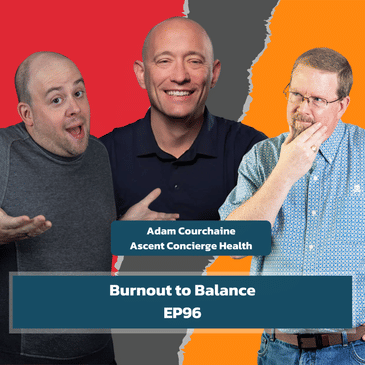


Topics include:
- Simple changes to improve nutrition, sleep, and daily movement.
- The science of stress reduction and its impact on business performance.
Listen to "All Things MSP" on Your IT Podcasts!
[00:00:07] I guess we need a cold open. Where the fuck is it? There's too many emails man. What time are these guys coming at what 2.30? Yep. I mean the point of a cold open is that it shouldn't be programmed. It should just exist and it just happened. It's one of those things that you know you question like where does an idea come from? Our listeners ask the same thing. Where do your ideas come from? And they come from literally just being like hi hi what's going on?
[00:00:41] And then we talk for five minutes and then we go okay let's be professionals about things and then start the show. Uh-huh look behind Justin's couch that's where the ideas come from. Iron Man? My couch? My pillows? Dude every time someone sees my background they always go is that a is that a Mac pillow? It is throwboy.com no affiliation but I do love it. I also have an iPod one there but you can't see it because I'm in the way. Cool. We're just starting to see it.
[00:01:15] Search the couch cushions for ideas. Yeah. And sometimes bus change. Been an ear in an ear in an ear. Navigating compliance requirements should not be a headache. With Compliance Scorecard you can track, report, and manage all your clients' compliance needs in one place.
[00:01:40] You can stay ahead of audits, ensure client satisfaction, and reduce risks with ease. Start simplifying your compliance today at atmsp.link forward slash compliance scorecard. What's up everybody? Welcome to the All Things MSP Podcast. I'm your host Justin Oscar. With me always is my good friend, podcast producer extraordinaire, Mr. Eric Anthony. Eric, what's going on buddy?
[00:02:06] Oh, it's a cold day here in North Carolina. It was actually in the teens this morning. It is a cold day here too. It's actually warmer now than I thought. I'm like, it's a cold day. I go look at the weather. It's 40 degrees. It's not that bad. But it's still, it's cold in my office here which is why I'm wearing my hat because I don't have my heater on because I'm silly like that.
[00:02:27] I hate the cold. I hate the cold. I think we should do it. I know a lot of people move to like Southern California or like Phoenix to get away from the cold or even Florida. I hate the cold. I hate the cold, but I kind of like seasons. Yeah. But I'm the same way. I dislike the cold. I like three out of the four.
[00:02:53] I dislike the cold, but I am a huge fan of seasons having grown up in Florida and having no seasons for, you know, the first 30 something years of my life. And so moving somewhere that has all four seasons and let's call it an abbreviated winter because we don't have a long winter here. Yeah.
[00:03:18] We, it's funny the last couple of years because of climate change, we've ended up up here in the Northeast with two winters where we have this thing where it's funny because like December is called fake winter. And then it gets surprisingly warm for some reason in January and like for January, not just, and then it gets really cold again in February. So we call it our second winter. There's some picture online that tells you, it says you where you are like fake spring, real winter, cold as hell.
[00:03:45] It's spring again, hot as balls, moving on fall, winter. Like it's, and it's like, it's, it's like an arrow. It's like, you are here. It tells you where you are real. Cause there's no longer four seasons. There's 17 seasons. Yeah. Whatever. Whatever. It's cold. You're cold. We're all cold, but Hey, you're here listening to us and we appreciate you taking time out of your day to learn a little bit about your MSP and try to make yourself better. I do love getting comments from people, you know, on the sidelines.
[00:04:15] I get people on Slack or, or once in a while I get a DM from somebody on Facebook and I heard you, I heard the, this week's show. You know, what's really funny is that Roman now is listening to the show over the, over the Amazon lady in the box. And so my Amazon lady in the box in the kitchen has a display and it's like, continue listening. And there's like the, the cover art of like us on the thing. And I'm like, I don't want to see this in my house. Get this out of my way. I've already, I've said it. Not our target demographic. I've said it. I've probably listened to it and watched it.
[00:04:44] I don't need it on yet another device. Um, so yeah. So that's that. Glad to know we're appealing to the younger audience. Roman claims to be the IT person for his fourth grade class. Like he's always helping people and the teacher with like their Chromebook. And I'm like, what'd you do? He's like, I just turned it off and turned it back on. I'm like, show me on your Chromebook, how you turn it off and turn it back on. Because what are you? Cause it's not even turning off and turning back on. Chromebooks just go to sleep like an iPad.
[00:05:11] People think when you press that button on your iPad or your iPhone, it's turning it off. It's not, it's just going to sleep. Right. It wakes up. It wakes up. He does the same thing. He thinks he's actually turning it completely off. And I'm like, Roman, if you're going to be the IT guy, at least know how to really reboot something. That's the number one rule in IT. Anyway, should we just jump into things? You mean like a from the group?
[00:05:43] I love watching this. The only reason I watch the show back is because I always want to see where you edit me in that like freeze frame before the from the group. We do have a from the group. Mr. Paul Browning writes, anyone using Veeam for local backups, parentheses, non-cloud, looking for alternatives to backup exec. Is the pricing as high and convoluted? Does it do deduplication, subscription, or perpetual license? This website lists four platform additions, but doesn't clearly state the difference.
[00:06:11] Look, backups are backups. At this point, truth be told, let's just talk about backup strategies in general because we don't use Veeam, obviously. At this point, there's two backup strategies that I have my clients on. And I really look forward to your tweets and emails about this one.
[00:06:35] Either back the computer up to Backblaze or don't back it up at all because all of your data is in some sort of cloud file share system. And nothing should exist on the computer. And that's it. Those are the two rules that we live by. And like I know there's like, you know, it's a modality thing, right? Mac, PC, whatever.
[00:06:57] But the truth of the matter is that, like, in my opinion, if you have a cloud-based file share, even if you have a file server in some way, shape, or form, cloud or local, there should be no reason except for maybe the CEO to be backing up a device in 2025. Hot take. So I agree. You know, personally, I would not store files locally.
[00:07:26] I'm always going to use some type of cloud storage system because I jump back and forth between devices way too much to store them locally. Now, I understand there's a lot of organizations that still have a local file server or a NAS. But here's where I thought this particular post was a little bit strange. And there's probably some good reason for it.
[00:07:55] But he's backing up locally to locally. And I'm like, that just doesn't offer you the redundancy and disaster protection that you really are implementing a backup for. Because you still have an issue with the building, something physically happening to the environment, which would nullify the backup as well as the server. Yeah.
[00:08:24] And that's just no bueno. I know. So we, a while ago, we're talking now over seven years ago, we built out a Synology system for a graphic design firm that had a very large amount of, I mean, they're using 80 to 100 terabytes of space. Right. Which seven years ago was a lot more than it is today, just relatively speaking. And so to provide them the best backup, I'll tell you what we did.
[00:08:50] And now, just as a point of reference before I go into what we did, we're currently deconstructing it because we're moving them to cloud and doing other things. But we built them a Synology. And off the main Synology, we hung an expansion pack, expansion pouch that did a hyper backup. So like a time machine or it just did the deltas to a file. So if we needed to restore something quickly, we could. We then did a dupe to another Synology on-prem. So we had two Synologies next to one another.
[00:09:18] Basically, we could have done high availability, but I think we decided not to at the time for some reason. So everything on A gets duped to B. And then from B, it gets duped to another Synology in an office in Texas and does a hyper backup to, we were using Wasabi as our cloud backup. Right.
[00:09:38] So we're giving ourselves local file one-offs, local clone, off-site clone if, God forbid, something happens to the building, and a complete off-site with hyper backup to Wasabi in case something happens. Like, not that Macs get encryptionware, but we've seen this kind of stuff happen, where Worm gets in and all the clones get eaten. Right. Right. So like that makes sense to do. You could have a local, but you still need those secondary things.
[00:10:07] We've since decided, you know what? We're just going to move to Google and like just get rid of the Synology because like why? First of all, they don't even really need half that stuff anyway. But the question is like why do you need these local backups? And you're right. A local to local does no good whatsoever. And there's probably tools and there's probably software you can use other than Veeam that is if really what the question is, is cheap because he's looking about, you know.
[00:10:34] I'm assuming the way this is phrased, backup exec is priced very high and as Kam alluded to use, and he wants to use Veeam. Whatever works, right? And also, who cares about the price? Let the client pay for it. It's the client's data.
[00:10:53] That's another very good point is that if the client requires a certain type of backup, the client needs to be prepared to pay for that type of backup. And, you know, there's something to be said. And you brought up a lot of great points.
[00:11:12] There's something to be said that if you need that very quick recoverability, you know, where they can't miss a beat when it comes to staying working. I understand having the duplicate Synology, right? Because you have an instant failover. There's literally no cutover time required there.
[00:11:36] But the chances of you needing 100 terabytes all the time is very low. Yeah. No, 100%. You're actually only working on like a terabyte. Well, in all fairness, this office happens to be below 36th Street.
[00:11:59] I don't know if you remember, like, we're going to go back now almost 17 years. There was a blackout in Manhattan that everything below 36th Street went out for like a day. And so at the time, the office is before we started working with them. But I remember they're all the IT director who told us what they had done. At the time, they had a server. And then the IT guy lived in Pennsylvania.
[00:12:26] He drove to Manhattan, walked up eight flights of stairs, took the server out, walked down eight flights of stairs, put it in his car, drove to Pennsylvania so they can work. You're right. They didn't need 100 terabytes. They probably could have shared a couple files. And again, 17 years ago, cloud wasn't as well built out as it is today. But it was built out out of fear more than anything else. But going to today's system, like I said, we're tearing it down because it's not necessary.
[00:12:56] Because you're right. You probably don't need that kind of level of continual access. So I would really go back to Paul here and say, like, you need a little more context around this story. It's not just a matter of, like, using Veeam versus not using Veeam. Maybe it's just a matter of looking at the holistic backup strategy and then plugging in whatever software works to fit those pieces. Because, again, on the Synology example, right, we used Synology to Synology, which is built in.
[00:13:24] We used Hyper Backup, which is a software in Synology, but to Wasabi, so we paid for cloud services. And in order to make the Synology work with the office in Texas, we ended up buying both offices Meraki devices and doing a site-to-site VPN. So there were, like, other steps involved to, like, make these things work, which come with a very high cost. And, yes, the client paid for it. But, again, the client was scared. And that's what you do when those kind of situations come up. So I would ask Paul, like, hey, what's that situation look like?
[00:13:53] Give us a little more context around it and then put the right software in no matter what the price because the client should be paying for it in some way, shape, or form. Not you. That's all. Yep. Bottom line, design the backup solution to meet the needs of the clients rather than just trying to put something in place because it's the way it's always been done or because it's the way you did it someplace else. Exactly. Well, Paul, thanks so much for writing in.
[00:14:21] If you want to be from the group, follow us at facebook.com slash groups slash all things MSP. Ask a relatively smart question and Eric and I will rip it apart on the show. No, I'm just kidding. We'll be better about it. We'll be nice. Eric hates when I do that. Thanks. Simplify IT procurement with Griffin IT. They provide MSPs with access to equipment, pricing, and product availability not typically found in traditional distribution channels.
[00:14:51] From refurbished electronics to IT asset disposition, Griffin IT offers solutions that boost margins and solve supply chain challenges. Visit atmsp.link forward slash Griffin IT to learn more about how they can help your MSP succeed. So it's just been about New Year's when we're recording this, Eric, and everyone always has New Year's resolutions, right? And the number one New Year's resolution everyone always makes is I'm going to be healthier. I'm going to look better.
[00:15:19] I've even set myself a goal to look better by aces. I don't think I'm going to get to the 200 pounds that I want to be or probably should be 185 because I'm way over there right now. But luckily for us, we have a guest today. I love it when we have a guest who's going to help you, the listener, and me get back on track with our weight goals. Let's bring them up. It's Adam Corshane, PA, over at Ascent Concierge Health. Adam, what's up, buddy? How are you? Hey, thanks for having me on here.
[00:15:47] I enjoy talking about this stuff, so fire away. Good. Well, we would really hope that you do enjoy it. If you hated talking about it, this would be a really crappy episode. Yep, awkward. So Adam, real quick, for those who don't know you, give everybody two-minute spiel. Who are you? What's Ascent Concierge Health? And you know what? You seem like a fit dude. How much can you bench? So I can answer that, actually, sort of. So I'm Adam. I've been a PA for just about 20 years, so I've worked in many facets of medicine.
[00:16:15] And about 2017, I came back from an Army deployment, and I came back to urgent care, and I said, wow, this sucks. It was terrible. I was like, why is it that our system is so bad? So since then, I've been kind of on a rampage trying to figure out how do we do better care for each other? So I started one practice, and then we started Ascent a couple years ago. But if we took off the training wheels, otherwise known as insurance, and just tried to give the best care to other people, that's what we're doing here. So not just what's broken with you today and how do we fix it.
[00:16:45] There's a time and a place for that, but how about you don't get broken? So that's the real quick version of what we do. The bench press thing is pretty funny. So I'm 51 years old. I work out in the basement. So I do a lot of push-ups. I could do that sort of stuff. So I went with my son to the gym a couple of weeks ago. He's back from school and all that. And he's like, oh, yeah, why don't you do some dumbbells to press? I was like, all right, fine. I haven't done this in like 20 years because I just do my own thing. So I was like, guess I'll try 70 pounds. And he's like, oh, that's a lot.
[00:17:15] And I did like 12 of them. It's like, geez, like you just made me look like a chump. And then I whipped out some 90s. And I was like, oh, I could still do 12 of those too. But I stopped there. I didn't want to hurt myself because it's wise to be smart. But I just ordered some 75-pound dumbbells to have at home so that I can get more comfortable with that. And then I'll go bigger. Yeah, we can get into that. But like I'm not a bodybuilder. No, I'm going to get into this for a second because if anybody who knows me or sees me like,
[00:17:43] I do not look like I'm fit in any way, shape, or form. I am – I'm a sleeper, dude. I'm weirdly strong for the way I look because I'm not – because I'm not like if – first off, I'm never taking off the hoodie. Anyone who watches this on YouTube.com slash at all things MSP realizes that I will never take off a hoodie. Sure. I don't really have muscles that show but I can – because I have my own stuff over there. I can – it's not really a chest – I guess it's a double-arm chest press because it's not one bar. I'm doing two dumbbells. Yep.
[00:18:10] I can do 45 in each dumbbell and that's probably my max right now, which like I think is pretty awesome considering the fact that I'm like 35 to 40 pounds overweight and not lean in any way, shape, or form. So, sure. Yes. And that's what my son said too. He's like, geez, dad, I guess you maintained some strength over the decades. So, I'm having fun. I'm playing around with it. But, yeah. I mean, yeah. Keep going. We can chat about whatever. Yeah. All right.
[00:18:39] So, let's talk about like what is concierge health and how can we attribute this – like how do we get this over to MSP owners? Like why should we – why should MSP owners – look, it makes – it's a stupid question for me to say like why should anyone take care of their health? You want to live, dummy. But like why should MSP owners specifically be more worried about their health than say almost anyone else? So – and you're right. It is everybody. And that's why I get crazy about this. So, I talk to different groups.
[00:19:05] But in the social world that we live in, there's regular medicine. So, we call it conventional medicine or allopathic medicine. And that is the what's wrong with you. Give me a name. You say headache. I say, okay. I got a pill for headaches. Here you go. Carry on. Is that system good or is it bad? The answer is it depends. If I have an acute problem, if I have a heart attack, dial 911. We've got a great system for that. Or if I need an appendicitis removed, it really is amazing. We're top notch.
[00:19:34] But when it's a chronic problem, obesity, fatigue, sadness, cholesterol, diabetes, it's the wrong system. And that's why everyone says, oh, I went in. They asked me if I brushed my teeth and said, have a good day and I'm healthy. That does not mean that you're healthy. That means you're not dying today. So, the bar is so low. And that's why it's an awesome system for what it's set up for. But if I have chronic problems, and we all do, there's a disconnect and there's a distrust.
[00:20:03] So, conventional medicine, you use your insurance card, you go, you pay a copay, and that's it. Concierge medicine came about decades ago. But that says, hey, if you give me a little pile of money, I'll give you more time. But in general, it's the same system. I'm still going to bill your insurance, do a copay, and figure out your problem. Maybe a little extra talking about it, but then send you on your way. I like the idea of how do I say, you know, like, let's pretend you're 35 years old.
[00:20:32] And you say, when I'm 70 years old, do I have to move into a nursing home? And the answer is, if you're like everybody else, yes, that's what you get to look forward to. It's going to be awesome. And for me and my family, I say, hell no. And I used to work in nursing homes. And I don't want to be there. And I tell people, my goal for me is one day I go for a hike, the next day I drop dead. That sounds awesome. That's my plan. So, you know, I'm not a super stud. I'm not doing, you know, crazy things and all stuff. But I am a human. And I want to be optimal me.
[00:21:03] And how do I do that? So the answer is, if I go to see someone and say, how's my cholesterol? They say, it's good enough. That's not good enough. Explain it to me. Is it good? Or is it bad? Or is it medium? Medium is good enough for everyone else, but not for me. I want to be a little bit more optimal. So regular concierge medicine is just focusing on that, you know, a little bit more time, but it's still the same system. So where we differ is we say, well, if we, like I say, take off the training wheels, take off the restrictions.
[00:21:32] So like, Justin, you come in, you say, hey, Adam, should I do some advanced cholesterol markers? And I said, well, let me ask your insurance for permission. Like, guess what? It's not happening. But if I said, you know what? Like, we can get cash pricing and it's wholesale and it's really not a big deal. Hell yes, you should. So the whole idea is forecasting and backcasting my health to say, what am I functionally able to do? So there's something called lifespan. How many days are you going to be on earth? So let's just say it's 80, 80 years.
[00:22:01] So at 80 years, you drop dead. But then there's health span. How many years were you healthy? And on average, it's minus 10. So at 70, your health's terrible. And now you get to suffer for 10 years and then die. To me, not good enough, man. Like I said, I want it pretty long as best lined up as possible. So if I live 80 years, I want to live 80 years with freedom to do things I want to do. And that's what nobody talks about. So when you go in for your physical, they say, hey, you know, this guy's 52 years old. You look great for a 52 year old.
[00:22:31] Yeah, you're on five different meds chronically and all that stuff. But so is everybody else. So you're doing great, buddy. Like, uh-uh. No, no, no, no. We can do a lot better than that. First off, are you actually, you said 51, right? 52? Yep. Yeah. You look up. I got to admit, like you came on the call and I was like, this dude is like 40 something. Like you look. It's because of the hair, the shaved head. Oh, please. I'm in the same club. All right. That's why you think I'm wearing the hat. Like I'm not, let's not go there. Okay, so why MSP owners, right?
[00:23:01] Because like, again, we said health is for everybody. But let's talk about specifically MSP owners, right? Yeah, sure. It's understandable that MSP owners are people who work in IT, just generally speaking, or probably some of the more lethargic people only in the regards of we sit in a chair all day in front of a computer. And we're told, you know, and I'll do this on camera, like feet down, back up, ergonomic keyboard, spine long, head up. Like nobody sits like that. Like I try to do that for four seconds. My entire body's like, screw you, dude.
[00:23:29] And I immediately go back to like, you know, roll shoulders. I'm hunched over, right? My feet are, I don't even, I don't even, I sit like this, like one foot under the other. I'm pushed up against my chair. My feet, granted, I have to look up for the camera. But like normally if I'm looking at my monitor straight on, my shoulders are kind of dipping inwards, right? None of that is good for us. We understand that. Sure.
[00:23:52] So back pain, lower back pain, leg pain, chance of heart attack, all of that, right? Yep. I don't want to, I don't want to, I mean, I don't want to die. No, but see, and I'll stop you right there because a lot of people say, I don't want to die. Oh, you're going to die. That's a guarantee. I will bet all the money in the world you will die someday. But we want you to live until then. And that's, that's the difference. No, no, no. I don't want to die young. I'll rephrase it. I don't want to die. I don't want to die before.
[00:24:20] Like, I don't want to be doing this podcast like mid show and Eric be like, Justin, are you there? And me just be like, oh, like, you know, my worst nightmare. Unless you're like 93 years old, then it would be okay. Because then you'd be doing the podcast when I am 93 years old. We have done too many episodes. Well, in answer to your question, why MSP owners? And the reason why is Eric knows one of my best friends is Dave Uesta. That's the MSP Association of America. So I've worked with him for years.
[00:24:49] We do services together. But talking to him, he's like, you know what? A good audience for you is MSP owners. They're busy. They don't want to sit around thinking about things. No, they want to be told, here's a good program for you. This is how to do it. Like the no BS approach. How do we get to the nuts and bolts? And like you said, they tend to be sitting around. They tend to be hard. I mean, a lot of people are hard. Everybody's a hard worker. But when you're running, I have small businesses. And like, you put in a lot of time.
[00:25:16] And then I'll just go sideways for a second and just say, what I've come up with, not that I created it, but in my own mind, you are a homo sapien. Shocker. You're an animal. You've been in evolution for about a quarter million years. So over a quarter million years, we starved. We're thirsty. Freezing cold, boiling hot. We survived. We're really resilient animals. And now, the past couple thousand years, we have everything in the world. And like this weekend in Colorado, it's going to get chilly. So I'm glad we have heat.
[00:25:46] And I'm glad I don't have to go hunting this weekend for dinner. We have grocery stores. So I say, well, how do we live somewhere in the middle? I acknowledge that we live now in the matrix. There was an ancestral way. But how do we combine it? And the answer is, you know, our ancestors, did they sit on their butt for 12 hours a day? No. They walked everywhere. So do I have to do CrossFit or run marathons? No. I just have to be active. So right now, I'm sitting, but usually at a desk, I'm standing. Again, these are little games. Does that change everything? No.
[00:26:16] But it's something. And sometimes if I'm not talking to people, I actually have a walking treadmill. Again, not banging out 50 miles a day. But you know what? If I could do work and still get some miles in, that's pretty awesome. So all those little things, same thing with food. So I call them pillars. So there's nutrition, physical activity, sleep, stress relief, sense of purpose, the community, that kind of stuff. So it's kind of that balance type thing. So just tying that in there.
[00:26:45] So are maybe these MSP owners, are they maybe a little bit more plugged into the matrix? They are. Of course, that's what you guys do. Everything is digital. And again, I told you I can go on for hours about this stuff. But even right now, I'm looking at a computer screen. It's about 18 inches from my eyes. Everybody's working 18 inches from their eyes. They've got their phone. They're doing this. Our ancestors were looking close, far, close, far, close, far. Scanning. So there's muscles in the eye even. So that's why our vision.
[00:27:15] I had LASIK. I see Eric's wearing glasses. I don't know about you. Like our vision's terrible. And some of that is genetic. Yes. Some of that's kind of the way we live, which is bizarre. Such a bizarre thing. So yeah, as an animal species, we're dying. Slowly, the caveat is, but we create a lot of drugs that can prolong that life. And that's what we do. We prolong life. But we don't prolong living. It's just you're still alive. And I've said that to people before.
[00:27:43] I jokingly pick on guys. Usually 30-year-olds will come in and be like, I don't want to live forever. I'm like, oh, don't worry. We'll keep you alive, buddy. But you'll be plugged into tubes and all that kind of stuff. So how do we do it better? And it's doable. It's really not that ridiculous. I would like to just add to the fact, though, like our ancestors didn't have to deal with printers. Right? Because I really feel like if we didn't have to deal with printers, it would be a lot easier. Wait, okay. The small change. Yeah, I mean, stress is a huge part of it.
[00:28:13] Yep. Yes. Being an entrepreneur is stressful. It is. Yeah, definitely. And if you think about it, it's interesting just to jump on that is, did our ancestors have stress? Yeah. They were like, we haven't eaten in three days. Kind of stressful. Or I hear the banging of the drums in the next village. Let's get nervous. But they were real threats. And now we say, well, when I retire, will I have enough money? Or what if this contract doesn't go through? Or what if they're all perceived stress? So meanwhile, the mind-body connection. So again, when the mind and body connected.
[00:28:42] So if I take you, Justin, I blindfold you. I think I'm a funny guy. I spin you around a few times. Take it off and you're staring at a grizzly. You're hauling down the street. Now, like, my leg's a little sore. Did I poop this morning? No, you're running. You're like an Olympian. It's amazing. Wait, wait, wait. Hold on. Hold on. Hold on. I thought the rule is with grizzlies. You have to be big. You are supposed to, like, be bigger than they are. I'd run. The point is the stressor is the grizzly, right? So then we do another experiment one day.
[00:29:11] I actually strap you to a chair, spin it around, whip off the blindfold. And you're staring at a grizzly. And all of a sudden now, you poop your pants. You pee. You're babbling. You vomit. You're doing all this mess. And I said, what's your problem, dude? It's still a grizzly. And you're like, yeah, but my mind's down the street. My body's here. When the mind-body disconnect, that feels bad. And that's a large source of chronic disease. That's blood pressure problems. That's going to give you some diabetes if we keep doing it over and over and over. So, yeah, stress. Stress.
[00:29:41] I have plenty of stress. And, like, we track things. We look at sleep. Like, yeah, I wake up at 3 in the morning sometimes. I'm like, oh, wait a minute. Did I do that thing? Do I have to make sure? I better call Eric in the morning. Blah, blah, blah. Like, we all do that. How do we do it better? Well, and I won't get into all the details, but that stuff. We just talked about this. You could have called me this morning. I was up at 3. Yeah, we were just talking to the free show that Eric was up at 3 in the morning because he was stressed out about today's call because he thought you were going to make fun of him. Well, we'll get there.
[00:30:11] Okay. So, I've heard a lot about the mind-body connection. I'm personally trying to do better with myself. I've read all of – I've read the Tim Ferriss hack your body thing, and I've watched plenty of stuff on probably when this air is the now-banned TikTok about health and whatever. Like, I get that mind-body thing because, truthfully, that mind-body thing, it goes beyond just your health. It also – like, even my business coaches talk about that mind-body thing.
[00:30:39] It's like being cognizant and being aware of what's going on in that situation right then and there because you are – Adam, do you know about the Jack theory? You ever hear the Jack theory? Like, the guy who breaks down his car and he, like, sees a house at the end of the street. Do you know this one? I don't know. Keep going. Okay. So, this guy's car breaks down. It's raining. It's whatever. It's a dark road. He sees a house, and he realizes he needs a Jack for his car to, like, change a tire or whatever it is. Doesn't have one in his car. And he starts walking down the street. He sees a house with a light on. He's walking to the house. He's walking to the house.
[00:31:10] And on the entire way, he's just walking and walking, walking. But in his head, he's like, what if that guy doesn't like me? What if he doesn't have a Jack? What if this? What if that? What if I can't get the car started? How do I get home? By the time he gets to the door, this, like, sweet old man opens the door. He's like, can I help you? And he's like, yeah, you can keep your effing Jack. And, like, walks away. There's that mind-body disconnect, right? Because our brains, especially IT people, our brains try to keep up with computers. And our bodies can't do that.
[00:31:40] Right. And that's where I've heard from a lot of MSPs, because I go to the conferences now and do all that fun stuff, is a lot of people say in their younger years, when they were not still figuring things out, like family suffered, health suffered, all this stuff. And some people just do that until they're done. But other people have this awakening and they say, you know what? If I don't take care of me, how the heck am I going to take care of my clients, my family, and all that stuff? So they'll have that awakening, that awareness.
[00:32:10] And I tell, I just had someone in the office yesterday and they're like, oh, I should have, should have, should have. I was like, you're not dead. Let's start over. Like today, you can start today. No matter what the heck you've done. I've even had people post heart attack. And I'll say, but you didn't die. Like, yeah, that's a long road. You're a little off the path. But if you want, you can come back. When you can't come back is when you're dead. Like, sorry, your turn's over. No more games. Unless you're Walt Disney, but that's a whole different story. True. So, okay.
[00:32:40] So everybody knows that they need to take care of their health. What are, let's start with some simple tactics. Because I really want people to be able to take something away, right? What are some simple, does this, because I don't have a standing desk. Does the standing desk thing really work? Should I get a ball chair? What are some simple things that MSP owners can do? Like right now, without investing tens of thousands of dollars in gym equipment. Right. You know, they don't need a Peloton.
[00:33:04] They don't need, you know, whatever the new hotness is in cable strength management with AI associated, whatever. Like FV shred. Like what, what do people need? Or what are some good tactics people can start with literally when they stop listening to this episode? Yep. And what I find is, and I call it like there's a rising tide of frustration.
[00:33:26] There's enough people like who says, you know, a lot of people say, oh, I went to my primary care, but, and I like the person, they're very nice, but they gave me five minutes, 10 minutes. And I forgot a question. And now I got to make an appointment three months down the road. So there's this rising tide of frustration of people saying like, if they admit it, almost everybody will say, I don't feel my best. And there are times I don't feel my best. I actually hurt my back a few days ago. Like, yeah, it's kind of making me mad now, but it's, it's not about being perfect.
[00:33:55] So in answer to your question, um, like nutrition, little baby steps, cause again, I can go deep into this stuff, but little baby steps are, if it's, if it's comes from a box and has ingredients you can't identify. It's probably not awesome for you, for you. If it's something that existed 50,000 years ago with your ancestors, it's probably okay. So if you said, yeah, but I like bacon and eggs. I'm okay with bacon and eggs. That's fine. If it's from a happy animal, so I mean quality of food.
[00:34:23] So little steps would be, I guess the first step is acknowledge that you're not happy with the way things are. And if they, if they're that, then figure out, I don't want to keep doing the same thing to get the same outcome. Cause that's insane. So instead I want to make a change. That's step one. Do you demand more? And then from there, you could say with food. And I tell people all the time, being a hundred percent dialed in is kind of lame. It's not fun. Um, maybe it's a 90, 10, maybe it's 80, 20, whatever it is for my body to feel good.
[00:34:52] Um, so quick steps, avoid processed garbage, like whatever ring dings and a Coke for breakfast probably isn't going to cut it. Um, and then some people it's gluten and dairy, but from that, is it real food and just make baby steps? I had, I had a man who said, I'm not prepared to change all my nutrition, but he found it in himself. He just cut out breakfast cereal. That's it. He dropped 14 pounds in two months. That's all he did. He didn't increase exercise. He just cut out cereal. Cereal is garbage.
[00:35:20] If you want it as a snack, cause it's delicious and yummy, fine. But nutritionally useless. I don't care what little labels are on it. Breakfast cereal was created by breakfast cereal companies and they told you cholesterol was bad. Um, so anyway, that's nutrition, physical activity, move, whatever. Um, and it's funny, I, me, like I said, I've been doing, I used to be an exercise physiologist, but then I've been a PA for about 20 years. I, I did conventional medicine. That's what I knew.
[00:35:45] Um, so this, this, my attitude in the last seven years has changed completely, um, toward proactive health. But I remember probably 15 years ago, I was reading something. I was like, huh? So steps are steps. Steps are good. So my kids were little at the time and I was like, Oh, I forgot something upstairs. Bonus steps. They're like, dad, they're not bonus steps. You forgot it. You don't want to go up there. I'm like, no, no, these are bonus steps. Um, but I mean, and it sounds ridiculous, but if you're vacuuming the house, like the, the mindset going into it does matter.
[00:36:13] And there was a study, I think it was 2006 at Harvard where they looked at, um, hotel chambermaids. So housekeeping, and they, they had these huge groups and they, they filmed them. They did all their markers. They did their biomarkers, all that stuff. And then they said, here's the health of these people. They split them into two different groups and across the board that said, do you guys exercise? The answer was essentially no. Half the group, they showed them the video. I mean, you guys were out there leaning, you're picking up things, you're moving heavy stuff. You guys were exercising all day long. Oh, cool. They changed nothing, but they had that mindset going into it.
[00:36:43] And it was whatever it was six weeks, six months later, they recheck things in that group. All their markers improved. They didn't change anything. Like to me, that's amazing. So you say placebo or positive attitude. But again, if you said, I remember as a younger guy, like, oh, walking is for babies and toddlers. Like I should go running. Maybe my knees don't feel awesome. Sometimes is walking really that valuable? My ancestors ran if they had to. Otherwise, they were like, what a waste of time. I'm going to walk and go find some dinner. So that one. Sleep is important.
[00:37:12] Like, oh, I'm a tough guy. I only need five to six hours. Maybe you need a little bit more. Stress. Again, if I find, and I do this now. There was one day I was walking around the other week and I said to my wife, who's a nurse, I said, man, there's something on my mind. I don't know what it is. I feel revved up. There's something, something. And it's funny. And she's like, are you supposed to be on a Zoom call? I was like, yeah. But just understanding your own stress. And is it stress that's helping me? Because sometimes you need to you need to perform for the deadline. You need to do your job. Or am I just stressing for stressing?
[00:37:41] So just ask. Right. Permanent fight or flight is never good. Right. Yeah. That's exactly it. So the parasympathetic, the rest and digest. Like, am I chilling? And I guess the final, I'm going through those five pillars again, the sense of purpose. And that, you need to answer your own. But for some people, like I'm still an Army PA, so I have my core group of people. And we go camping and do things. I have my professional group of people. But you've heard this. Like, how many business owners are like, I crushed it in the business world and now I'm dying and I have no friends or no family?
[00:38:11] Like, why do you do what you do? And only you can answer that one. But, so anyway, those are some things. So eat real food, just whatever it is, and move. I like to, let's talk about nutrition for a quick second because, you know, I said earlier, like, we're changing. I'm trying to get better. I'm trying to look better. And for me, it was always dessert. Dessert is my killer. Like, I have such a sweet tooth. Like, if I'm not ordering a Carvelanche from Carvel or Cheesecake from the Cheesecake Factory, like, I feel like, I feel like I didn't see it in life.
[00:38:40] But those things are obviously terrible for you. Now, I will say, just number one, I'm not a nutritionist. And number two, from the stuff I've learned, I haven't cut it out entirely, but I have a limited – like, I'll do a Carvelanche once every two weeks as opposed to four times a week, right? So the little tips. Here's one that I learned that I really, really like. Like, if you like ice cream and you want to stop eating ice cream, okay? I now – and I got my kids into this. My kids love this, okay?
[00:39:06] I bought protein-enhanced yogurt, right? So it's like vanilla yogurt with extra protein, okay? I cut up some strawberries. I mix it in there. And then I make four small discs on a tray with parchment paper, and I just find something to use as a stick. Sure. Freeze it. And then when they're done freezing, I get no sugar added dark chocolate that I've melted and I put on top of it because it makes – it doesn't cover it. It makes it like a chocolate shell. Yeah.
[00:39:36] And then I'll do freeze-dried strawberries on top of that as like a sparkling dust or maybe some like nuts or something like that. Way low fat, way no carb. Yes, it's got the sugar. It's got some chocolate in it, so that like appeals that way. It's got the natural sugars in the yogurt. That one small change takes zero time to do. My kids have not eaten ice cream in three weeks.
[00:40:06] That's outstanding. Well, and I'll support you and say this. It takes about two weeks to change your taste buds. So dear God, I don't want to go too far into this one, but sugar, like processed white sugar is in everything. It's government subsidized. It's dirt cheap. It's everywhere. And I'm not going to get all conspiratorial, but why? And the answer is like it's everywhere. It's the legal crack addiction. So it's in the buns when you get your burger out.
[00:40:35] It's in the meat. It's in the pizza sauce. It's everywhere. So I tell people, actually, I'll throw this one out there too, is we animals have no shortage of guilt. So we make choices that you're like, oh, I know I shouldn't eat this three times a week or whatever it is, but I do because I'm a loser and I'm a piece of garbage. And also like we beat on ourselves all the time. What I tell people is if you find yourself in a, if you have your awakening and you said, man, I'm pretty far off where I should be. Don't start beating on yourself.
[00:41:04] Take a breather because you're supposed to be there. That's what the equation is. You should be morbidly obese, sad, fatigued, blood pressure, cholesterol, diabetes. That's average. It's not normal, but it's average. Right. So you're not an idiot if you find yourself every now and then like, huh, how did I get here? That's the natural progression. You just fell asleep for a little while. So anyway, there's that. Yeah, people talk about the sugar. Wait, let me ask you a question because people talk about the sugar all the time. And I understand why, especially IT people drink sodas. Like I get it, right?
[00:41:33] We need that caffeine. We got to keep moving. This is personal politics and anyone who's listening is going to start a fight with me. Bring it on. Because you listen to me. What's your thought on diet sodas or zero sugar sodas, like Coke Zero or something? Yep. So did your ancestors drink it? I mean, my ancestors didn't drink. Hold on. My ancestors didn't drink wine. Well, I would say they might have had some berries.
[00:41:59] Well, and my answer to that is to say, do we think, you know, back in the good old days, you know, ancestral times, was it all good? No, it was horrible. Like there was starvation. There was fighting. So what I tell people, because I have a lot of patients that are like police officers, like your job's not easy, you weirdo. You go into the gunfight. I run away. Um, so I, I believe, and I'm kind of having a little, I'm being a little liberal with some of this stuff, but like, yeah, our little village where we had our tribe went fought the other village. We didn't all come home that night.
[00:42:29] So what do we do? Did we just say, well, listen, stop being a baby. Go have your tear by yourself in your pillow and come out when you're a man. No, I think everyone was like, Hey, go clean up. You go get those mushroom thingies that you like to play with. Eric, get that. Like those berries that you've been brewing for the last month. Let's come back tonight. Have a wild party. We'll name some constellations after Jimmy and like, let's have some positive cathartic release, you know? So it wasn't all like just eating perfectly. The one thing we probably didn't do is in excess.
[00:42:57] Meaning if our little village were out there foraging, like, God, we haven't eaten in days. Hey, I see some bees over there. If we got to that beehive, I'm eating the hell out of some honey. It wasn't about no sugar, but I didn't do that three times a day, every day. Probably did it twice a year. And believe me, I like some sugar here and there. Like, I like something sweet. Back in the day, before I started really getting into this price seven years ago, I used to have just as another quick little example, coffee with what cream and sugar. And then I was like, Oh, I'm going to go healthy. I'm going to go agave nectar and some cream.
[00:43:25] And then I was like, Oh, you know, I'll go local honey and some cream. Okay, fine. Then I did this challenge, which was no added sweeteners. I was like, God damn it. No dairy. I was like, Oh, geez, what do I put in the damn coffee? I went to coconut milk or oat milk and all that kind of stuff. And I was like, Oh, this doesn't taste as good. But now like if you got me a coffee with sugar, like I just can't drink it because you can change the taste buds. And again, I did say, it's not about being perfect. It's not about never having ice cream ever again, have the ice cream.
[00:43:55] But for me, I guess I won't get into too many details about people. But for me in general, I'm like a pig at a trough. And I remember years ago learning that when you want to feed pigs, they eat by competition. So you let all the piggies go eat, but you keep a couple back. Then the pigs start slowing down because they're getting kind of full. You let these little buggers go and they all start eating again. They overeat. That's meat at buffet. I can eat the hell out of it. Well, and I have a tendency to overeat. So what I tell people is it's not about eating the food or not.
[00:44:23] It's about choosing to eat the food. So if you said, actually one of the police officers, this is awesome. A couple of years ago, he's like, you know, after a long shift, it's midnight. He said, I've literally, this is kind of scary. He said, I've literally found myself walking from the counter with a brown bag. I don't even know where I am. I don't know what's in the bag. Like that's autopilot. That's scary. That's what you don't want to do. Now you just, I feel like this, this afternoon, I'm going to the ice cream place. And I'm going to eat the biggest Sunday I can get my hands on. Go for it. That's freedom. Do it.
[00:44:52] But acknowledge that. Does it have any nutritional value? And the answer is no, it's got zero. That's okay. If you choose to do it, but what strawberries in it just to make myself feel better. Exactly. But how much is too much? And the answer is ask your body. And that's one thing that we do is check the values. Like how is your advanced cholesterol markers or your inflammation markers? How's your vitamin D? All these things are easy enough to check, but nobody does it because what's your problem? You're not here with a problem today. Let's wait till you have the heart attack. Then we'll talk.
[00:45:22] And that's ridiculous. I do also like the idea, and this hasn't come up yet, but I want to talk about this for just a quick second. Because I feel like a lot of IT people, like we've talked about this before. Like we get really into like, we get hard set on something. Like we're really into craft beers. We're really into craft whiskey. Like we have these things, right? A lot of IT people I know are really into games, right? And so gamifying the weight loss and the gymming and all that stuff.
[00:45:50] Like I use a new app called My Fitness Pal. It lets me keep track of things. I can see what I'm doing, good and bad or whatever. But like gamifying the whole system. Like it's something that works for me. It doesn't work for everybody, obviously. But like there's another, my little, your unnecessary opinion from me about something. No, no. And I'll quickly say this, and I'm sure we have to wrap up or whatever.
[00:46:18] But I have a Garmin watch on. I have an Oura ring on. I've got a sleep number bed. I've got a chili pad. I play around with these things because I think it's interesting. But you're right. Am I getting looped into the dopamine fix to be like, ooh, what's my score today? But it can be useful to say, hey, if I drink coffee late in the evening, does that affect my deep sleep? Or if I have alcohol late in the evening, does that affect my REM sleep? So it can be very powerful. And the thing is, we do live in the game system, right? This is the game system. It's the matrix, as I call it.
[00:46:49] So acknowledging that, like if I get on the scale every single day and measure my weight, like it can be useful objective data. But also keep in mind, a friend of mine has this phrase, you're stepping over dollars to get pennies. So what's the best supplement? I need this. Maybe you just need to go for a walk. So anyway, so games are fine, but acknowledge what are they doing? What is their benefit? And how can I actually remember that I'm a bloody animal and go move and participate in life?
[00:47:17] If I could take this podcast recording whilst walking, that would be like, that's what it's all about, right? Like I know a lot of people walking seems to be the new in thing again. But like really like, I don't know, it may not be 10,000 steps. It might be 5,000. It might be 12,000. It depends on who you are and your body composition. But like they, you know, like the number one thing I think everyone's pushing right now is the walking thing. Maybe, you know, you the listener can take a call from a walking perspective.
[00:47:49] You know, get on a team. Don't put your camera on. Nobody likes cameras on anyway. And then, you know, put your headphones on and go for a walk. It might be 39 degrees outside. You might be uncomfortable. But even if you do like 15 minutes, it's better than zero. Exactly. Yes. Yep. Perfect. And last thing I'll say is even with strength training, I used to like 90-minute workouts. How often do I have 90 minutes? So you just don't do anything.
[00:48:15] And the answer is in the last two years, I've really figured out like, hey, I have 25 minutes. I'm going to do some push-ups and pull-ups. Go. Get it done. So anything is better than nothing. So that's not about being so messed. I did that today actually. My daughter is sick, so I didn't sleep well last night. And so my wife let me sleep in a little bit. But I missed my normal workout time. And so I did my morning routine. I talked to my team. And I said, hey, are you guys all good? Because I need 10 minutes. And I did a 10-minute arm workout.
[00:48:45] And then I came back and I did some work. And I was like, I got a lull. Are you guys good? I'm going to do another 10 minutes. And I did 10 minutes on my bike. Awesome. And I came back. Like even if you could just do that, right? Yep. Like that might not be the best workout. And if you listen to people who I will call gym rats who are like super jacked. They're like, that's not doing anything for you. They're lying. It is doing something for you. Yes. Like do something. Okay. All right. We have to wrap. This is another episode where Eric didn't get a word in that twice.
[00:49:14] Eric, do you have anything you want to share? Do you even want to just – should we just like cut you out of the show altogether today? Oh, the life of a producer. It's not living. I'm just going to tell you. Yeah. Yep. Eric, what's something that you're going to do for the rest of the year to following Adam's advice here? So we typically eat pretty well, right? We try and stay away from the things that we can't read and pronounce.
[00:49:43] But it's mostly the exercise. And one of the things that we have been doing is we've been taking a midday walk about a mile. We've got just a simple little loop we can do here in the neighborhood. And so we do about an extra mile a day now. That's a game changer. I'm not just saying that. Like that's freaking awesome. Yep. For the mental energy too. Yes. Well, and you know, I've really noticed – you mentioned it very early on in the podcast.
[00:50:12] The eye thing with, you know, we're all working 18 inches. And that is something that changes so dramatically when you just get outside because your focal distance goes way out and your eyes have to adjust. Yep. Speaking of weather from earlier today, I just got a winter storm alert on my thing. So I apologize if that just came through the microphone. I'm not taking a walk outside today. Adam, thanks so much for being here, man.
[00:50:41] Where can people find out more about you and Ascent Concierge Health online? Sure. So we have ascentmedicine.com. That's probably the easiest way. And just reach out to us through there or on LinkedIn. Same thing. That's it. Awesome. Thanks, man. So I would love to know what everyone else is – if you're listening, like wait until you're done driving and then pull over. Join the Facebook group, facebook.com slash group slash allthingsmsp. Let us know what you're doing about your health this year in 2025. And I really do believe that accountability helps a lot of that.
[00:51:11] So if anybody that's in the All Things MSP group wants to do some accountability with it, let Eric and I know. We'll try to set up a group to keep people on track. It's another way to gamify as well as keep track of everyone's progressions throughout the year. Look, a healthy owner is a good owner. If you're not taking care of yourself and you're working 80-hour weeks to put into your business, you're not going to be alive long enough to take care of your business or be able to give it to anyone else. So take care of your bodies. Take care of your minds.
[00:51:40] Take care of Eric. No, I'm just kidding. Anything? Eric, have you anything you want to finish off with before we end today's show? Wow, the pity party for Eric today is strong. No, dude. Gosh. I'll turn my reactions on. We'll end it right there. I'll turn my reactions on just so that way my little heart things work for you. Or not. No love. No hearts. I'll just manually do it. You have to watch this at YouTube.com. There we go. Hearts for Eric. You have to watch it at YouTube.com slash at All Things MSP.
[00:52:10] I almost forgot for a second. Also, check us out on all of your favorite podcasting tools everywhere. Thank you very much, Adam. That's Eric. I'm Justin. Bye. See you, guys. Thank you for listening or watching the All Things MSP podcast. If you liked this episode, go ahead and give us a thumbs up. Hit that like button and consider subscribing to catch all our weekly episodes.
[00:52:36] And from your host extraordinaire, Justin Eskar, and myself, Eric Anthony, your humble producer and All Things MSP founder, thank you very much for spending your time with us. If you are not aware, All Things MSP started as a Facebook group and now supports over 6,000 members. We also have a LinkedIn page for those of you who don't do Facebook. And make sure to check out our YouTube channel for even more content. A special thank you to our elite sponsor, CoreView, helping you manage your Microsoft 365 tenants
[00:53:05] instead of them managing you. Thank you to our premier sponsors, EasyDMark, Helped, Gozinta, Movebot, and SuperOps. And thank you to the rest of our sponsors. Without sponsors, we could not do what we do for the MSP community. Please consider checking them out. The All Things MSP podcast is a BizPow LLC production. The views and opinions of the hosts and guests are their own and do not reflect the thoughts
[00:53:33] and opinions of any employer, vendor, sponsor, or random taxi driver in the Metro DC area. Be sure to join us next week for another exciting episode. We'll see you next week. Bye. Bye. Bye.