
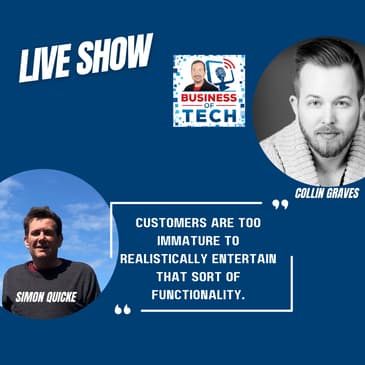
Silicon Valley is experiencing a surge of interest in AI agents, with prominent figures like Sam Altman and Satya Nadella predicting their integration into the workforce and knowledge work, respectively. However, a significant challenge remains: there is no consensus on what constitutes an AI agent. This ambiguity raises questions about whether we are on the brink of a transformative shift in automation or merely witnessing another instance of overhyped terminology seeking a market. The discussion features insights from Collin Graves of Northlabs and Simon Quick of Microscope, who explore the current landscape of AI agents and their implications for businesses.
Collin Graves offers a multifaceted definition of AI agents, suggesting they involve large language models capable of directing their own processes. He notes that while some implementations resemble smarter workflow automation, they often remain constrained in their capabilities. Simon Quick adds that vendors are presenting a wide range of interpretations, from simple workflow assistants to more autonomous systems that minimize human interaction. This lack of a unified definition contributes to confusion in the market, making it difficult for businesses to understand how to effectively adopt AI agents.
The conversation also delves into the readiness of customers and vendors to embrace AI technologies. Many customers express interest in AI's potential but struggle with foundational data management issues that hinder meaningful progress. Collin emphasizes the importance of establishing a solid data strategy before pursuing advanced AI applications, while Simon highlights the challenges vendors face in delivering effective solutions. Both agree that the current landscape is reminiscent of early cloud computing, where organizations are still figuring out how to leverage AI effectively.
As the discussion wraps up, the participants reflect on the future of ambient computing and its potential applications. While there are promising use cases, such as voice-activated systems for the elderly and facilities management in manufacturing, the overall sentiment is cautious. The podcast concludes with a focus on the ongoing evolution of the managed services market, driven by consolidation and the need for providers to adapt to changing customer demands. The insights shared by Collin and Simon underscore the complexities and opportunities that lie ahead in the realm of AI and automation.
About Business of Tech: The daily MSP news and analysis podcast for managed service providers and IT services leaders. Host Dave Sobel covers AI for MSPs, MSP pricing and profitability, MSP M&A and private equity, vendor partner programs, MSP cybersecurity and liability, and MSP operations — and answers the question every story raises: Why do we care? Produced by MSP Radio.
💼 All Our Sponsors
MSP Radio is supported by our partners:
ABC Solutions · CometBackup · Firetail · Guardz · HaloPSA · LogMeIn · Mailprotector · Pax8 · Rythmz · ScalePad · TimeZest · Transit AI
Supporting the IT services community through insights, analysis, and transparency.
🚀 Join Business of Tech Plus
Get exclusive access to investigative reports, vendor analysis, leadership briefings, and more.
👉 https://businessof.tech/plus
🎧 Subscribe to the Business of Tech
Want the show on your favorite podcast app or prefer the written versions of each story?
📲 https://www.businessof.tech/subscribe
📰 Story Links & Sources
Looking for the links from today’s stories?
Every episode script — with full source links — is posted at:
🎙 Want to Be a Guest?
Pitch your story or appear on Business of Tech: Daily MSP News & IT Services Analysis
💬 https://www.podmatch.com/hostdetailpreview/businessoftech
🔗 Follow Business of Tech
LinkedIn: https://www.linkedin.com/company/28908079
YouTube: https://youtube.com/mspradio
Bluesky: https://bsky.app/profile/businessof.tech
Instagram: https://www.instagram.com/mspradio
TikTok: https://www.tiktok.com/@businessoftech
Facebook: https://www.facebook.com/mspradionews
Hosted by Simplecast, an AdsWizz company. See pcm.adswizz.com for information about our collection and use of personal data for advertising.
[00:00:13] Silicon Valley is all in on AI agents. Sam Altman says they'll join the workforce this year. Satya Nadella thinks they'll replace knowledge work and Salesforce wants to be the top provider of digital labor. But here's the problem. No one can actually define what an AI agent is. Are we witnessing the next big shift in automation? Or is this just another overhyped buzzword looking for a market? We'll break it down.
[00:00:42] Sam Altman says, I'm Colin Graves from North Labs and Simon Quicke of Microscope. Join me today. Welcome to the Business of Tech Lounge, the live version of the Business of Tech podcast. It's Wednesday, March 19th, 2025. And I'm Dave Sobel. We will take questions and comments throughout the show. So make sure to put them in chat. If you have a question, we will happily respond to it. Now I want to thank Sales Builder, our Patreon sponsor whose support makes this show possible. Focus on your IT sales workflow with the power of automation.
[00:01:12] And visit them at salesbuilder.com. That's B-U-I-L-D-R.com. And reminder, we're watching chat and we'll take any questions. Colin Graves is the founding partner and CEO of North Labs, a full-time job of utilizing in Amazon Web Services. With over seven years at the helm, Colin has led North Labs in delivering consultative data solutions designed to streamline operations and improve decision making for businesses, particularly in the manufacturing and industrial sectors.
[00:01:43] Colin, welcome to the live show. Hey, pleasure to be here, Dave. Thanks for having me. And Simon Quicke is the editor of Microscope, a UK-based channel publication under TechTarget. With over two decades of experience in technology journalism, Simon has been with Microscope since 1995, covering various aspects of the channel, including software security, cloud computing, and consumerization. Simon, welcome back to the show. Hi, guys. Thanks for having me, Dave. And hi, Colin.
[00:02:12] I am super excited to have you two join me today because the top of mind for me right now is particularly an article from TechCrunch. It's got the best title. What the hell is an AI agent? A quick bit of quote from the lead on it. Silicon Valley is bullish on it. As I said, Sam Altman says that it will join the workforce, but no one can seem to agree on what an AI agent is.
[00:02:34] In the last few years, the tech industry keeps boldly proclaiming that AI agents, the next buzzword, are going to change everything. In the same way that AI chatbots like ChatGPT gave us new ways to surface information, agents would fundamentally change how we approach work, claiming both Altman and Nadella.
[00:02:51] That may be true, but it depends on how one defines agents. Much like other AI jargon like multimodal, AGI, and AI itself, the terms agent and agentic are becoming diluted almost to the point of meaningless. Gents, I'm going to sort of start right here, and Colin, I'll throw it to you. Do you have a good definition of an AI agent?
[00:03:13] I do, but it's multifaceted, as I believe is the case in the industry, right? So when you think of agents, I think the correct sort of idea is that you have large language models that can direct their own processes and control how tasks are accomplished.
[00:03:37] What we're seeing in the real world right now is it's sort of taking on this earlier idea of being more of a smart workflow where you still have LLMs and you still have tools involved, but they're predefined in terms of their execution. So think of it like maybe smarter workflow automation, but still really constrained in terms of what the system can and can't do.
[00:04:04] And I think until we unify around a true definition of what agentic means, like you said, Dave, there's going to be a lot of confusion because I don't think both of those definitions carry the same amount of water. And Simon, I know you're spending a ton of time talking to various vendors who are pitching their version of this. Have you settled on a definition or are they all over the place in terms of what vendors are talking about? It is all over the place. I'll give you two examples.
[00:04:34] So this week at HP Amplify, for instance, they've been talking about their AI partner assistant, which is a lot more like what appears to be what Colin was talking about in terms of almost like a workflow process for HP's partner portal development.
[00:04:51] And then meanwhile, I went to an event late last year with Salesforce where they were talking about agents being given much more autonomy and a rules-based system where an agent could effectively make decisions which would almost reduce the human interaction with a customer to the absolute bare minimum. So there seems to be a really wide spectrum of one end, something that can do everything. And at the other end, it really is just a slightly smarter chatbot.
[00:05:21] Now, Colin, you've spent a bunch of time talking to various customers around this. Give me a little sense of is this being pushed from the supply side, meaning that's something that the vendors want you to adopt? Or is this something customers are clamoring for? Like, what on the spectrum is this? It's a good question. I think it's a bit of a mixed bag. And what we're seeing right now is customers coming to us and saying, hey, we understand the potential of systems like this and what it could do for our business, we think.
[00:05:50] We think we can see where the last domino is going to fall for us when we enter this state of LLM-driven utopia. But we don't quite know how to get there, what that first domino needs to be. And so where a lot of organizations are going in these early stages is, let me just adopt a few of the tools provided by my respective software systems, whether that's Salesforce or HubSpot or an ERP-based chatbot, whatever it might be.
[00:06:20] But the issue we're running into there with customers is they get far enough down that rabbit hole and they say to themselves, well, this is great. And this one sort of silo or fragment of our value chain has AI capabilities tied to it. But that AI is unable to sort of transcend the rest of the business in terms of the context it holds. So we're seeing a bit of a sticking point similar to early days of cloud.
[00:06:49] You know, I've been at this since 2007. Early days in cloud was just throw everything up there and we'll figure it out. And it very quickly, you know, turned into, well, maybe we need to be more methodical about what we actually move into the cloud. And I think the same thing is going to start happening with AI where you're sort of kicking the tires on what could be done.
[00:07:11] But then you ultimately come to the realization that, hey, if I don't have a foundation of the house to build on, I'm putting up walls in the grass in my backyard. How much weight can that ultimately hold? And is it future-proofed enough for a meaningful strategic investment? Okay. Now, Simon, I've been thinking about this too. And in particular, I suspect you've got some good perspective here because covering this, this feels a lot like robotic process automation.
[00:07:41] Like it's some of the same promises that RPA made just with a new marketing film. Like as you've been looking at this, am I thematically on or are there things that you're looking at in the reporting that are different? No, I think, I think you're right. And actually when Colin talks about cloud, it reminds me of cloud in the sense of, in those, in those early, well, even for, even now in some senses, people don't quite know what it means. So the problem is everybody's talking about AI.
[00:08:09] What that actually means for an awful lot of people is let's just get a co-pilot license. And so the problem is that a lot of people are talking about saying we have to do it, but don't know what they're doing. So most of the channel is around at the moment is sort of trying to work out, well, what are the use cases? How can we make it work? And of course, the customers, you're right, are looking for, well, look, the one thing we expect it to deliver pretty quickly is some sort of efficiency based on automation and smoother processes.
[00:08:39] And so where it seems to be is just, okay, how can I monetize a concept without falling into a trap where I'm actually over promising and under delivering? So a lot of the channel, I think you're trying to work out what does it actually look like? And yeah, maybe you're right. Some of it isn't actually sexy as it sounds. Well, I've always said like there's an element of it doesn't have to be sexy for us to all make money off of it. In fact, sometimes the most unsexy things are where the best bits are.
[00:09:09] Colin, like you're directly working with customers around making their data more effective. Like what is the piece that customers are buying right now related to this noise? Yeah. So ultimately what we're finding with customers, and this is going to be a broad brushstroke sort of statement, but it is generally true for most customers that we're seeing.
[00:09:33] The promise of AI is finally motivating some of those late majority customers to work to take hold of their data strategy from a holistic standpoint. Right? So that conversation may start with, hey, we've heard about agentic AI. We've heard about process automation with AI, whatever that might look like. How would we go about getting started with this?
[00:09:58] And really what we're finding is these groups don't have enough maturity with their core data infrastructure to make meaningful advances in a quarter or two. So we're really having to back them up a lot and say, listen, there's fundamental business value to be unlocked if we get the foundational pieces right here. And it may not look like a fully autonomous AI system.
[00:10:22] It will look like better data aggregation, better visibility across the organization, the ability to better track metrics and KPIs and production throughput and things like that. And oh, by the way, it will serve as a lead in for eventually refining those systems to leverage AI and automation.
[00:10:44] But until we have that foundational component in place, a lot of what we're talking about is very pie in the sky, theoretical types of applications. Let's instead focus on pouring the concrete, laying the rebar, getting the foundation poured. And then we're in a really good spot to begin with lightweight, cost effective experimentation.
[00:11:08] But until then, we're effectively getting stuck in the cement ourselves. So a lot of it is sort of walking back from, hey, you skipped ahead to chapter six in the book. The first five chapters are really important for setting up the rest of the story. So let's rewind and maybe start with the first word of chapter one.
[00:11:30] And that's ultimately going to lead to a better experience in the long run, as opposed to maybe trying to cash in on short term gains or wins because of the hype that people are reading about. Now, an obvious follow up there is to sort of get a sense of, look, look, if if a customer has been doing a good job with their data management, they might actually be positioned to start taking advantage of that. But at the same time, I'm looking at this going, there's a lot of hype and I'm not sure there's actual software being delivered on a lot of this.
[00:11:58] Give me a little bit of a kind of a realistic sense of if you were working with a customer who actually was well put together from a data perspective. Is there stuff that they could implement, say, in the next 12 months or is this really an 18, 24, 36 month kind of project? Yeah. So I believe that the lowest hanging fruit available to customers with any sort of data maturity is leveraging AI for like natural language querying almost,
[00:12:27] which is a concept that basically says, hey, instead of needing to task Dave, your analyst with a dashboard you'd like to see or a KPI you'd like to track down. What about the ability to leverage AI to go and find that information for you? Almost like an analyst attached to your hip. And we've had a lot of successful implementations for those sorts of workloads, leveraging what you have with proper data management.
[00:12:55] Not getting too technical here, but putting a semantic layer on top. So our definitions of data mean the same thing across the organization, which is a huge problem. And then being able to say, all right, for all of your users, whether they are super technical or have worked in procurement for 30 years and don't like change, giving them something that's familiar to them from a user experience standpoint, like a search bar,
[00:13:24] is really, really powerful to get people excited about those possibilities that could be unlocked. So we're typically trying to shoehorn lightweight stuff like that into our efforts with customers, because it's a great way to sort of give them a meaningful taste of what AI could do for them without first saying, hey, let's take three years and invest millions of dollars only to not really arrive where we think we're going to.
[00:13:53] So I've seen that work out fairly well. Okay. So Simon, bring us home a little bit on this in terms of, Colin's outlined a really useful sort of customer use case. How ready are vendors to deliver against that? Is the software ready there? Is there still a lot of squishiness that has to be coded by the provider? Like when you talk to vendors, how ready are they? I think a lot of them, you've got to appear to be ready.
[00:14:22] But I think a lot of them, it's about trying to get a strategy in place. There's been an awful lot of efforts put into like AI readiness programs, certification programs, trying to ensure that partners are ready. To be blunt with you, a lot of that is just, can you sell our product, which may be an AI capable laptop? It's a difficult one to answer because I think at the moment,
[00:14:48] a lot of people are just trying to get the lay of the land and trying to work out what's in it for us. And so again, going back to HP, because it's a timely example, they've been doing their Amplify conference. They are launching, I think, 80 products they launched yesterday. Most of them will be AI enabled. So the training and support will be, let's be blunt, it will be around selling those. It won't necessarily, the other problem I think for partners is that this is a challenge
[00:15:17] for both their customer and for themselves. So you're having to look at partners also having to embrace or wanting to embrace AI internally. So saying, well, how can we take advantage of this ourselves? Those conversations I think are often, that's where the development is happening because I think the channel players who are able to do in-house development are working out themselves, where are the gaps and where can we plug them? But I think it's really early days for a lot of people at the moment.
[00:15:47] Well, early days isn't necessarily a bad thing. For those watching, if you've got a question or a comment, throw it in chat, and we definitely will address it. I'm glad you guys helped me baseline a little bit here because at some level, we want to make sure that we're not overemphasizing something to people that isn't ready, but we're also identifying that sometimes in the confusion there is opportunity. Now, I'm going to give you both an opportunity to sort of tell me I'm wrong because I've been thinking that ambient computing, the idea of computing around us
[00:16:17] and particularly with a voice interface, has been a thing that's going to come for a long time. And on one hand, as we look at what's happening with Apple and their Siri rollout, it looks like that's delayed at least another year or two. At the same time, Amazon's promising that Alexa Plus comes out in the next month or so with the new generative AI. So I kind of am looking at this saying, this could go either way. Either I'm finally right or I'm woefully wrong.
[00:16:45] And Simon, I'm going to ask you to sort of give me a sense first. Do you think companies like Amazon and Google in particular started finding a business model for ambient computing? Or is this just sort of an experiment that hasn't paid off? I think it's really difficult. I mean, to give you one of the trends that's happening here in the UK, we've got this return to the office movement really picking up where more and more companies are saying to employees,
[00:17:14] we want you minimum of three days in the office, potentially going to four. At the same time, offices have gone into this sort of hybrid. There's no distinct areas for a lot of people. You just sit there and you work. And so the problem with ambient computing is the idea of using your voice within that context, the idea of having that sort of experience that a Siri or an Alexa would work, it's just going to be problematic.
[00:17:41] I mean, in many ways, I feel we're sort of going back to, you know, how it was well before, you know, pre-COVID. So I get a sense maybe this was one of those things that looked great when life had sort of changed and everyone said it's changed forever. But it seems to be snapping back now. And I just I think it's going to be very, very difficult in open plan offices in particular to have a world where everybody's talking into their computers over one another.
[00:18:10] You've essentially said a nice way of saying how annoying that would be. Give me a little sense. You know, you've been looking at this. You're looking at opportunities. Ambient computing an area that there are particular industries that might make sense? Or are you looking at this and saying, no, this doesn't make any sense? I mean, if we look at and just for everybody listening, right, this term ambient computing has really come online again over the last,
[00:18:39] you know, 12 months, at least, you know, in my world. But it's been around the concepts been around since the 90s. And some of the technology we've grown very accustomed to are great examples of ambient computing succeeding. Anytime you strap on an Apple Watch or a Fitbit, that is ambient computing. Now, as much as I want to, you know, lean into sort of the minority report type of user interface, I think we're a ways away from that.
[00:19:07] To answer your question specifically, there are two core demographics that I've seen ambient computing work well. I don't know if it's enough of a foothold to champion something meaningful. But the first is for the elderly population, right, where you don't have the same technical acumen that you do with the younger generations. Voice command, voice activated types of workflow response can be really beneficial in those situations,
[00:19:36] not only for day-to-day life, but in emergency types of situations. The second that I think is really interesting, particularly because of our work in manufacturing and industrial, is leveraging ambient technology for not necessarily process automation, but think of it for like facilities management, right? Everyone is struggling with utility costs in the manufacturing space. Electricity continues to go up, right?
[00:20:05] Raw materials, resources continue to go up. So even this idea of leveraging ambient computing for facilities management from an electrical output perspective or an energy output perspective is really, really interesting. And we have seen successful applications with that for some of the largest groups on the planet. I don't know how accessible it's going to be in the near term for small and mid-market manufacturers,
[00:20:33] but that is an area where I'd like to see more adoption because I think the results are meaningful. Those are the two that come to the top of my head. In terms of like EV production and things like that, we're seeing smarter interfaces with some EVs and things like that. But I'm not really viewing those as true ambient computing right now. Maybe we'll get there at some point, but those are the two that come to top of mind.
[00:21:02] So in particular, do chatbots just sort of subsume this? Because in a way, if you can type to it and the ability to... ChatGPT does have that ability for a traditional voice assistant, but it can switch back and forth. Does that style just subsume this space? And you end up... Occasionally, you could use voice, but mostly you're probably going to type to it. In particular, Simon, I'm going to throw it to you here. Are we seeing chatbot rollouts sort of step into that space
[00:21:32] from your perspective? Yeah, I think they have the potential to. And I think it goes back to what you were saying at the beginning about agentic AI. I think that's probably one of the areas that it could be used there in that people increasingly want to have conversations rather than type into those little boxes on the side of the screen. So I think that's where I think it could work because there's an opportunity for the two things to overlap, definitely. Okay.
[00:22:01] Colin, I'll just get the last pulse here. Are customers asking for this? Or is this like a made-up problem? Not in my world. Okay. And frankly, again, the vast majority of our customers are too immature to realistically entertain that sort of functionality or capability in their business for at least the next three to five years, while some of the more foundational stuff is taking hold. Gotcha. Well, then I will move us right along. The last thing I wanted to ask you was,
[00:22:31] in particular, Simon, you had a recent and interesting interview with John Pagliuca of Enable. And there was one particular area that I wanted to get a little bit more insight from you on is you really talked about the idea of providers being able to better serve the Fortune 1000. Tell me a little bit more about what he was talking about. Yeah. Well, consolidation has always been a feature of the managed service market. And I guess most of the focus has been, well, what, you know, it just happens.
[00:23:00] And what goes on there in terms of the numbers of MSPs, do more come in? But he spoke about the idea that, well, look, think about what happens to those outfits that have consolidated. They've got bigger, they've got more capable. And inevitably, that means they can go after bigger customers. And I must admit, I hadn't heard that before. Maybe it was just something I'd not looked for. But there was a real sense, I think, that, you know, bear in mind, the MSP market is maturing.
[00:23:30] But it's got to that stage where certainly John was making the point that he was struggling to find customers that weren't prepared to use MSPs now. So we're talking about multinational banks and some of the large, some of the clients that in the past liked to operate direct with a vendor. So, yeah, I mean, I still think, again, I'd have to go out digging further. But certainly, it's a really interesting idea that that consolidation, fueled often by private equity, obviously,
[00:24:00] has really given these companies the scope to say, look, there used to be that thing that you didn't want to work with people that you didn't like the size of because if you had to sue them, you wanted to know that you could win and some money. So I think that's happening, that you're seeing larger and larger MSPs. You're seeing over here, and I'm sure it's the same in states, we have serial acquirers who are building national, you know, five, 10 acquisitions a year. So obviously,
[00:24:29] where do they want to go with it? They come from the SME market, the SMB market. But really, as you're growing more capable, you can only go up, I would have thought. And for any viewers out there, if you've got questions or comments, throw it in the chat, and we'll definitely take it. Colin, you're obviously looking out there at the competitive market. Most of us talk about the fact that it's pretty large, so there's space for everybody. But what are you seeing from a consolidation perspective as a provider? We're seeing a lot of it. Manufacturing and industrial
[00:24:59] historically has grown via two avenues, and they're related, mergers and acquisitions, right? So it has always been very rare that organic growth in the industrial space is your primary growth driver, right? That legacy ended quite a while ago. And so we're seeing very aggressive private equity groups come in to snatch up those 50 to $500 million industrial firms
[00:25:27] to eventually have a multi-billion dollar portfolio holding. And I anticipate that that is going to increase, particularly, you know, assuming the cost of money decreases over the next few years, we will see that activity continue to increase when these founders who have been running their businesses for 45 years decide that now's
[00:25:56] a good time to sail off into the sunset. So I anticipate that activity will only increase through the next five years. Are there parts of the technical delivery stack, Colin, that you're looking at that you think are commoditizing faster than you might have expected? Are there pieces there that you're watching saying, we want to stay out of that because that's too much of a commodity? I think general cloud computing. And again, I don't come from the true IT managed services space. We're sort of a faux managed services provider
[00:26:26] for analytics and AI. Right. But from a core infrastructure perspective, when you think about managing AWS resources or Azure or GCP resources, there is going to continue to be downward pressure on that, particularly, again, as private equity roll-ups of those types of companies have bigger levers to pull from an economies of scale and scope perspective. So there will be downward economic pressure in the market. And so for us,
[00:26:55] that's where I started life, was managing cloud environments way back in 08 when there were about three AWS services to manage. Now there are hundreds, but we got out of that space in about 2018 because I didn't want to compete with the downward pressure when labor costs were spiking fairly dramatically at the time. And so we made the decision to focus on more of the
[00:27:24] forward side of the adoption curve in analytics and AI to insulate ourselves from that downward pressure. It's only a matter of time until the world I'm in receives the same treatment, but that was a big factor in our strategic positioning in the market. Gotcha. Simon, how much of that is what Colin's story, how much of that plays into what you're seeing as you talk to providers more broadly? Yeah, absolutely. I think there's
[00:27:52] the influx of private equity which has been going on over the last few years has been really, you know, one major feature here because I think the economics of the MSP market, the channel more broadly are now firmly understood and it's an attractive place to invest and so we are seeing more and more almost like a cycle where somebody will emerge with a very,
[00:28:23] and expect and hope to be acquired within a few years and so it goes on and as these areas like AI going back to what we've been discussing most of this session as AI becomes more popular anyone who's good at AI you know you're going to be an acquisition target so I think it just goes round and round and people tend to get bigger but the positive is that there's a constant or appears to be at the moment a constant influx of people coming in to make up for that consolidation so that means it's a healthy
[00:28:52] still a very healthy channel got well that's good so quick question that is we sort of think to the we're about to roll into Q2 here I'm going to ask each of you for kind of a final thought on this what's kind of the next thing you're watching for just short term over the next three months like a key indicator of what's going on and I intentionally am leaving it broad Colin keep on what are you watching for in the next three months we're watching for truly these agentic AI systems to roll out of beta
[00:29:22] and to have some sort of gravitas in the broader market that's not just meant for R&D purposes within engineering teams right we want to be able to bring cutting edge technology to enterprise customers but it requires an aspect of stability for that to be taken meaningfully in those conversations unless you're happy with just saying hey it'll be experimental and it won't be ready for a while
[00:29:51] not really how we're positioned in the market where we're measuring ROI before we do the work so that you have to bring very real numbers and concepts and methodologies into the conversation so for me we're going to continue to have these enterprises are not ready to adopt AI even if they think they are just fundamentally they are not so we'll be working on rounding that out but I am really eager for some
[00:30:21] of our more mature customers to finally be able to go to them and say remember this sort of art of the possible we talked about a year ago it's ready for prime time how do we gently nudge the eye on in the next couple of months I think for me the big thing at the moment is just looking for this long awaited sort of strong
[00:30:51] recovery here we've had this week we've had results out from the largest UK channel players computer center and soft cap today and the feeling is that last year was quite tough there's a lot of customer hesitancy about spending and so we're just really keeping an eagle eye please start like the Windows 11 refresh start rolling AI start doing anything
[00:31:21] because we're all looking across certainly the UK channel we're just looking for it to be a stronger market going into the second half of this year certainly well thank you both this has been really insightful Colin can be found at North Labs and of course Simon at Microscope thank you both now I want to preview another good conversation with Eric Peterson he was the founder and CTO of Cloud Zero and we spoke about the critical
[00:31:51] intersection of cloud cost optimization and AI and he emphasized the need for businesses to view their cloud spending as an investment more than a mere expense he shared some insights on how understanding unit economics and leveraging AI can drive innovation while ensuring cost efficiency ultimately leading to better financial outcomes for digital enterprises here's a preview of that interview so there's an interesting word you just used today viability which I think is a good way to
[00:32:20] step back and on that investment and if we don't then we don't have a viable investment we don't have a necessarily a viable business even many of the digital businesses that folks are building the machinery the manufacturing line
[00:32:50] the digital products that they produce they come out of this cloud environment but they're not thinking about it as an investment they're not thinking about the return on that investment because in the reality is every dollar I spend in the cloud whether it's AI or building a traditional website I should be seeing a return on that and ultimately if you're understanding your costs not in terms of how much you're spending but more in terms of your margins or what you're getting in return for that you're going
[00:33:20] to have getting a return on that investment and that's been my focus for well over a decade now even before I started cloud zero and it's changing how people think about the money they're spending on cloud now bring us here
[00:33:57] the cost of that prompt or that inference or that conversation that they're having on the website and they're being wildly successful but they might actually have a success failure because they're spending money and not seeing a return on that investment that idea of a success failure is something that we dive further into and my Patreon supporters already have this if you want to listen now it'll drop on
[00:34:27] listen visit patreon.com slash msp radio to get access right now now I want to thank sales builder our Patreon sponsor whose support makes this show possible focus on your IT sales workflow with the power of automation and visit them at sales builder dot com that's b-u-i-l-d-r dot com and vendors you too can get your name mentioned on the live show it's a simple monthly subscription visit patreon.com slash msp radio for more and sign up right now listeners you can support
[00:34:57] the show like share and follow on your favorite platforms it is by far the number one thing you can do to help the show make sure you're following whichever way you like to get content and if you want to support on Patreon you can use our give what and if you have a question and are listening to the recording send it in at question at msp radio dot com thanks for joining me for the business of tech lounge and I