
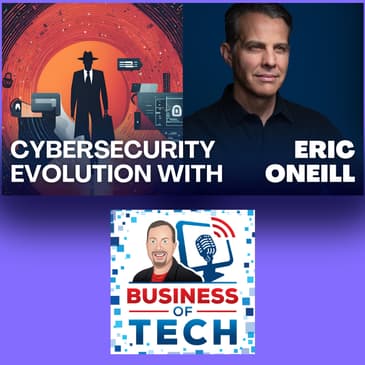
Host Dave Sobel engages in a compelling conversation with Eric O'Neill, a former FBI operative renowned for his role in capturing notorious spy Robert Hansen. The discussion delves into the evolution of espionage over the past two decades, highlighting how traditional spycraft has transitioned into the realm of cyber espionage. O'Neill explains that while classic methods like dead drops and clandestine meetings still exist, the majority of modern espionage is conducted through cyber attacks, where attackers exploit vulnerabilities in systems to gain access to sensitive information.
O'Neill emphasizes the importance of understanding the changing landscape of threats, particularly the misconception that insider threats are the primary concern. He points out that attackers often create what he terms "virtual trust insiders" by stealing credentials and infiltrating organizations from the outside. This shift in tactics underscores the need for businesses to focus on robust cybersecurity measures, including better authentication practices and employee training to recognize phishing attempts.
The conversation also touches on the complexities of the cybersecurity industry, where the balance between providing solutions and generating profit can create tension. O'Neill argues that while technology companies are developing products to combat cyber threats, the focus should also be on fundamental practices such as implementing multi-factor authentication and improving software quality. He advocates for a proactive approach to cybersecurity, encouraging organizations to adopt counterintelligence strategies to anticipate and thwart potential attacks before they occur.
As the episode concludes, O'Neill discusses the future of cybersecurity in the context of artificial intelligence. He notes that both cybercriminals and cybersecurity professionals are increasingly leveraging AI, leading to a new battleground where AI systems will play a crucial role in detecting and responding to threats. This evolution presents both challenges and opportunities, as the fight against cyber threats becomes more sophisticated and complex, requiring continuous adaptation and vigilance from organizations and individuals alike.
Supported by: https://www.huntress.com/mspradio/
About Business of Tech: The daily MSP news and analysis podcast for managed service providers and IT services leaders. Host Dave Sobel covers AI for MSPs, MSP pricing and profitability, MSP M&A and private equity, vendor partner programs, MSP cybersecurity and liability, and MSP operations — and answers the question every story raises: Why do we care? Produced by MSP Radio.
💼 All Our Sponsors
MSP Radio is supported by our partners:
ABC Solutions · CometBackup · Firetail · Guardz · HaloPSA · LogMeIn · Mailprotector · Pax8 · Rythmz · ScalePad · TimeZest · Transit AI
Supporting the IT services community through insights, analysis, and transparency.
🚀 Join Business of Tech Plus
Get exclusive access to investigative reports, vendor analysis, leadership briefings, and more.
👉 https://businessof.tech/plus
🎧 Subscribe to the Business of Tech
Want the show on your favorite podcast app or prefer the written versions of each story?
📲 https://www.businessof.tech/subscribe
📰 Story Links & Sources
Looking for the links from today’s stories?
Every episode script — with full source links — is posted at:
🎙 Want to Be a Guest?
Pitch your story or appear on Business of Tech: Daily MSP News & IT Services Analysis
💬 https://www.podmatch.com/hostdetailpreview/businessoftech
🔗 Follow Business of Tech
LinkedIn: https://www.linkedin.com/company/28908079
YouTube: https://youtube.com/mspradio
Bluesky: https://bsky.app/profile/businessof.tech
Instagram: https://www.instagram.com/mspradio
TikTok: https://www.tiktok.com/@businessoftech
Facebook: https://www.facebook.com/mspradionews
Hosted by Simplecast, an AdsWizz company. See pcm.adswizz.com for information about our collection and use of personal data for advertising.
[00:00:02] [SPEAKER_01]: Long time listeners know, I'm not always keen about talking about cybersecurity.
[00:00:06] [SPEAKER_01]: I'm a general technologist and I want to understand how it fits in the context of the overall business.
[00:00:11] [SPEAKER_01]: So I wanted to talk to Eric ONeill.
[00:00:14] [SPEAKER_01]: Now he's famous for having taken down Robert Hansen back two decades ago.
[00:00:19] [SPEAKER_01]: How has Spycraft changed?
[00:00:21] [SPEAKER_01]: And what does he think about the incentives in the space on this bonus episode of The Business of Tech?
[00:00:29] [SPEAKER_01]: Today's episode is supported by Huntress.
[00:00:32] [SPEAKER_01]: You want to focus on your clients and are always looking for ways to get more time.
[00:00:37] [SPEAKER_01]: Use Huntress' fully managed cybersecurity platform to fight off cyber threats.
[00:00:43] [SPEAKER_01]: Huntress is more than cybersecurity software for endpoints and identities.
[00:00:47] [SPEAKER_01]: It's a 24x7 security operations center.
[00:00:50] [SPEAKER_01]: It's security awareness training, community engagement, and dedicated partner support
[00:00:54] [SPEAKER_01]: with an average CSAT score of 99.3%.
[00:00:59] [SPEAKER_01]: Technology can only get you so far.
[00:01:02] [SPEAKER_01]: Human expertise is what's needed to truly elevate and protect small businesses.
[00:01:07] [SPEAKER_01]: And you get that with Huntress.
[00:01:09] [SPEAKER_01]: Secure your clients and help them thrive with the number one rated EDR for SMBs on G2.
[00:01:15] [SPEAKER_01]: Visit huntress.com slash MSP radio to find out more.
[00:01:21] [SPEAKER_01]: Oh Eric, thanks for joining me today.
[00:01:24] [SPEAKER_01]: David is great to be here.
[00:01:25] [SPEAKER_01]: So obviously you're most famous for your work gathering all the evidence leading to the arrest of Robert Hansen,
[00:01:31] [SPEAKER_01]: who's providing intelligence to the Russians for more than two decades.
[00:01:34] [SPEAKER_01]: Now it's one of those great spy thriller stories.
[00:01:37] [SPEAKER_01]: But I'd be remiss if I didn't say, but it's also from two decades ago.
[00:01:40] [SPEAKER_01]: Right.
[00:01:41] [SPEAKER_01]: Because so spy craft has really changed over the last two decades.
[00:01:45] [SPEAKER_01]: Talk to me a little bit about how spy craft has evolved since the Hansen story.
[00:01:51] [SPEAKER_00]: Absolutely, David.
[00:01:53] [SPEAKER_00]: And look, I wrote an entire book about this.
[00:01:54] [SPEAKER_00]: And great day, which is all about the evolution of espionage and why Hansen matters so much to this change in how cyber espionage espionage has transitioned.
[00:02:06] [SPEAKER_00]: Hansen was on the crest of a wave.
[00:02:08] [SPEAKER_00]: Right.
[00:02:09] [SPEAKER_00]: This new kind of spy.
[00:02:10] [SPEAKER_00]: He was one of the first spies, if not the first spy to drop data to his Russian spy masters.
[00:02:16] [SPEAKER_00]: And now this is going back in time.
[00:02:18] [SPEAKER_00]: And his earliest, his earliest espionage would have been, you know, copying paper and putting it under a bridge in Fox Stone Park.
[00:02:26] [SPEAKER_00]: But then he transitioned to copying data off computer systems at the FBI that were never secured from a trusted insider and dropping floppy disks.
[00:02:35] [SPEAKER_00]: He started with, you know, those five and a quarter big floppy ones.
[00:02:38] [SPEAKER_00]: And then he moved to the more secure three and a half.
[00:02:41] [SPEAKER_00]: And we caught him before he'd go to thumb drives.
[00:02:43] [SPEAKER_00]: So he presents this change in how espionage occurs.
[00:02:48] [SPEAKER_00]: And today those cloak and dagger traditional espionage dead drops and signal sites and, you know, dark meats and dark train stations.
[00:02:58] [SPEAKER_00]: You know, that still happens a little bit, but most of it.
[00:03:01] [SPEAKER_00]: Most of it is cyber attacks, cyber espionage where they intelligence officer who's a trained spy, but also very adept at penetrating computer systems
[00:03:11] [SPEAKER_00]: is using the same old techniques that Spice used for a millennia to fool a person into handing over their information.
[00:03:20] [SPEAKER_00]: And they can do that from wherever they are in the world.
[00:03:23] [SPEAKER_01]: Well, that's been obviously the business promise at all time.
[00:03:26] [SPEAKER_01]: There's a couple of areas I want to go through.
[00:03:27] [SPEAKER_01]: But the first one I hit on is the great things about stories like the Hanson story is that they do take life and they get into kind of regular people's minds.
[00:03:37] [SPEAKER_01]: It's something that permeates beyond those of us that focus on technology and it gets into broad culture.
[00:03:43] [SPEAKER_01]: But what's like one of the big wrong stories ideas that gets into users and end people's normal people's minds that we really need to address as it moves into pop culture?
[00:03:55] [SPEAKER_00]: Yeah, I think if you look at what happened in the Hanson story, this was a trusted insider who was in the FBI in an incredibly trusted position.
[00:04:04] [SPEAKER_00]: I mean, Hanson was at one point put in charge of catching himself put in charge of catching the legendary spy that had spied for two decades that was only known by a code name Gray suit.
[00:04:16] [SPEAKER_00]: And because Hanson was the top Soviet analyst at the time, they went to him and said, we need your help to figure out who Gray suit is.
[00:04:23] [SPEAKER_00]: Of course, he was Gray suit.
[00:04:25] [SPEAKER_00]: I mean, his code name when we later learned that he was a person of interest.
[00:04:28] [SPEAKER_00]: He was potentially the spy became gray day.
[00:04:31] [SPEAKER_00]: It's always a derivative.
[00:04:32] [SPEAKER_00]: So what do you need to know?
[00:04:34] [SPEAKER_00]: I think businesses especially focus too much on thinking that there could be some rogue element or a trusted insider when actually the the worst thing that can happen is someone from external creating what I call a virtual trust insider.
[00:04:51] [SPEAKER_00]: So what attackers are trying to do now is not use the three old traditional methods of recruiting one of your people bribery.
[00:04:59] [SPEAKER_00]: I'll give you money.
[00:05:00] [SPEAKER_00]: You give me data.
[00:05:01] [SPEAKER_00]: Blackmail.
[00:05:02] [SPEAKER_00]: I just learned something about you.
[00:05:04] [SPEAKER_00]: You don't want your wife or grandmother to know give me data or ideology.
[00:05:07] [SPEAKER_00]: You think like me.
[00:05:08] [SPEAKER_00]: You believe more like me and your your business is scum so you should help me take them down, right?
[00:05:14] [SPEAKER_00]: Those those still work to some extent but not as much as an attacker penetrating a flaw or a vulnerability in a system.
[00:05:22] [SPEAKER_00]: The easiest way to launch an attack and stealing someone's credentials and then becoming your employee within your environment so they can just go through and cherry pick whatever data they want.
[00:05:33] [SPEAKER_00]: That's the that is what that sort of low hanging fruit.
[00:05:37] [SPEAKER_00]: That's what we need to stop because that is the most prevalent way that a cyber attack happened.
[00:05:42] [SPEAKER_01]: Now I want to get to I'm going to ask you about two premises and I want to get your sense of it.
[00:05:46] [SPEAKER_01]: The first is the way I like to think about these organizations.
[00:05:50] [SPEAKER_01]: I think there's too much of an idea that either we're fighting raw, pure nation states where it's armies of cyber hackers or it's the old school idea of the hacker in the basement.
[00:06:01] [SPEAKER_01]: The lone wolf that hits back.
[00:06:02] [SPEAKER_01]: In fact, I really think that we ought to talk about this much more like Tony Soprano and an organized mafia ring that's just using business techniques rather than going around, you know, and visiting in person.
[00:06:15] [SPEAKER_01]: They are instead just running a data center, running a customer support operation.
[00:06:21] [SPEAKER_01]: You know, and we should think of them as businesses that just happen to ignore the law.
[00:06:26] [SPEAKER_01]: Is that a fair premise and way of thinking about the adversaries that most of us are thinking about?
[00:06:30] [SPEAKER_00]: Yes, no, I like the way you're going with this, Dave, because I've been talking on stage for a long time about what I call the cyber crime syndicate.
[00:06:38] [SPEAKER_00]: I take it up another level and I tell the story about, hey, I'm going to throw out a word.
[00:06:41] [SPEAKER_00]: Everybody keep that word in your head.
[00:06:43] [SPEAKER_00]: And then I say hacker the crowd and I say, OK, who here thought immediately of the movie version of the hacker, the kid in the basement, black hoodie,
[00:06:52] [SPEAKER_00]: it's typing away to keyboard hits one key and says what I'm in.
[00:06:55] [SPEAKER_00]: That's magic.
[00:06:56] [SPEAKER_00]: It's not the way it works, right?
[00:06:59] [SPEAKER_00]: These are very sophisticated.
[00:07:00] [SPEAKER_00]: Like you said, business entities that are using the dark web, this anonymous system of servers that hide the right identity.
[00:07:07] [SPEAKER_00]: You can allow them get paid through these cryptocurrency schemes to make trillions of dollars, not millions of billions,
[00:07:14] [SPEAKER_00]: but trillions of dollars off the backs of hardworking business and individuals and consumers all over the world.
[00:07:21] [SPEAKER_00]: They're incredibly sophisticated.
[00:07:24] [SPEAKER_00]: They have all sorts of business verticals from a help desk to help you get your ransomware decrypted after you pay them.
[00:07:33] [SPEAKER_00]: They have full media angles.
[00:07:36] [SPEAKER_00]: They will post messages that reporters will pick up on the cybersecurity beats.
[00:07:40] [SPEAKER_00]: They even have call centers.
[00:07:42] [SPEAKER_00]: So these are people who are just trained to launch constant impersonation attacks.
[00:07:47] [SPEAKER_00]: You know, hi, it's your grandson.
[00:07:49] [SPEAKER_00]: I'm lost in Panama.
[00:07:51] [SPEAKER_00]: I need you to wire me X or, you know, they will now use deep fakes to clone someone's voice so that you hear from your daughter thinking
[00:07:58] [SPEAKER_00]: she's been kidnapped and you have to pay the ransom.
[00:08:01] [SPEAKER_00]: They're very effective and what they have become incredibly effective of the best in the breed, the top class,
[00:08:06] [SPEAKER_00]: and there are about six of these cyber crime syndicates is ransomware attacks.
[00:08:11] [SPEAKER_00]: And that right there is the most critical threat to every business on earth because a ransomware attack,
[00:08:17] [SPEAKER_00]: if you're not prepared for it can have massive downstream consequences and even lead to bankruptcy.
[00:08:22] [SPEAKER_00]: Yeah.
[00:08:23] [SPEAKER_01]: And that's I mean, we have to point out that they are so good at what they do that they can teach grandma how to use Bitcoin.
[00:08:30] [SPEAKER_01]: Like that level of customer support that they can deliver versus those of us on the other side that oftentimes are not that as nearly as sophisticated.
[00:08:39] [SPEAKER_00]: That's true.
[00:08:39] [SPEAKER_00]: Although I was looking at a case where they sent grandma in the middle of the night to a CVS to a pharmacy that was open 24 hours.
[00:08:48] [SPEAKER_00]: They done the research and had her buy a bunch of gift cards and read off the numbers to them.
[00:08:55] [SPEAKER_00]: That's how they were getting paid because grandma and grandma are doing the Bitcoin.
[00:08:58] [SPEAKER_01]: And how clever they are to think of solutions to this idea.
[00:09:02] [SPEAKER_01]: But one of the things that I want to also talk about is that I think we've got an interesting dynamic that's happening in the cyber security world
[00:09:10] [SPEAKER_01]: that I kind of want to address.
[00:09:12] [SPEAKER_01]: And I always say that I'm not a cyber security expert.
[00:09:14] [SPEAKER_01]: I didn't get I didn't get into technology to go into cyber security.
[00:09:18] [SPEAKER_01]: I've been doing this long enough that, you know, I have a computer science degree and I got into it to build things and to help customers with technology.
[00:09:25] [SPEAKER_01]: And when I first started the threats were not that big a deal.
[00:09:29] [SPEAKER_01]: And even the biggest ones that was things like Code Red slowed us down but didn't do damn.
[00:09:34] [SPEAKER_01]: But now it's evolved in a very different different realm.
[00:09:37] [SPEAKER_01]: But we're still trying to run technology broadly.
[00:09:39] [SPEAKER_01]: But what's also come out is we have a whole industry that's appeared around solving this problem.
[00:09:45] [SPEAKER_01]: Right. The entire cybersecurity industry is designed to solve this problem that is both noble and in the business of making money.
[00:09:53] [SPEAKER_01]: And if they fully solve the problem, well, they stop making money.
[00:09:56] [SPEAKER_01]: So there's actually a tension there in that they will often build products to try and solve this problem,
[00:10:04] [SPEAKER_01]: which is usually a people process problem that they're trying to address with product.
[00:10:11] [SPEAKER_01]: And my the premise I kind of want to get your take on a little bit is that we're not actually focusing enough as a technology industry on doing the very basics very well
[00:10:23] [SPEAKER_01]: and saying we really ought to be good at a couple of things.
[00:10:26] [SPEAKER_01]: We ought to be good at good authentication and we ought to make users do things like physical keys or biometrics.
[00:10:33] [SPEAKER_01]: And we just need to move away from passwords to past keys and biometrics and something more secure.
[00:10:38] [SPEAKER_01]: We need to do a good job of making our software of higher quality, not just purely patch management.
[00:10:46] [SPEAKER_01]: But we need to embrace what Jenny Sirlie is saying around actually holding manufacturers liable the same way we do for automobiles.
[00:10:54] [SPEAKER_01]: Right.
[00:10:54] [SPEAKER_01]: You know, and we need to make our software of higher quality and we need to really be good at data protection that we need to be understand that,
[00:11:02] [SPEAKER_01]: you know, hey, we're going to fail sometimes and we need to be able to tell the criminals go to hell.
[00:11:08] [SPEAKER_01]: We'll be down for a day or two and we'll put things back together, but you get no money out of us.
[00:11:14] [SPEAKER_01]: How do you feel about a premise that looks more like that?
[00:11:17] [SPEAKER_00]: Yeah, so that's a lot.
[00:11:18] [SPEAKER_00]: Let's unpack it a little bit.
[00:11:20] [SPEAKER_00]: I think that cybersecurity companies are doing their best.
[00:11:23] [SPEAKER_00]: But as you said, it is a technological solution to a three-pronged problem.
[00:11:29] [SPEAKER_00]: Right.
[00:11:30] [SPEAKER_00]: You have people.
[00:11:31] [SPEAKER_00]: People will always make mistakes.
[00:11:32] [SPEAKER_00]: There's nothing you can do to train that away.
[00:11:34] [SPEAKER_00]: The statistics on spearfishing, that email that gets you to click on a link or open an attachment,
[00:11:40] [SPEAKER_00]: no matter how much training you give your workforce, 25% of people will click on that link.
[00:11:46] [SPEAKER_00]: They will just be fooled.
[00:11:47] [SPEAKER_00]: They'll be rushed.
[00:11:49] [SPEAKER_00]: They'll be stressed.
[00:11:50] [SPEAKER_00]: And so they're going to click on the link.
[00:11:51] [SPEAKER_00]: So you need that technology behind them to try to catch that mistake.
[00:11:55] [SPEAKER_00]: And by the way, 25%, I call it my 25% of breaches come from that spearfishing email.
[00:12:01] [SPEAKER_00]: Still, even though we've known about it for decades, the number one thing that anyone in the world can do to protect themselves,
[00:12:09] [SPEAKER_00]: the most basic thing is not done.
[00:12:13] [SPEAKER_00]: Turning on two-factor authentication, turning on multi-factor authentication.
[00:12:16] [SPEAKER_00]: Like you said, using some biometrics, which is way better than the password.
[00:12:20] [SPEAKER_00]: The password has not been useful for a very long time.
[00:12:24] [SPEAKER_00]: It can be cracked.
[00:12:26] [SPEAKER_00]: Breaking encryption is getting better.
[00:12:28] [SPEAKER_00]: Computers are getting faster.
[00:12:29] [SPEAKER_00]: Crunching passwords is a much more easier for dark web cyber criminals and spies.
[00:12:34] [SPEAKER_00]: So don't rely on a password.
[00:12:36] [SPEAKER_00]: And the big problem, of course, is everyone has the same password for every account.
[00:12:39] [SPEAKER_00]: It's already been lost in some other breach and they just have to buy it off the dark web for a couple cents.
[00:12:44] [SPEAKER_00]: So what do we need to do for the problem?
[00:12:47] [SPEAKER_00]: Everything you said, but what we really need to focus on is making people aware that awareness is the most critical thing.
[00:12:54] [SPEAKER_00]: And what I'm trying to do in the next book I'm writing, which I've written, which comes out next year,
[00:12:59] [SPEAKER_00]: is train people in deploying my FBI background, counterintelligence.
[00:13:05] [SPEAKER_00]: So just as you bring to the cybersecurity table that clever ingenuity and programming and building cool stuff,
[00:13:12] [SPEAKER_00]: my background is in security and hunting spies.
[00:13:16] [SPEAKER_00]: And my idea is that if we can bring the idea of counterintelligence to cybersecurity,
[00:13:21] [SPEAKER_00]: not just create a defense around a network, a defense around a data center, a defense around a hard drive,
[00:13:28] [SPEAKER_00]: but actually hunt actively hunt threats.
[00:13:32] [SPEAKER_00]: And like I said before they hunt you, that's what we did in the FBI to hunt spies.
[00:13:36] [SPEAKER_00]: We didn't just sit around waiting for Hansen to show up.
[00:13:38] [SPEAKER_00]: We were trying to find them before they attack.
[00:13:41] [SPEAKER_00]: Some of them get through if there will always be breaches.
[00:13:44] [SPEAKER_00]: So what we need to do is train people or make them understand all the ways attackers attack
[00:13:52] [SPEAKER_00]: and then how to act like a spy hunter, the things you can do to defeat them.
[00:13:56] [SPEAKER_00]: If everybody were to start to be brought into the same world you and I are in,
[00:14:02] [SPEAKER_00]: it would be much more difficult for attackers to compromise them
[00:14:06] [SPEAKER_00]: because most of what they're doing is just deceiving people.
[00:14:09] [SPEAKER_00]: Like I said, the same old spy tactics of your just in a modern attack surface.
[00:14:15] [SPEAKER_01]: Do you think there's evolution happening on the legal landscape that really will plug some of these holes?
[00:14:19] [SPEAKER_01]: I alluded to it a little bit.
[00:14:21] [SPEAKER_01]: Let's focus on kind of like the carousel between the technology industry and say the auto industry.
[00:14:25] [SPEAKER_01]: If an auto manufacturer ships a car with it and there's defects in it,
[00:14:31] [SPEAKER_01]: it gets discovered through investigation by the National Transportation Safety Board.
[00:14:35] [SPEAKER_01]: They'll have to bear some of the responsibility on the fixes.
[00:14:40] [SPEAKER_01]: But if I compare against the technology world and I'll pick on them because I can.
[00:14:44] [SPEAKER_01]: CrowdStrike is a great example.
[00:14:46] [SPEAKER_01]: CrowdStrike makes a huge mistake that is their mistake.
[00:14:49] [SPEAKER_01]: If they're not actually responsible for the financial recall, we just assume
[00:14:55] [SPEAKER_01]: we just assume while the market will correct it, they'll take the ding in revenue, customer trust.
[00:15:00] [SPEAKER_01]: They're not actually financially responsible for what they did.
[00:15:03] [SPEAKER_01]: Whereas an automaker who may make it might make a mistake.
[00:15:06] [SPEAKER_01]: Do you think there's changes required here in the legal landscape to prioritize this?
[00:15:12] [SPEAKER_00]: I think that if there was a regulation that would like the automotive industry or so many other industries
[00:15:17] [SPEAKER_00]: hold a CrowdStrike accountable, they would be a little bit more careful with quality control.
[00:15:22] [SPEAKER_00]: That said, I think that they are going to be pristinely careful with quality control going forward.
[00:15:28] [SPEAKER_00]: That said, Delta has launched a pretty gnarly lawsuit against them.
[00:15:35] [SPEAKER_00]: The market does correct these things.
[00:15:37] [SPEAKER_00]: These companies do end up paying small fortunes when these breaches occur,
[00:15:42] [SPEAKER_00]: assuming that the other party can show the damage.
[00:15:45] [SPEAKER_00]: And here I think that's going to be pretty easy.
[00:15:47] [SPEAKER_00]: I mean so many flights were grounded.
[00:15:49] [SPEAKER_00]: But then take a look at the mega company of mega companies, Microsoft.
[00:15:53] [SPEAKER_00]: They have breaches every other week and they're just too big to fail.
[00:15:58] [SPEAKER_00]: So what can government do?
[00:16:00] [SPEAKER_00]: If Microsoft goes out of existence, nobody can draft a Word document anymore.
[00:16:05] [SPEAKER_00]: So there needs to be better regulation.
[00:16:07] [SPEAKER_00]: And I think where this was going with an SCC rule that recently was published.
[00:16:14] [SPEAKER_00]: And the original iteration of that legal rule was going to require public companies
[00:16:20] [SPEAKER_00]: to not only have some of the aspects of zero trust and some of the better cybersecurity protect themselves.
[00:16:27] [SPEAKER_00]: Sort of trying to figure out a gold standard.
[00:16:29] [SPEAKER_00]: But it was going to require that every board of a public company have a cybersecurity professional there minding the shop.
[00:16:36] [SPEAKER_00]: Looking at the IT work, looking at these things all the way up at the board level
[00:16:41] [SPEAKER_00]: and then holding boards accountable.
[00:16:43] [SPEAKER_00]: Now the public companies all push back and it got watered down.
[00:16:46] [SPEAKER_00]: But I'd like to see something like that come back.
[00:16:48] [SPEAKER_00]: Because I think at that top tier management level, you have to have that buy-in.
[00:16:53] [SPEAKER_00]: Otherwise you can get lazy all the way down through the lower tiers.
[00:16:57] [SPEAKER_01]: So what do you think this is all going particularly as we think about AI getting as part of this?
[00:17:02] [SPEAKER_01]: And how do you see cybersecurity sort of evolving over the next say five years?
[00:17:06] [SPEAKER_00]: Well, you know, just as criminals have become incredibly adept at levering AI for everything from deep fakes to impersonation attacks
[00:17:14] [SPEAKER_00]: to these brilliant confidence scheme attacks that leverage entire fleets of AI avatars that show up on Zoom calls
[00:17:21] [SPEAKER_00]: and completely fool someone until they feel like all of their bosses have just told them to do something.
[00:17:27] [SPEAKER_00]: You know, real time in a conversation on a virtual call.
[00:17:31] [SPEAKER_00]: Cybersecurity is must and is working along the same lines using effective AI to fight the bad AI.
[00:17:39] [SPEAKER_00]: So, you know, we've been in this cyber war for a very long time and it's been mostly humans versus humans in this battle over our data.
[00:17:48] [SPEAKER_00]: Now it's going to be AI doing a lot of this fighting.
[00:17:51] [SPEAKER_00]: AI looking for the for the malicious AI, the malicious AI doing counter surveillance to try to find the cybersecurity AI.
[00:17:59] [SPEAKER_00]: It's really fascinating, but it's going to happen so much behind the scenes and rely so much on technology.
[00:18:06] [SPEAKER_00]: I think it's going to come found us poor humans.
[00:18:09] [SPEAKER_00]: I think you may be right.
[00:18:10] [SPEAKER_01]: Eric O'Neill is a former FBI operative who played the pivotal role in capturing Robert Hansen, one of the most damaging spies in US history.
[00:18:18] [SPEAKER_01]: Now a cybersecurity expert, national security attorney and founder of the Georgetown group.
[00:18:23] [SPEAKER_01]: He shares his insights on espionage cyber threats and the future of digital security.
[00:18:27] [SPEAKER_01]: Eric, if people are interested in learning more, where should they get resources?
[00:18:30] [SPEAKER_00]: Sure. You can go to my website, which is Eric O'Neill dot net where I have every resource there.
[00:18:35] [SPEAKER_00]: I also post all of my podcasts like this wonderful one on there and the writings.
[00:18:40] [SPEAKER_00]: You can also be ready for my next book, which is coming out early in 2025 called The Invisible Threat,
[00:18:47] [SPEAKER_00]: which is all the things we talked about how to think like a spy so that you can act like a spy hunter and defeat these threats before they defeat you.
[00:18:55] [SPEAKER_00]: Well, I'll have to have you back when the book comes out.
[00:18:57] [SPEAKER_00]: Thanks for joining me today.
[00:18:58] [SPEAKER_00]: Thank you so much, Dave.
[00:18:59] [SPEAKER_00]: It's been wonderful.
[00:19:02] [SPEAKER_01]: One minute, EDR and MDR providers are telling you you don't need a SIM.
[00:19:07] [SPEAKER_01]: And the next they're telling you to duct tape some logs together and upsell you an add on.
[00:19:12] [SPEAKER_01]: Blue Mirror offers a game changing cloud SIM platform designed for IT teams of any size.
[00:19:19] [SPEAKER_01]: Unlimited ingestion, unlimited integrations, managed detections, guided response, one year retention and 24 by 7 sock support.
[00:19:28] [SPEAKER_01]: And the best part, Blue Mirror is free for MSPs.
[00:19:32] [SPEAKER_01]: Don't settle for a SIM-ish add on.
[00:19:36] [SPEAKER_01]: Get started with your NFR account at bluemirror.com slash radio.
[00:19:41] [SPEAKER_01]: That's B L U M I R A dot com slash radio.
[00:19:48] [SPEAKER_01]: The business of tech is written and produced by me Dave Sobel under ethics guidelines posted at business of dot tech.
[00:19:55] [SPEAKER_01]: If you like the content, please make sure to hit that like button and follow or subscribe.
[00:20:01] [SPEAKER_01]: It's free and easy and the best way to support the show and help us grow.
[00:20:06] [SPEAKER_01]: You can also check out our Patreon where you can join the business of tech community at patreon.com slash msp radio or buy our Why Do We Care Merch at businessof dot tech.
[00:20:18] [SPEAKER_01]: Finally, if you're interested in advertising on this show, visit mspradio.com slash engage.
[00:20:25] [SPEAKER_01]: Once again, thanks for listening to me and I will talk to you again on our next episode of the business of tech.
[00:20:34] [SPEAKER_00]: Part of the MSP radio network.