
Jeff Borello, CEO and co-founder of Andromeda Technology Solutions, shares insights into the managed services landscape, particularly focusing on the needs of manufacturing clients in the Midwest. With over 30 years of experience, Borello discusses the evolution of his company from a break-fix model to a pure managed services provider, emphasizing the importance of project delivery and cloud migration. He highlights the company's commitment to providing flat-rate monthly services while maintaining a strong professional services team to address complex technical needs.
Borello notes that many potential clients often come to them already dissatisfied with their current managed service providers, primarily due to poor response times and unresolved issues. He explains that while customers may initially seek project work, the focus is on transitioning them to a managed service platform to better understand their needs. Cybersecurity is a significant concern, but many clients only prioritize it after experiencing an incident, leading to a challenging sales process that requires careful navigation.
The conversation also touches on the internal operations of Andromeda, which has been recognized as one of the best places to work in Illinois. Borello discusses the importance of documenting processes and ensuring adherence to them, as well as the challenges of maintaining a strong company culture in a hybrid work environment. He emphasizes the need for a middle management layer to facilitate day-to-day operations, allowing leadership to focus on strategic growth.
Looking ahead, Borello expresses a desire to streamline tools and integrate automation and AI into their operations while ensuring that customer service remains a priority. He acknowledges the potential disruptions that generative AI could bring to the industry and the need for a careful balance between efficiency and customer satisfaction. Ultimately, he remains optimistic about the future of Andromeda, driven by a strong team and a commitment to continuous improvement.
About Business of Tech: The daily MSP news and analysis podcast for managed service providers and IT services leaders. Host Dave Sobel covers AI for MSPs, MSP pricing and profitability, MSP M&A and private equity, vendor partner programs, MSP cybersecurity and liability, and MSP operations — and answers the question every story raises: Why do we care? Produced by MSP Radio.
💼 All Our Sponsors
MSP Radio is supported by our partners:
ABC Solutions · CometBackup · Firetail · Guardz · HaloPSA · LogMeIn · Mailprotector · Pax8 · Rythmz · ScalePad · TimeZest · Transit AI
Supporting the IT services community through insights, analysis, and transparency.
🚀 Join Business of Tech Plus
Get exclusive access to investigative reports, vendor analysis, leadership briefings, and more.
👉 https://businessof.tech/plus
🎧 Subscribe to the Business of Tech
Want the show on your favorite podcast app or prefer the written versions of each story?
📲 https://www.businessof.tech/subscribe
📰 Story Links & Sources
Looking for the links from today’s stories?
Every episode script — with full source links — is posted at:
🎙 Want to Be a Guest?
Pitch your story or appear on Business of Tech: Daily MSP News & IT Services Analysis
💬 https://www.podmatch.com/hostdetailpreview/businessoftech
🔗 Follow Business of Tech
LinkedIn: https://www.linkedin.com/company/28908079
YouTube: https://youtube.com/mspradio
Bluesky: https://bsky.app/profile/businessof.tech
Instagram: https://www.instagram.com/mspradio
TikTok: https://www.tiktok.com/@businessoftech
Facebook: https://www.facebook.com/mspradionews
Hosted by Simplecast, an AdsWizz company. See pcm.adswizz.com for information about our collection and use of personal data for advertising.
[00:00:02] It's an interview with an MSP. I love talking to find out what's going out in the field. So we're going to talk about what customers are buying, are they buying AI, how's the cyber sales process going, and more. Jeff Borello, he is the CEO and co-founder of Andromeda Technology Solutions, a managed services provider doing $9 million in annual revenues, joins me on this bonus episode of the Business of Tech.
[00:00:27] This episode is supported by Comet Backup. Are you seeking a fast, secure, and flexible backup solution? Comet Backup empowers you to manage all your backups from a simple centralized platform. Protect Windows, Linux, and Mac OS, as well as Hyper-V, VMware, Synology, Microsoft 365, and more. Manage backups on your terms. You choose where the data is stored, with on-prem storage and direct-to-cloud with industry-leading integrations like AWS and Microsoft Azure.
[00:00:56] Experience streamlined data protection and disaster recovery tailored to your needs. Visit CometBackup.com to start your free 30-day trial today. Get $100 free credit when you sign up with the promo code MSPRADIO. Start running backups in 15 minutes or less with Comet Backup. Well, Jeff, welcome to the show. Thanks, Dave. I am excited to be here.
[00:01:20] Well, likewise, it's always great fun when I get to have an actual managed service provider on the show to give me a little bit of sense from what's going on in the field. So before we get into the current, give me a little bit of the history. Talk to me about you helped co-found Andromeda Technology Solutions over 30 years ago. Give me a little bit of the sense of the journey and what you guys are up to now. Yeah. So 30 plus years ago now, we had our 30th anniversary in October and my two co-founders are still here with me day-to-day in the trenches doing our thing.
[00:01:50] You know, we all worked together at the same place way back in the day. We it was a high-speed data acquisition company. And we also, man, if we work this hard, we should do something for ourselves. What should we do? We said, oh, we take care of the network there. So let's, let's go start a networking company. Right. And as you know, this was way back before managed service providers. Right. It was just all break, fix. You went in the field. It was the whole nine yards. And just over the years, we've built it up. We have like 36 employees now, you know, internal service desk, professional services team, kind of the full gamut.
[00:02:19] And, you know, we've done some things over the years. We got kind of wide. We bought some companies. We did phone systems for a while. We did physical security for a while. We've now shed all that back off. And we're back to just being a pure play managed service provider. Gotcha. Now, a couple of the quick stats. Give me sort of revenue, reach some of the numbers to let people know your size. Yeah. Eight to nine million on the revenue. For the most part, most of our customers are in the greater Chicagoland area. Our current focus is more just manufacturers in the Midwest. So kind of the eight states kind of around us.
[00:02:48] And then slowly we'll over the, you know, kind of on our roadmap is to just expand that out over the whole U.S. at some point. Okay. Now let's get in specifically. You said something that was really interesting there. I want to learn a little bit more that you went to Gambit, sold a bunch of different stuff, but have reformed to focus just on managed services. If you were to describe the services offering right now, what are you delivering to customers? So, yeah, pretty much, you know, mostly project delivery.
[00:03:15] So migrating to the cloud, maybe it's a, you know, on-prem forklift server lift, although most of we're really trying to get everybody to the cloud that can go to the cloud. But, and then it's just, you know, flat rate monthly service for the most part. You know, that's, you know, and we still, we do some work in the field, but, you know, probably 90% of the work, it's done remote as much as we can. But if somebody is, you know, swapping a PC or whatever, we will put hands in the field and get that done.
[00:03:44] But it's pretty much just a traditional MSP with, you know, we have a really solid professional services team. So there's almost, you know, no project that's probably too technical for our team. We are pretty selective about what we do and don't do. And really that, that focus right now is really on serving manufacturers. That is, that is a niche that we are focused on for the last couple of years. We do have customers in other industries. We will take customers in other industries, but that is really where we're trying to put most of our learning and our effort.
[00:04:12] Well, you said two things that I think I want to hear a little bit more about too. The first is, and I want to just acknowledge it. You've said, hey, we focus on manufacturers. So you've chosen a vertical and gone deep on that. And the other thing that I found that was really interesting is while you do describe yourself as a traditional managed services provider, you led with project work. And you additionally went back to reinforce it as part of the pitch. Give me a sense. Is that the kind of work that customers are asking mostly for now? Is it they're asking for investments in technology?
[00:04:42] No, I mean, that was, no, it's still most of the people that come to talk to us probably generally already have. We have a managed service provider. Right. And we do have a co-managed piece to this. A lot of manufacturers have some IT presence. Now, a lot of times it's a ERP software specialist or some internal people that really need some help. So, but generally it's somebody looking to leave a managed service provider because they're not happy response time. They're not solving problems, whatever it may be. So traditionally it's that.
[00:05:10] We generally don't like to lead with a project because we just don't know the environment. Right. So we're happy to do whatever projects need to get done. We really generally like to get them on the managed service platform first and then figure out where, where they need help and how we can help them. Okay. Gotcha. Now talk to me a little bit about what customers ask for. Like, is it just the element of like, Hey, help us take over the technology. Are they specific about needs? Do they lean into cyber? Like, talk to me about what they're asking. Yeah.
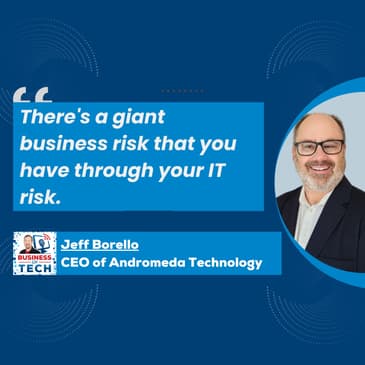
[00:05:40] So typically it seems like no one's asking for cyber unless they've had an incident. If they've had an incident, right now, that's the only talking point. But it still seems like there's this head in the sand approach to people like, well, it's not going to happen to me. So we really try to spend a lot of time talking to people. Listen, there's a giant business risk that you have through your IT risk. And you need to understand that. We do get people that'll show up. It's like, you know, we need a project done and our internal staff just can't do it.
[00:06:09] I think the other area we see is the internal staff is so busy day to day fighting the fires that they know they're not looking at what's down the road. Right. They're just so caught up in what's happening right now with people knocking on my door and their needs. They know they're not looking at what's out there. They know they're not looking at automation. They know they're not looking at AI. So we'll do where they're looking at like, Hey, we need some help. Now that's, I think, really hard for internal IT people to admit or for anybody for that matter. Right. People don't like to admit they need help.
[00:06:39] So I think once they come to that realization and they can convince their upper management of, you know, Hey, we need somebody to come in and augment us here. We're never looking to replace the IT because we want to, we want to make them look good. That's kind of our thing. So some combination thereof. Gotcha. Makes sense. So talk to me a little bit about the sales process then for the ones that have not had a cyber incident. You have those conversations about cyber. How, how easy or difficult is that sale right now? They're long. They're definitely, we, you know, last year was a tough year. You know, we, we think it was the election related.
[00:07:09] Just the lead generation was down. People were not making decisions. You know, I think the biggest challenge still is people. They, they, they think they want to change and they probably do want to change. But when push comes to shove, they don't want to make that final decision. Right. It's just, they think it's going to be too hard. It's going to be too disruptive. Um, so, you know, it's that, it's the typical thing. They, they reach out, you know, we get that initial 15, 20 minute, just assessment call. Hey, let's make sure we're a good fit. Um, you know, we are pretty selective about who we take in.
[00:07:39] So a lot of, a lot of those initial leads that come in, we do end up turning them away or we, we hand them to somebody else. Um, once we get past that first meeting, we will get a second meeting set up, whether that's in person or not. And typically we will take our onboarding engineer with us to that meeting, um, to kind of just look at what they have, how good or bad off is their situation. Um, and then just try to understand, okay, where are they in their journey? Understand where they're at in their maturity level. Um, and then at that point it's, you know, get a proposal together and, uh, get that in front of them.
[00:08:08] And, uh, and then hopefully we, you know, we give them a sign, but I do think there's that, that last step is always tough for people. Cause they're like, well, we've been with these people for five years. Yeah, they're not great. We hear a lot of that, but in the end it's the devil, you know, is often better than the devil. You don't know. And I feel really bad for places because there is a better answer out there, whether it's us or other people, but there are people out there just suffering through some terrible it. And it really does hurt their business. And I, and I feel bad that they think it's going to be a big problem to switch.
[00:08:36] And we try to convince them that we've been doing this for 30 years. We've, we've gotten pretty good at keeping the customer hands off in the process and being able to, to make that change for them pretty easily. Well, at some point they have to, they have to make the decision. I'm kind of curious, talk to me a little bit what's going on with your existing customers. So the ones that know you, love you, have engaged for a while.
[00:08:56] In particular, I'm interested in understanding their kind of digital, you know, I don't want to call it digital transformation as much as I get annoyed by the phrase, but much more I'm interested in the idea of how much conversation are they having around AI right now? And what do those conversations look like? Yeah. So we're definitely, you know, you know, we meet with the customers anywhere from once a quarter to once a year, depending on how often they want to get together and kind of talk up through their IT strategy and their roadmap and where they're going. And we do try to make that as much of a business conversation as, as possible.
[00:09:26] Some of the customers are great at that. Others are still thinking of us as their vendor and they call us when something's broken. Right. So still not a lot of AI conversations, a little bit, probably more on the automation. You know, I think for us, we tend to be, we try to be on the semi-cutting edge, but never the bleeding edge. So at least for me personally, I feel like AI is still a lot more hype than reality. So it's not a big conversation we're having. Like we're telling people, listen, you know, we get people come to say, Hey, I want to get a co-pilot license.
[00:09:55] Like, yeah, maybe we need to spend some time looking at your setup and your structure and your security before we go slap and co-pilot around. And it starts digging out information that you didn't know was out there. So I think it's cautiously discussing with them. You know, you want to look at AI, but why and where are you trying to go and try to really understand, is that the right tool to help them? Now, it's interesting you bring that up because that's exactly the data management conversation that I'm expecting users to have. How is that portion of it going as they discuss where they may want to do something with it?
[00:10:24] How is the data management help us get our data organized, secure, structured? How's that conversation going? It's generally not good, right? Because it's probably a mess, right? Just like ours is a mess. It's just one of the things you've been in business for 30 years. We've had the same structure for 30 years. And, you know, in matter of fact, this quarter, we were looking at sort of trying to get it organized. It's really hard, right? You set it up great initially. Everyone's got their folders. Everyone's got their groups. They're tight. And then over years, it just gets messy and chaotic.
[00:10:55] And I think it's really hard. You know, and we can only help them so much, right? It's their data. They know what these files are. They know what's good and what's not. That's, you know, we've gone down that road with a few customers and it's a struggle. And they undertake it. And, you know, we think it's going to take a couple months. And a year in, it's sometimes no better. So it's just, it needs a dedicated effort from their side. And we try to help. We try to steer. We try to guide. But, man, it is sometimes a tough road. Interesting.
[00:11:23] So I want to pivot a little bit and talk a little bit about what's going internal to the business. So Andromeda has been recognized as one of the best places to work in Illinois for three consecutive years. So congratulations. Sounds like you've got a few of those internal processes well thought out. What's the biggest sort of operational challenge you're dealing with right now? Really, there's probably, it's getting people, getting those processes documented, right? And we have a lot of them, right? But then getting to make sure that people are actually following them.
[00:11:52] And then we call it Overwatch. And then getting some level of Overwatch on top of that so that somebody's watching them to make sure they're happening. So actually, that's one of our major undertakings in Q2 is to come up with a structured process where we can have people document when they follow the process. And then all the way up the chain, all the way up to me so that I can follow up on my leaders. They can follow up on their managers and all the way up and down the chain. And we can say, yep, that guy that once a month, he's supposed to run a checklist on this process. He's actually running it.
[00:12:21] And we can verify that all the way up to me. Gotcha. How's the hiring landscape? Are you finding all the people you need? Is it really difficult out there somewhere in between? How's hiring doing? We've been really, really fortunate in that regard. We have not had some of the struggles that people have had. But, you know, we did, after COVID, we are a hybrid, a little bit more of a hybrid organization, right? Local people come in a couple days a week, but we have six or seven people out of state. So I think, you know, that opens up the hiring pool a lot.
[00:12:50] Creates some challenges around culture. You know, we do everything on video, right? So everybody sees everybody, but it's still not the same. But, you know, I think the best places to work in Illinois has helped. We've spent years and years, years ago, really building up the culture, building up our hiring process, and really getting that, you know, the soft part of the business, I guess, if you will, but the culture built up. That I think has really helped us find the right people. We have a lot of A players, and that attracts A players. So it's been really, really good for us, you know, and hopefully that continues.
[00:13:21] Now, it sounds like you've made some deliberate choices around culture and investment there. Talk to me a little bit about how that's been put together. So we've, you know, a couple of business operating systems that we've gone down. You know, we've dabbled a little bit in EOS. We did some scaling up, and we're currently using the metronomic system we've been using for a few years. But, you know, just undertaking that whole entire process. Start with, you know, what's the purpose? What's the why? Building up the core values. And following the metronomic system to just walk us through that.
[00:13:48] And, you know, every year or so, we kind of revisit them, make sure that they're still valid. You know, we have the typical, you know, posters on the walls. We have things we send out to people. And we talk about it a lot, like in every one of our daily huddles, a lot of times we'll say, okay, you know, talk to me about a core value story today or something that happened. So it's just building it all out, you know, adjusting it as you go, but then you got to keep it alive, right? You can't just have the poster on the wall without some discussions. So it tends to stay front and center.
[00:14:17] We've gotten probably a little loosey-goosey with it over the last year or two. And that's, again, something we'll reinvigorate this year to try to make sure that it's front and center and still talked about. So long, very time-consuming process, but I think it was very well worth it. And it really has become really a core part of the organization now. Now, I think one of the other things that reflects on the way organizations run are the organizational structures they put in place. You've got two other co-founders.
[00:14:45] You've got 35 people, you know, growing organization. Talk to me about the way the organization is structured. Yeah. So we started about a year and a half ago as part of our journey through the metronomic system, figuring out. So what metronomic says it has something called a three hag. So everyone generally knows the B hag, right? The big hairy audacious goal. A three hag is a three-year highly achievable goal.
[00:15:07] So the one we set two years or three years ago now was we wanted to build up and have a middle management layer that was really handling the day-to-day and get the leaders out of that role. So we're about a year into that, and it's going really well. So that was the piece we were always kind of missing was we had leaders and we had a bunch of, you know, individual contributors, but we were missing that middle layer in there. So we've been taking some internal people, training them, putting them in some positions to empower them a little bit. And that's been going really, really well.
[00:15:36] And that was the, that was kind of the next step for us. And, and, and then letting the leaders get their heads up more at the strategy level and be able to think about things bigger picture. So that's been really good. So how's it, how's it set up? Is it teams, pods, divisions, like walk me through like literally just the boring structure of how you put it together. Yeah. So the, yeah, so the manager is a managed, a service manager running the managed services team. There is a, one of our head engineers is now he's also, he's still our head engineer, but he's also managing the professional services team.
[00:16:06] And there's a knock manager. We have a manager of client success and then our sales manager, our sales manager. We have a sales guy of one who's also the sales manager at this moment. But so, yeah, so those five people meet with my, one of my co-founders who's the COO and they're, they're pretty much running the entire service part of the organization. Marketing and sales is still under me, but we have the whole entire, you know, service delivery all the way through purchasing and invoicing and all that under that, under the COO.
[00:16:34] And that's really, really freed me up to be able to stay very much out of the day to day and be able to way more into the strategy, looking at numbers, looking at levers to pull. So that's, that's been a pretty phenomenal change over the last year. So we've got a lot of the components of how you're running the business, where you're going, but I really want to get a sense of what you think is next. Because one of the things that I've been thinking about a lot for this space is we're really at an interesting point. Now, the technology itself gotten a lot more stable, a lot more easy, you know, easy to use.
[00:17:02] There's still stuff to work on, but particularly when we look at some of the technologies around what generative AI can do, and particularly in advancing with customers, there's a real risk that a good component of the day-to-day operations of basic help desk can go away with a combination of good generative AI and good automation. Where do you see your organization going over, say, the next 18, 36, 48 months timeframe?
[00:17:30] Yeah, I think that's, you know, that's a pretty long timeframe. But I think, you know, there's a couple of pieces. I think first one is just general tool reduction, right? We have way too many tools and they're all starting to get some overlap now. So I think the first thing is just getting our fundamentals down so we know what the tools are and then figuring out, okay, now where can we put automation into play? Where can we put AI into play? So I think that is absolutely the next big wave.
[00:17:56] But I think it sounds really great, but I think it's a bigger lift than people are going to think about, right? And I think for us, we've always been a partnership, people-oriented business. So I think one of the challenges for us, like we still have a receptionist that answers the phone, right? We do not have an automated attendant. We don't believe in it. But we just had that discussion yesterday, like, is this still really the way we want to do business? Does it still make sense, you know, in 2025?
[00:18:24] But then I think it's like, okay, while it's not a fundamental restructuring of the business, it almost is, right? I mean, you almost got to think about things from the ground up and say, okay, where can we automate? And where can we automate without negatively impacting the customer, right? Because you can probably automate the heck out of some stuff that the customer is not really going to like. So I think that's the challenge of trying to find that balance between what's good for us and it's still got to be good for the customer. And are you starting to think about the kinds of people that you hire differently?
[00:18:53] I assume you've leaned heavily into technical people. How much are you starting to think about business people and business analysts as part of your team? Definitely a discussion that's come up a couple times. As a matter of fact, we recently made a change around our account management staff where we replaced a few people with some more business savvy people, right? Where maybe before they were a little more customer service oriented, not technical. And now we've gone back to a little bit more technical business analysts. So absolutely something that we have made that made the change.
[00:19:21] And always a focus for us is looking at that business side of things now. Gotcha. And I'm going to start asking, what's the thing that keeps you up at night? What's the thing that you worry about most? I think it's always that you're going to wake up in the morning and you're going to grab your phone and there's been some sort of security incident at us or a customer, right? We have pretty good stack. We have a good team. But, you know, it takes one person somewhere to do something bad. And that's the big worry. You know, and something happens to one client.
[00:19:50] It's probably not bad. It's that, and I hate, I won't say their name, but the K word, right? It's that something happens and they get across the whole entire ecosystem. And now it's, that's all you do for the next year. That's the nightmare scenario for me. There is not much else that keeps me up. I sleep pretty good. I know we've built a good company. We have good clients. We have a good team. I sleep pretty well. Well, I think that's a great place to end it.
[00:20:15] Jeff Barella is the CEO and co-founder of Andromeda Technology Solutions, a managed service provider specializing in IT and building security solutions for manufacturing companies in the Midwest. With over 30 years of experience in the tech sector, he's led Andromeda to serve more than 500 customers, achieving annual revenues exceeding $9 million. And they have achieved the MSP 501 list and been named among the best places to work in Illinois for three years running. Jeff, thanks for joining me. This has been great fun. Yeah, thanks for having me, Dave. Appreciate it.
[00:20:46] Are you ready to get your brand in front of the tech leaders shaping the future of managed services? Here at The Business of Tech, we offer flexible sponsorship opportunities to meet your needs, whether it's live show sponsorship, podcast advertising, event promotion, or custom webinars. From affordable exposure options to exclusive sponsorships, our offerings are designed to fit businesses and vendors of all sizes looking to make an impact.
[00:21:13] Prices start at just $500 per month, making our packages a fraction of typical event sponsorship costs. Be a part of the conversation that matters to IT service providers worldwide. Join us at MSP Radio and amplify your message where it counts. Visit MSPRadio.com slash engage today to explore all the ways we can help you grow.
[00:21:41] The Business of Tech is written and produced by me, Dave Sobel, under ethics guidelines posted at businessof.tech. If you've enjoyed the show, make sure you've subscribed or followed on your favorite platform. It's free and helps directly. Give us a review, too. If you want to support the show, visit Patreon.com slash MSP Radio, and you'll get access to content early. Or buy our Why Do We Care merch at businessof.tech.
[00:22:10] Have a question you want answered? We take listener questions, send them in, ideally as a voice memo or video to question at MSP Radio.com. I answer listener questions live on our Wednesday live show on YouTube and LinkedIn. If you've got a comment or a thought on a story, put it in the comments if you're on YouTube, or reach out on LinkedIn if you're listening to the podcast. And if you want to advertise on the show, visit MSP Radio.com slash engage.
[00:22:37] Once again, thanks for listening, and I will talk to you again on our next episode. Part of the MSP Radio Network.