
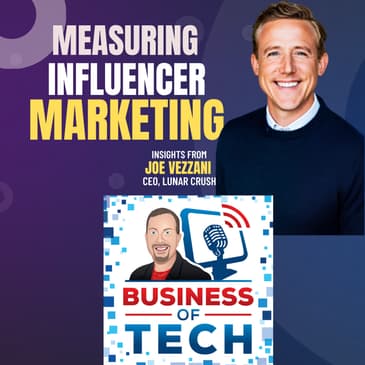
In the podcast episode, Joe Vezzani, the CEO and co-founder of Lunar Crush, delves into the evolving role of influencers in the buyer's journey, particularly emphasizing their impact on B2B markets. Vezzani points out how influencers, ranging from subject matter experts to anonymous creators, are now collaborating in teams and engaging with businesses in more informal ways, such as through direct messages on platforms like X. This shift signifies a significant change in the creator economy, where influencers have transitioned from individuals to integral parts of businesses' marketing strategies.
Furthermore, Vezzani stresses the importance of incorporating influencers into marketing campaigns in B2B markets. He highlights the necessity for businesses to adapt to the evolving landscape of social media and influencer marketing to effectively reach potential customers. By leveraging influencers, businesses can access their existing audiences, boost brand awareness, and establish credibility within their target market.
Supported by:
https://movebot.io/
All Sponosrs:
https://businessof.tech/sponsors/
About Business of Tech: The daily MSP news and analysis podcast for managed service providers and IT services leaders. Host Dave Sobel covers AI for MSPs, MSP pricing and profitability, MSP M&A and private equity, vendor partner programs, MSP cybersecurity and liability, and MSP operations — and answers the question every story raises: Why do we care? Produced by MSP Radio.
💼 All Our Sponsors
MSP Radio is supported by our partners:
ABC Solutions · CometBackup · Firetail · Guardz · HaloPSA · LogMeIn · Mailprotector · Pax8 · Rythmz · ScalePad · TimeZest · Transit AI
Supporting the IT services community through insights, analysis, and transparency.
🚀 Join Business of Tech Plus
Get exclusive access to investigative reports, vendor analysis, leadership briefings, and more.
👉 https://businessof.tech/plus
🎧 Subscribe to the Business of Tech
Want the show on your favorite podcast app or prefer the written versions of each story?
📲 https://www.businessof.tech/subscribe
📰 Story Links & Sources
Looking for the links from today’s stories?
Every episode script — with full source links — is posted at:
🎙 Want to Be a Guest?
Pitch your story or appear on Business of Tech: Daily MSP News & IT Services Analysis
💬 https://www.podmatch.com/hostdetailpreview/businessoftech
🔗 Follow Business of Tech
LinkedIn: https://www.linkedin.com/company/28908079
YouTube: https://youtube.com/mspradio
Bluesky: https://bsky.app/profile/businessof.tech
Instagram: https://www.instagram.com/mspradio
TikTok: https://www.tiktok.com/@businessoftech
Facebook: https://www.facebook.com/mspradionews
Hosted by Simplecast, an AdsWizz company. See pcm.adswizz.com for information about our collection and use of personal data for advertising.
[00:00:02] We talk about changes to the buyer's journey. This idea of how customers learn about products
[00:00:08] and services, and influencers are more and more a part of that. Got a little bit of a
[00:00:13] bias, I'm theoretically one myself. How does this industry work? And how can solution
[00:00:19] providers take advantage of it? So I spoke with Joe Vizani, he's the CEO and co-founder
[00:00:23] of Lootercush, a company that studies the space on this bonus episode of the Business
[00:00:32] of Tech. Data migrations are complex and irritating, creating days of frustration from
[00:00:36] setup to cut over. Movebot was built from the ground up to fix that. Movebot is the simplest
[00:00:43] and fastest data moving tool there is, fully hosted with no infrastructure, no virtual
[00:00:48] machines, none of that. Sign up, connect, scan, and you'll be moving data in minutes.
[00:00:54] Techs of all levels can now move terabytes per day with Movebot. The magic lies in how
[00:01:00] Movebot simplifies and auto-scales your migration with modern cyber technology, handling proprietary
[00:01:06] doc types, file name sanitization, permissions, and cut over with detailed reporting and
[00:01:12] alerting at every step. Start moving data like a pro at movebot.io
[00:01:20] Joe, thanks for joining me today. Hey, thanks for having me, Dave. I appreciate it.
[00:01:26] I want to talk a little bit about the buyer's journey as we think about it in B2B, because
[00:01:31] you spent a lot of time thinking about the way that's changed based on influencers. Give me
[00:01:38] a sense of the state of play for the way we think about a buyer and their information sources
[00:01:45] in 2024. Man, the landscape for buying and even social media in general,
[00:01:54] citizen journalism, there is so much that has changed with the influencer landscape that we
[00:01:59] see out there. At Lunar Crush, we are looking at everything across social media. We're a social
[00:02:05] media analytics company. We're pulling all this incredible data from places like X at TikTok
[00:02:10] and Reddit and YouTube. And we help people understand what these markets look like, whether
[00:02:15] that be investment firms or marketing firms to help make better decisions for their businesses.
[00:02:21] And what we are seeing is that there are tons of these smaller businesses that are kicking up
[00:02:27] that used to be just creators or just influencers doing one-off things. They have teams now.
[00:02:33] The way that you interface with those teams is a little bit more, I would say, ad hoc than
[00:02:39] normal. Some of this stuff is happening in DMs on X. You're getting a lead that comes in,
[00:02:47] and some of those are some of the best relationships that we've created
[00:02:50] are through social media. You're seeing a big shift in the creator economy when it comes to
[00:02:56] the way that business is done. I feel like I need to do a disclosure at this point,
[00:03:01] because at some level, that is literally my business. I'm a podcaster with an audience
[00:03:07] who communicates up. So I feel for my listeners, hey, you want to know that's actually my
[00:03:10] business. The reason I wanted to have you on the show was not about what I do, but actually
[00:03:15] more to think about what typical technology companies need to know about the way this works.
[00:03:23] Talk me through a little bit about the way influencers work for these technology
[00:03:30] companies that are going to consider, hey, we need to go to market and reach potential
[00:03:34] customers, but also our customers are learning things from influencers. Talk to me about how
[00:03:39] help them understand how this economy works. So influencers start in all sorts of different
[00:03:45] ways, and these platforms are all different in the way that they create content. You have a lot
[00:03:50] of, I think, hobbyists that start and they kind of think to themselves, can I do this?
[00:03:55] Can I create some sort of audience on here? And I think the best people have started
[00:04:01] with just an idea, hey, I'm just going to start putting myself out there a little bit.
[00:04:05] And I'm potentially a subject matter expert on a specific topic that maybe has a broad
[00:04:12] use case or maybe it has a niche. You might be the most influential person on ice baths
[00:04:18] and cold plunges, or you might be on just broad-based AI and you have some great opinions.
[00:04:24] And so these things start in all sorts of different ways. Some of these influencers
[00:04:28] start anonymously. There's someone that potentially is working at a business and they
[00:04:34] can't put their face and name out there the way that you or I can, but they want to get their
[00:04:39] ideas out into the world. And even in our industry, in Web 3, there's a lot of influencers
[00:04:44] and creators that get hired and you don't know who they are, right? But you do know that they
[00:04:49] have a great reputation online. And then how do you utilize a partnership there to
[00:04:55] potentially get your brand out there with these people? And so we've created some tools
[00:04:59] at Lunar Cross that we're launching that help this kind of micro influencer economy work where if
[00:05:04] you're a brand, you're used to hiring a creator and we have a lot of budget leak, as we say.
[00:05:12] You're kind of like it's the same thing as having a billboard. You don't necessarily know it's more
[00:05:17] of an awareness play where we're trying to shift that into more of a performance play,
[00:05:23] where it's I know exactly how many impressions I'm getting from this budget, from every influencer
[00:05:29] that's out there. And as the transparency and the data starts to happen, we're now able to correctly
[00:05:35] get those people the right amount of money for the campaigns that they're doing. And so
[00:05:40] as you look at social media data, there's a lot of different use cases here for understanding
[00:05:47] the creator economy. Now, you hit it on what I actually wanted to get into, which is the
[00:05:51] meat of this, the metrics. Like give us this feels like for people that are initiated into it
[00:05:55] that is, oh, it's really squishy. How do you measure this? These are just people posting.
[00:06:00] But you've spent considerable amount of effort like putting metrics around it. Walk me through
[00:06:04] some of the metrics that help understand the impact of creators. Yeah, I like that term,
[00:06:12] by the way, squishy. It's because social media has always been pretty squishy. We're
[00:06:15] trying to make it just a lot less squishy, right? There's still going to be that piece in
[00:06:20] there, but we've made a lot of progress in that. So what we're doing is we're looking at things like
[00:06:25] keywords, but we're also looking at every individual creator that's out there mentioning
[00:06:30] XYZ topic, right? Like mentioning different companies, mentioning Nike, mentioning Under Armour,
[00:06:36] mentioning PGA Tour, right? Or they might just mention the word pizza, right? And so we're
[00:06:41] trying to help understand the landscape of what all the interactions are. So if you're out there,
[00:06:48] specific example, and you're on X and you mentioned some sort of AI technology, right?
[00:06:55] And we categorize that AI technology. We're going to know exactly how many interactions
[00:06:59] you drove on that specific post, right? And so as we're collecting that in real time across all
[00:07:06] these different social networks, we're really helping to frame the market when it comes to
[00:07:12] what is the potential reach of all of these different individuals, and then the reach
[00:07:17] that happens on a potential campaign might be different for every single person, right? You might
[00:07:23] some, you know, it's always about the creative and then your audience. You might come up with some
[00:07:27] sort of epic post and epic creative that just goes viral in just that one moment. So we want to
[00:07:32] be able to reward you for that when a brand is hiring you for their services. And so,
[00:07:40] you know, I think there's a really cool thing that happens here where creators were bridging
[00:07:45] the gap for them that they can't really monetize as well as they want to on some of these social
[00:07:50] media channels. And for brands, we're helping create a lot of transparency around, hey, I've got a,
[00:07:55] you know, $100,000 budget. I don't want to just go pick five creators and then maybe not
[00:08:00] have as much creative control over what's going on. It's more about amplifying some of the
[00:08:05] things to put out into the world, right? They have the perfectly crafted post, you know,
[00:08:09] the perfectly, you know, created production piece of creative content that they put out there.
[00:08:14] And sometimes they just need amplification of that. And so we're trying to kind of help
[00:08:18] create the transparency and bridge that gap. Now, you look at this a lot. Help me understand
[00:08:24] the dichotomy here of viral versus consistency because the traditional idea in marketing is
[00:08:30] always the idea of, look, look, a good consistent message over time gets heard. You know, we
[00:08:35] hear all of the folklore myths of like, oh, it's seven touch points before a customer
[00:08:39] remembers you, those kinds of things. But the real message there is about deliver a consistent
[00:08:44] message over time so that it's heard versus a viral impact. Everyone, you know, there's this idea
[00:08:51] of chasing a single viral impact where that's going to make the difference. But you've looked
[00:08:56] at the data. Talk me through like, what is the right way to approach this and think about
[00:09:01] the outcome that you want? It's a little bit of both, I would say. And you need that
[00:09:07] consistency in your messaging to stay out there. You have your current audience that you're creating
[00:09:12] content for. And so your current audience is, you know, maybe a little bit more interested
[00:09:17] in the changes around the products or the services that you've created. And so you're
[00:09:21] trying to kind of keep them updated on little things that you've changed. And then you
[00:09:25] potentially might have a larger brand launch or redesign or something that you do where
[00:09:30] you're always, you're always hoping for some piece of virality in what you're doing there.
[00:09:35] And but what you really end up seeing in that is you don't just start, for most brands,
[00:09:40] just shooting straight up. You don't go from, you know, if your baseline is, hey, we get 100
[00:09:45] new customers a day, right? And then that's your kind of consistent piece. You might have a viral
[00:09:49] moment, maybe you have a 500 customer a day. You're most likely not going to see that trend
[00:09:55] continue unless you've just completely changed your product and launched something brand new
[00:09:59] that the world's never seen suddenly, right? Then maybe you're going to launch something
[00:10:02] new and you're going to see that increase. But what you tend to see and what's nice about
[00:10:07] having a little virality that happens in what you're doing is you might see a higher low, right?
[00:10:14] You might go from, hey, we're now, you know, we were at 100 kind of was our average a day.
[00:10:18] Maybe we're now at 120, right? And, you know, it kind of comes back down from that 500 to that
[00:10:23] 120. And so you're just kind of trying to build on top of that. And so that's why you see,
[00:10:28] you know, people go after a celebrity and doorspin or something like that. They see a bam,
[00:10:31] they see a huge spike in what they're doing. They're probably going to see a little bit of a
[00:10:36] tail off in conversion, right? Because you've got people that are just kind of trying something and,
[00:10:40] you know, dusting something off and seeing if they can figure it out. But it's still, I think
[00:10:45] it's a positive thing to try for both. Obviously, you just have to stay consistent,
[00:10:49] right? Social media is all about consistency, staying relevant, staying within the algorithm.
[00:10:54] But definitely go for the virality when you can.
[00:10:57] Now how much is that offset by B2B? Particularly because one of the things that I
[00:11:02] love B2B is that you don't need to do the same amount of volume because the value of individual
[00:11:07] customers is so much higher, right? You know, we're doing, you know, relationships where we're
[00:11:12] talking thousands or hundreds, tens of thousands of dollars in terms of the sale when it's a
[00:11:17] technology conversion versus a single consumer buying a single product, which is, you know,
[00:11:21] much lower. How much balance and what data should be looking at when you think about
[00:11:27] it from a B2B perspective? Yeah, I think we're seeing this a little bit with open AI and chat GPT.
[00:11:34] You know, it went viral from a retail standpoint and now they're in there trying to create
[00:11:39] B2B products for businesses that have maybe a closed loop of their data. They don't want,
[00:11:45] businesses don't want their data going into this open loop and training this large set of
[00:11:50] this large data set for open AI to then go and resell. And so I think when it comes
[00:11:55] to social media, social media is a great place. You know, I kind of look at Slack,
[00:11:59] when this is like a good Slack example of Slack started where there were pods of people at
[00:12:05] advertising agencies or small companies that started to utilize Slack from a B2C perspective,
[00:12:11] right? They didn't have the, you know, a lot of these companies, they didn't have,
[00:12:16] you know, contracts in place with their HR department or, you know, procurement to go
[00:12:20] and use Slack, but little small teams started using it because it was just a
[00:12:24] straight up better product, right? The communication was better. The efficiency was
[00:12:27] better. And then it started to grow into this kind of B2B business from there. So I think you,
[00:12:33] you really, it's a great business model and you love to see the retail kind of spider
[00:12:39] into an organization. And then Slack would come in and say, Oh, you have 15 people working
[00:12:44] here. Let's do this large one year reoccurring contract. And now we have ARR as a business
[00:12:50] and put that together. So I think that's a really interesting business. And I think that's a really
[00:12:55] effective way of getting new technology into a business is to get it loved by the people
[00:13:00] that are making decisions and maybe some of the product managers within that business.
[00:13:04] And so I think that, that social media game is a little bit different where you're trying to
[00:13:09] get some attention. But then that turns into a relationship business pretty quickly.
[00:13:14] When you have large contracts, you've got someone at that business that's got to pay for it.
[00:13:18] You've got to get the contract signed and then you got to get the bill paid and you got to go
[00:13:22] through all that landscape. So it's just a little bit of a different game when you're
[00:13:26] talking about straight up B2B, but the awareness and the coolness of something still kind of lives
[00:13:32] on social media and lives in the B2C space. I'd be remiss if I didn't ask, what's AI doing
[00:13:38] to shift this? Because it feels like this would be a space that would be right for a
[00:13:42] little bit of impact and disruption from AI. What are you seeing?
[00:13:46] AI, everyone in the startup world is using AI in some way now. We use AI at Lunar Crush to
[00:13:54] understand what sentiment looks like. Every single post that we pull in, we're utilizing
[00:13:59] five or we're going on six different open source models to try and understand,
[00:14:04] is this a positive post? Is this a negative post? What's being said here? Are there other
[00:14:09] keywords that relate to what's being said here? AI has just found its way into tons of technology and
[00:14:17] it will continue to find its way at businesses utilizing this stuff on the back end. On the
[00:14:23] front end, there's been a lot of pretty amazing examples that are starting to come out with single
[00:14:27] use AI, some of them around customer support, I would say. There was a company that I think
[00:14:33] they've already found $47 million in efficiency with their customer support, where the customer
[00:14:38] support can answer these questions in about a fifth of the time. They're answering more questions
[00:14:45] and they're finding that maybe there's not as many customer support people are going to need.
[00:14:50] I think you're just going to continue to see AI disrupt and some of these single use businesses
[00:14:57] where you can train just a specific, everything on law and all the legal framework that's
[00:15:03] out there for one specific niche. That's going to start to be some software that a lot of businesses,
[00:15:09] especially smaller businesses, if the price is right can start to utilize. If I was out there
[00:15:15] selling to 10,000 different SMBs out there, I would be looking for the next single use AI
[00:15:21] disruptive software that's out there that is looking for channel or vertical management
[00:15:27] and can have someone that can help translate that language of, hey, this really difficult
[00:15:32] AI thing is going to help solve this for your business. That's a big piece of what's happening
[00:15:37] and where the disruption is coming from. I want to make this conversation a little tactical
[00:15:42] for people. You're a person who spends a lot of time thinking about this space,
[00:15:46] thinking about social media and influencers. Can we give one or two really tactical
[00:15:51] piece of advice for leaders in their organizations to be thinking about as they want to measure
[00:15:57] success and be successful in leveraging this way of communicating? What guidance would you give them?
[00:16:04] I'd say there's a huge opportunity. If you're not as good at social media or you don't think
[00:16:10] you're a social media person and you're a CEO of a company, I would say don't worry about that.
[00:16:16] Just try it and see what happens. X is a great place for thought leadership as a CEO or as
[00:16:22] a manager of a business or a CMO to go and just put your ideas into the world and start talking
[00:16:28] about your business. It's a much more accepted thing to be out there and maybe talk about your
[00:16:34] day a little bit, maybe have some inspirational quotes that are out there that's something
[00:16:38] that you're thinking about each morning. Then as you go along throughout your day,
[00:16:42] you're just thinking about, hey, what are some of the insights that I heard throughout my day?
[00:16:46] Who are some of the people that I talked to that I thought something was interesting
[00:16:50] and start posting those things? Start putting that out there. I think you will be wildly surprised
[00:16:56] as to the inbound that you get from a quote, founder-led movement when it comes to your business
[00:17:02] and what you're working on because that literally is the goal of the entire internet. We're able
[00:17:07] to connect with people in other niches that maybe we didn't think were out there. Those people
[00:17:12] are out there and whatever you're into and whatever business that you're doing,
[00:17:15] those people are out there on social media and they're just waiting for great content to come
[00:17:19] out there. I'd say it's never going to be perfect. Your first 100 posts or whatever content that you
[00:17:25] do is, it's not going to be that good and that's fine. Just keep plugging through and you'll get
[00:17:30] your fans. Well, give me a little... You've mentioned ex a couple of times, but they're not the only
[00:17:35] player out there. In particular, we've seen a big resurgence of LinkedIn for another kind of
[00:17:40] market. Give me your sense of the lay of the land of the different tools and what the
[00:17:45] audiences are just from a high level so that people can match to where their relevant audience is.
[00:17:53] Yeah, it's a great question. I think LinkedIn for sure is business and B2B oriented.
[00:17:59] You're out there. You're probably not going to be posting a sunset on LinkedIn.
[00:18:06] You're going to be really sticking to your business and what you're seeing in your business
[00:18:10] if you're hiring. You're really going to focus there on innovation or maybe you put
[00:18:15] together a really awesome presentation at your business and you're like, hey, I think this would
[00:18:19] be a great thing to share. Here's how we see the world and here's how we see something that's changing.
[00:18:25] X is... There's a lot of really awesome stuff on X too. I think it's the ability for a
[00:18:31] business leader to get in and mix it up a little bit. You don't have to get overly
[00:18:37] opinionated on what's going on. You can, but it does create the ability to get more
[00:18:43] followers faster and really spread out and do more networking, I would say.
[00:18:49] And quality networking of people that are around the world that you may never have run into.
[00:18:54] Instagram is... That's more e-commerce oriented. A lot of... If you're flipping through Instagram,
[00:19:00] I'm sure you've been targeted with an ad that is probably extremely relevant to what you're
[00:19:05] looking for. You're probably going to get an ad. If you are going on a vacation,
[00:19:10] you're going to get ads for new beach towels or something like that. So I'd say, if you're into
[00:19:15] e-commerce, you're probably all over Instagram already and that's the nut that you're really
[00:19:19] trying to crack. Reddit is a completely different place. They also just went public here.
[00:19:25] There is long form on Reddit. There are people that spend their entire lives moderating
[00:19:31] some of these channels and creating niche culture. So I would say, if you're someone
[00:19:35] that likes to be able to write long form content and really dive into some specific... I'm sure there's
[00:19:44] AI subreddits that are out there, if that's what you're into or
[00:19:49] hardware, computer hardware subreddits, there's so much there to get into. I would say you're
[00:19:54] probably not going to get a bunch of inbound leads out there, but it's a great place to
[00:19:59] research, I would say. And then TikTok... We'll see they could be banning TikTok here in the US.
[00:20:06] They just passed a bill. So that's a little bit of a tougher one, I would say depending if you're
[00:20:13] out there trying to sell software as a B2B leader out there, TikTok might not be the place for
[00:20:20] you, but again probably more e-commerce oriented businesses that are out there trying to have
[00:20:25] that viral moment hiring influencers that have huge audiences to wear a watch that you're selling
[00:20:31] or a hat that you're selling, you'll have a lot of effectiveness there as well.
[00:20:37] Joe Vazzani is the CEO and co-founder of Lunar Crush, a company that provides real-time data
[00:20:43] analytics and insights. He's got a diverse background spanning finance, technology, advertising,
[00:20:47] sales and marketing. He's a seasoned entrepreneur and expert on leveraging data to drive competitive
[00:20:52] advantage. Joe, how can people get in touch if they wanted to learn more?
[00:20:57] You can check us out at LunarCrush.com. My Twitter handle, I still call it Twitter is just
[00:21:03] jovesjevezz, hit me up in the DMs, love to hear from you.
[00:21:08] Joe this has been great thanks for joining me. Thanks Dave.
[00:21:13] The business of tech is written and produced by me, Dave Sobel under ethics guidelines posted
[00:21:19] at businessof.tech. If you like the content, please make sure to hit that like button and follow or
[00:21:25] subscribe. It's free and easy and the best way to support the show and help us grow.
[00:21:31] You can also check out our Patreon where you can join the business of tech community
[00:21:36] at patreon.com slash msp radio or buy our why do we care merch at businessof.tech.
[00:21:44] Finally, if you're interested in advertising on this show, visit mspradio.com slash engage.
[00:21:51] Once again, thanks for listening to me and I will talk to you again on our next episode
[00:21:56] of the business of tech. Part of the MSP radio network.