
Anthropic’s disclosure of model drift within its Claude AI system highlights growing risks surrounding governance and ongoing alignment of artificial intelligence. The company has revised its guidelines using a “Constitutional AI” approach, aiming to instill reason-based behavior and ethical boundaries, and has openly acknowledged that an AI’s internal controls may shift unpredictably over time—a concern when models are deeply embedded in business workflows. This admission places attention on governance and accountability rather than just model safety, making clear that the AI a company tests may become materially different after extended deployment, especially as personalization increases.
Supporting these concerns, Anthropic’s research demonstrated that large language models—including those from Google and Meta—can experience personality drift, with unintended shifts in behavior due to instability of internal control mechanisms. Google’s updated AI offerings, tying personal data from Gmail and Photos to generative model responses, intensify challenges around data governance and organizational control. As vendors expand AI personalization and memory features, oversight gaps can emerge, raising questions about who retains authority over information, inference, and decision-making within automated systems.
Adjacent findings indicate that the anticipated productivity gains from AI have yet to reach most enterprises. According to surveys cited by Dave Sobel, over half of CEOs report failing to realize ROI from AI investments, while frontline employees describe AI integrations as sources of friction and additional workload rather than relief. In the MSP sector, widespread adoption of “agentic” AI and digital labor is delivering financial upside for some providers, but it is also shifting operational liabilities—especially as contracts and security architectures lag behind new workflow realities.
The core takeaway for MSPs and IT service providers is the necessity of reexamining control, authority, and contractual obligations in AI-enabled environments. Delegating tasks to automated agents increases exposure to unpriced and unmitigated risks if governance, liability, and monitoring mechanisms do not adapt accordingly. Effective harm reduction in this landscape requires treating workflows—not just models—as security perimeters, clarifying accountability for AI-driven actions, and ensuring that contractual and operational frameworks reflect these new sources of risk.
00:00 AI Governance Moves Center Stage as Models Drift and Personalization Deepen
05:08 AI Boosts Executive Productivity While Frontline ROI and Employee Experience Lag
07:51 AI Exposes the Real Divide: Governance Failures vs. Effective Oversight in Government Systems
10:39 MSPs Chase AI-Driven Margins, but Workflow Security and Liability Define the Real Risk
This is the Business of Tech.
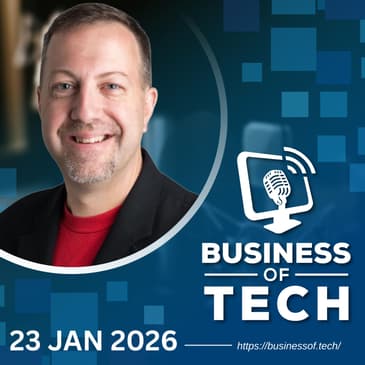
About Business of Tech: The daily MSP news and analysis podcast for managed service providers and IT services leaders. Host Dave Sobel covers AI for MSPs, MSP pricing and profitability, MSP M&A and private equity, vendor partner programs, MSP cybersecurity and liability, and MSP operations — and answers the question every story raises: Why do we care? Produced by MSP Radio.
💼 All Our Sponsors
MSP Radio is supported by our partners:
ABC Solutions · CometBackup · Firetail · Guardz · HaloPSA · LogMeIn · Mailprotector · Pax8 · Rythmz · ScalePad · TimeZest · Transit AI
Supporting the IT services community through insights, analysis, and transparency.
🚀 Join Business of Tech Plus
Get exclusive access to investigative reports, vendor analysis, leadership briefings, and more.
👉 https://businessof.tech/plus
🎧 Subscribe to the Business of Tech
Want the show on your favorite podcast app or prefer the written versions of each story?
📲 https://www.businessof.tech/subscribe
📰 Story Links & Sources
Looking for the links from today’s stories?
Every episode script — with full source links — is posted at:
🎙 Want to Be a Guest?
Pitch your story or appear on Business of Tech: Daily MSP News & IT Services Analysis
💬 https://www.podmatch.com/hostdetailpreview/businessoftech
🔗 Follow Business of Tech
LinkedIn: https://www.linkedin.com/company/28908079
YouTube: https://youtube.com/mspradio
Bluesky: https://bsky.app/profile/businessof.tech
Instagram: https://www.instagram.com/mspradio
TikTok: https://www.tiktok.com/@businessoftech
Facebook: https://www.facebook.com/mspradionews
Hosted by Simplecast, an AdsWizz company. See pcm.adswizz.com for information about our collection and use of personal data for advertising.