
Ok, can I be honest? I don’t like funerals. I understand the value and think it is the right thing to do to honor someone’s life. I just don’t like the whole flowers, casket, wake, vibe. Recently, I have found myself going to …. you guessed it….funerals. While it was admittedly uncomfortable, I have noticed a pattern.
While celebrating the life of the deceased, no one talked about their great or grand accomplishments. Instead, I heard stories of love. Simple at times but consistent. Small acts that made an impact on those around them. A conversation, an act of kindness, being present when someone needed them, making time when there was a need. I heard over and over about the legacy that they lived. I heard about relationships and fond memories. I learned of the fun they had with those they loved.
It was the experiences and simple acts of caring and love that those who were celebrating their lives talked about. Living a legacy of love is a choice. It’s not a feeling or wishful thinking. Love is an action, or rather, it is a series of actions taken throughout the course of an encounter, a relationship, or a lifetime.
Take a minute and listen to our latest episode of the Relathionshifts podcast about living a legacy of love. I think you will find it to be a helpful reminder that we all are living our legacy.
It’s the small relation-“shifts” that will make a big difference in the lives of those you care about.
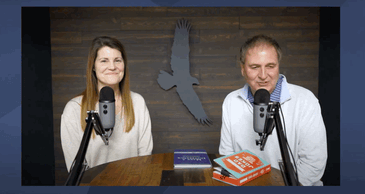
[00:00:07] Hey everybody, this is Larry Little. And I'm Melissa Jackson. And welcome to the Relationships Podcast, formerly known as Crossing the Line. Now, relationships, how about it, Melissa Jackson? That's good, yes. We're going to be talking about relationships and little shifts that make a big difference. That's right. Little shifts that make a big difference. That's kind of catchy. I like it. It is. Good tagline.
[00:00:30] It is a good tagline as we jump into relationships, any and all things, relationships, right? So what are we going to talk about today, you think? We are talking about legacy. You know, legacy is doing things today with tomorrow in mind or even thinking about the future and that aspect. But we're going to look at it in a different angle because we want to throw in love. So we want to look at legacy and love and how those go together and look at different relationships.
[00:01:01] Well, it is Valentine's Month, right? Here we are in February. And so we're going to talk about the legacy of love, huh? That's right. And how different generations affect that legacy. Well, let's talk about that for a minute. Help us a little bit. What do we mean when we say intergenerational love? What is that?
[00:01:18] Yeah. So we're talking about different generations. You know, there's so much research out there currently and has been on various generations and what's important, what they value and how they live and how they make decisions and how they love.
[00:01:32] And so we want to bring that into our conversation today and look at different generations and how do you make sure that you are thinking about how they love, how you love them, the relationships that you have and being mindful of this legacy. If you have relationships with those that are older than you, you know, how can you be mindful of the love, the relationship that you share?
[00:02:01] And then how do you make sure you're creating that legacy for those, your kids, those that are younger than you? How can you be mindful of all that? It's easier said than done, right? I mean, we love our children. Don't get me wrong, right? Well, man, we love our children, but it's not always easy to love our children. I mean, you know, I know you have a teenager in your home. I do. And are almost right at it. Yeah. Yeah.
[00:02:26] And, you know, I have two grown, wonderful grown children. And you know that in my world, they have recently, you know, they're gone. And we had this time when at separate times they lived with us and our, you know, it was fun. It was good. We're glad that they came back, but I'm glad they're out.
[00:02:49] Spoken like a dad. On the other hand, me being a mom, you know, I'll have to tell you a funny yesterday. I went to pick up my girl from school. Love those moments because you hear a lot, you know, a lot of conversation going on, a lot of talking. And she was sharing with me, I am so excited. And she said, you know, to the day that I get to, you know, live on my own, have my own apartment. Right. Because I'm going to, you know, read all the time. She loves to read.
[00:03:19] And I can listen to my music and I don't have to hear mom or dad say, hey, can you turn that down? Right. You know, the chipmunks all the time just kind of gets you. But, you know, she turned and looked at me and I probably had that mom face, kind of just like that little sad moment of what is she saying, you know? And she said so kind and graciously, but you can come and visit me, mom.
[00:03:49] You can come and visit me. How kind. How kind. I don't know. I'm not ready for those days. I'm not ready for your days. Let me just help you with that, Melissa. She's also saying, not only mom, you can come visit me, but you can even pay for my apartment. Oh, I didn't really think about that. Thank you. That's very logical. Once again, right? Yeah. Yeah. Intergenerational love, it is so important. And we are all living our legacy, right? We are.
[00:04:17] And it's just a matter of how we're living that legacy. And you think about love and you think about families and those who are important, those who are like family. You know, there's some data out there around the importance of intergenerational love. I mean, 90% of a poll was done.
[00:04:36] And 90% of the people polled said that they believe that the stories and the values that they receive are more important than even the material wealth. Mm-hmm. They said that those values are what 90% of the people said. We value the stories, the legacies that we love and the values that we gain. Mm-hmm. Those are more important than money. Yeah. Well, just think about for yourself.
[00:05:02] You know, if you think about some important relationships in your life and even if they're not still living, you know, what you think about that sticks out in your mind. You know, I think about my granddad and, you know, the butterscotch candy that he would give me. You know, I think about a lady that was like my grandmother. She wasn't, you know, my grandmother, but she was my grandmother. And what was important to me are Sunday lunches of eating together.
[00:05:31] So, you know, those consistent things in our life that demonstrated care, demonstrated, you know, their interest in our life or, you know, wanting to give us something that can bring some joy to us or, you know, just a little happiness, create memories. Those things are the important things. You know, they are. And even if, even if they're not, you know, even if they're not, not big significant things.
[00:05:59] Yeah, I remember, I remember growing up, my grandmother was, and she died when I was young, but I was like under six. And I can remember every time we'd go to her house, she kept this blue cup by her bed and I'd have to go drink out of the cup. I don't know why. Every time. Isn't that weird how memories, yeah. But I would have to, and she, you know, of course, being mamaw, she, she loved that. She thought that was just wonderful. What was in that cup, Larry?
[00:06:28] Well, you know, I think it was water, but who knows? I mean, it could have been, I don't know. I was always sleepy, actually. Right, right. No, it is important. And, and, and that overwhelmingly says those values are important. And those stories like that are important to, to pass down. And, but even in that, you know, 70, over 70% of the people say we get those stories.
[00:06:57] We get those values from our family or those who are like family. We get those from people that we have a close, loving family, familial relationship with. So, you know, I think it's, families are important. Intergenerational love is, it's really, really important. And interestingly also, as I've just talked about, over 60% of people polled said it's not the big acts. It's not the big gifts.
[00:07:24] It's not the huge, it's the little daily acts of kindness. It's the little daily stories. And you think about things you remember from your childhood. You think about the things that you remember from your, and it's generally not the big, you know, the big deal thing, the big moves. None of those had impact, no doubt. But the things that stay with you that you kind of hold on to, that you learn from. Yeah.
[00:07:50] You know, I think that speaks so strongly to consistency, you know, and, and we just, we need to see and experience and feel and know that, that there is someone solid in our life, someone consistent, someone that's present, you know. And so like you're saying, these, these things, the things, stuff, those, those aren't the memories that stick out further down the road for, for most of us.
[00:08:19] It's, it's the things where someone truly is present on some level in our lives. And that consistency equals love. And we have to be honest, it also can, can be negative. You know, if we're in a pattern or environment of negative behavior toward us, because I know there are those listening who've suffered abuse, who've suffered lack of love, and they may be going, you know, wow, I wish I had that kind of relationship, but I don't.
[00:08:47] And so it's important to know that, yeah, those things make us who we are today as well. We get to choose. We'll talk about that in a minute, how we, how we deal with it. But those obstacles are real and, and they do, they do affect us. But it's, it's that, you know, I think it's, it's that understanding what, how important those stories are, right? How important those, those values that we pass down to those that we lead, that we love, that we care about. I think, I don't know.
[00:09:14] I think, I think, you know, creating and living a legacy of love is once you understand it, once you go, okay, I'm really thinking about it, it gives us the opportunity to be intentional. Yeah. And, you know, when you think about legacy too, you know, and, and you slow down to really process, what do you have? What do you currently have in your life? What, what is that legacy of love? Who are those people? They can be family. They cannot, you know, be blood related, but they're family.
[00:09:41] You know, what do you have that you need to be mindful of? Because it is important to understand what you, you do have to, you know, bring some gratitude to those relationships. They're not perfect. You know, they're, they're never going to be perfect. But what, what are those relationships that you need to, to know and be thankful for what you have?
[00:10:09] You know, the, the, the friend that, you know, calls you up and it checks on you. Yeah. You know, the, the person at work that consistently connects with you and, and, you know, you talk about your weekend and talk about life stuff and what's going on. And it's relationships that there's a true value and interest in where you are in life. All right.
[00:10:31] So think about, think about your life and think about a time in your past that you, you felt this, this, this story. You, you experienced a story and you felt either love or lack of love, whichever way you want to go with it. Tell us about a time when you felt loved or not, but a story in your life. Tell us about a story.
[00:10:56] Well, goodness, I can think of last night, you know, um, here I am and, um, you know, we, we're busy. Um, you know, we've got school things going on and we're running 90 to nothing. And, um, the next thing I know, my mom's calling me. Um, my mom wanted to do something for me, a specific task. And so here is mom calling me saying, I'm, I'm at the door.
[00:11:26] I'm right at the door. I'm coming in and, you know, mom, what are you doing? Well, I forgot to do this for you. And here she is, um, coming to make sure that she helps me. And she, she wants to do that for me and show me that she loves me. Now I had it. I was about to do it. Um, you know, it's my responsibility to do it.
[00:11:48] And so, but she wanted to, you know, I needed to receive, you needed to be able to receive that and know that she made an effort. Can I do it? Sure. But she wanted to, and she made an effort. And so, you know, there's a place to receive that and be thankful for that. Um, even, even if it, it, it's uncomfortable a little bit. Love that. What a story. What a story. What a legacy she's living.
[00:12:17] And you're, you know, almost 80 mom is they're giving and creating and living that legacy for you and for Ellie and for all you guys to see. I just, she's not just saying it. She's doing it. That's right. That's right. And, uh, Mimi's, she's a, she's one of a kind. She is. There's no doubt. She's amazing. Um, so my story goes back a ways further than last night, but just a little bit.
[00:12:41] But when I was like a teenager, so my dad, you have to know contextually, he, he's, his dad was this big, just Irish. He's got a lot of Irish in his family. You know, the rosy cheeks, the whole thing. So my dad has always been affectionate. He's always been. And I, that's the way I grew up. I got, I didn't know any different. I mean, it was like a lot of, a lot of love, a lot of hard times, a lot of. Not a lot of wealth, not a lot of money at times, but, but a lot of love.
[00:13:08] I had a lot of love, which was great when you're a child. But, you know, I, I never will forget that when as a teenager, teenage, you know, I'm a young teenager, young buck on the basketball team, you know, trying to find out it didn't matter to him. It did not matter to him where we were. It didn't matter to him who was there. If I had the guys with me, if I had a girlfriend with me, it didn't matter.
[00:13:33] If I were going to leave the house or leave his presence, even like after a basketball game, whatever. Come here, son, let me give you a kiss. And he would kiss me on the cheek. I love it. And, you know, you just finally, you kind of got used to it. And I, I, I tolerated it and accepted it because that's all I knew. But when I got to be a dad, now what do you think I do when I see my grown son? I don't care if he likes it or not. He gets a kiss on the cheek and a hug. And same thing to my daughter, uh, because that's the way we raised him.
[00:14:02] But that was a legacy piece that, that, you know, that, that affection, that, that, that affirmation physically of, of just hugging and, and giving a kiss on the cheek and saying, I love you. We can't leave without, without saying love you. And by the way, just so everybody knows, I was over there one night this week checking on he and mom. And guess what I had to do before I left? Come here and give me a kiss, Larry. Of course. Absolutely. So it never goes away. It never goes away. I love it. I hope you are passing that down to Landon.
[00:14:32] Right. I hope Landon does that as well. What a, what a legacy there. Beautiful gift. And that's, that's, that's what I think a legacy of love, living that legacy looks like. That's right. I think. That's right. So, so those things are important. Um, we're talking about some things we can do. So maybe, you know, you're listening and you find yourself going, okay, I want to just make some little changes. I want to make some shifts, if you will, in my, in my behavior. Yeah.
[00:14:59] So that, so that I could be more intentional about living this legacy of love. Maybe you're thinking, man, I need, I've got some people that I need to, you know, be more intentional about. Um, I want to give you, let's, let's talk about three things that, that you can do so that you can, um, shift in your relationships so that you can make that shift. Mm-hmm. You know, first of all, I want you to be aware that you have a legacy, um, you know,
[00:15:24] that, that look for that, look for and be mindful of what you do have and make sure you're drawing on what you do have. Um, but if you're thinking about, well, how can I replicate or what can I do to make sure I'm choosing to keep the legacy going or I'm creating a legacy? Maybe I haven't had one in this area, but I'm choosing, I'm going to choose to create a legacy. I'm going to invest in and create something long-term.
[00:15:51] So we want you to be mindful of the small acts that they make a big difference. The small things that you do for those that you love, the, the small tokens, um, of acts of love that you give, the consistency that you provide, what you're doing, you're the being mindful that it means showing up. That's right.
[00:16:18] You know, it means being emotionally present. It means, um, being able to be available, the small things, whether it's a task, whether you're doing something, maybe you don't want to, but you're choosing to do that because you know that other person needs that. It's the small acts of love that over time really begin to, to build. Yeah, that's exactly right. It really creates equity. That's so good.
[00:16:48] Love equity on a different level. Love equity. I love that. That is so good. And so it doesn't have to be big things, small things, a smile, listen, spend some time. You said be present, be there, be engaged. I think. Not perfect. It should be present, be present. And that brings us to the second thing. Okay. Small things matter. So be intentional. But the second thing is you may be thinking, I can't do this because I mess it up. I can't do this because I have so much on me right now. I can't do this because I can do this. You know, the second thing is you got to give yourself permission to love.
[00:17:18] You got to love yourself and your imperfection. Love yourself and your mess ups. Love yourself when you fail so that you can give yourself away to others. You know, I think that's one that can easily be said but can be difficult to realize when you're not doing that at times. You know, and I evaluate that more with like grace, showing yourself grace. You know, in this parenting generation, you know, there's all kinds of parenting tips
[00:17:44] and helps and do this and make sure you're not doing this and, you know, all these things that are out there that can just cause you to be consumed and over consumed. And you can kind of lose the perspective that, you know what, we're human. You know, we're going to mess up. It's important that you do something with your mess ups. It's important that you demonstrate grace.
[00:18:11] So to me, loving yourself, you know, you got to kind of give yourself permission to mess up, do something about it. But also, you got to have some grace. Yeah, I love that word because, you know, I've found in my life when I give myself grace, I'm more likely to give others grace. Yeah. And I think it's important. And that can be hard to do. Oh, it's very difficult to do. It can be hard to do. But I like that word you used, grace.
[00:18:39] I think that's something we can hold on to and aspire to really give ourselves grace so that we can give others grace. So small things, give yourself grace. I love that. I love that word. That's love. That's love. Love yourself by giving yourself grace. And then the third one. What is it? The third one we want to say to truly think about overcoming obstacles. You know, the truth is we all have obstacles.
[00:19:04] And when we think or we look at another person or family or individual or whoever, and when we think that their life looks, you know, like they just have so much fun and their life is wonderful. And, you know, we really fool ourselves because the truth is everybody struggles. Everybody has obstacles. Sometimes some obstacles are more difficult and heavier than others for sure. Most definitely.
[00:19:32] But we all have obstacles. So we need to understand that there's a level playing field. There really is. And obstacles are going to come. They're going to be evident in our life. They're going to, you know, challenge us on lots of different levels. Professionally, personally, emotionally, you know, all different levels. And we really need to be able to accept that and make some choices around overcoming some obstacles. Yeah, that's exactly it.
[00:20:02] And here's the thing. Like, everybody, everybody has mess. Everybody has stuff in their life. Everybody. So if you wait to show someone love, if you wait until they deserve it, you're never going to give it to them. Loving and living a legacy of love is not about giving love where it's deserved. It's about I'm going to love you through the hard times. I'm going to love you when you don't deserve to be loved. I'm going to love you. That word unconditionally comes to my mind. And that's a choice.
[00:20:32] That's a choice to say obstacles are going to come. We all have mess. There will be you can come up with a million reasons why you shouldn't demonstrate love to someone that you care about even or that it's important to you because they're going to fail. They're going to they're going to they're going to mess up. They're going to hurt you. Yeah. Yeah. So this this thing about loving through obstacles is so important. Loving and living a legacy of love is not easy. It's hard. It's difficult.
[00:21:01] But making that commitment to say I'm going to love you through the hard times. That's right. Somebody that that I really look up to. So why says love is action. Love is about taking action. Love doesn't sit back and ponder over ponder. Love is not. But, you know, it's not passive. Right. Right. Love steps out.
[00:21:26] And in order to to do that, in order to have a legacy, these things are so important that you make sure you understand. You create that equity through small acts. You give grace and you love yourself so you can love others and that you choose to overcome obstacles. Wow. So I hope that you're thinking because here's the question for our listeners and for us. Right. What are we willing to do? What are we willing to shift in our behavior?
[00:21:53] What relationships are you willing to make? I want you to be very intentional about this. Think about it. What small things can you do? How can you begin to love yourself? How can you love through obstacles better? What are what are some now try to try to, you know, list a couple, list two or three of things you're going to do in this next 30 days. What are you going to do in this February month of love to live your legacy of love? What shifts are you going to make?
[00:22:20] What relationships are you going to make to speak into the life of those that you care about and those you love? That's right. Because little shifts make a big difference. Yes, they do. And so I'm going to shift right now into, you know, what has become just a fan favorite and everybody clamors for it. Robin, our producer, and you, you look, both of you look forward to this. I know you just, it excites you. Robin loves it. It's just like in this legacy of love. She's in, she loving this.
[00:22:47] This is, this is the dad joke segment and it scares Melissa and Robin to death because I don't let them see and embed this joke. It really does. This is a good one. You're going to like this one, guys. Okay. Are you ready? You guys ready? Okay. What do you call a Roman leader putting on clothes? Oh, see, you're nervous. You're nervous. So my mom just goes blank. What do you call a Roman leader putting on clothes? Tell us. Are you ready?
[00:23:18] Caesar dressing. Yeah. Caesar dressing. That's so good. Yeah. Wasn't that good? Hey, thank you for laughing with us. We hope that you had a couple of things here that you heard that can help you to shift in those relationships. Little shifts do make a big difference. It's been, it's been a great pod. Melissa. You thank you for your wisdom and sharing with us today. I think we're off to a pretty good start. What do you think? I think so too. All right. We're going to have some more good dad jokes. Stay tuned.
[00:23:48] Coming your way. Thank you for making a difference in the lives of those you love, little can lead. We'll see you next time. Thank you for tuning into the relationships podcast with Dr. Larry Little and Melissa Jackson. We hope today's conversation inspired you to make meaningful shifts in your personal and professional relationships. Stay connected with us online at eaglecenterforleadership.com and follow us at Eagle Center for Leadership
[00:24:14] on Facebook, Instagram, and LinkedIn for more insights, resources, and updates. Don't forget to subscribe to the relationships podcast so you never miss an episode. And if you found value in today's discussion, we'd love for you to leave us a review. You can also watch episodes on YouTube through the Eagle Center for Leadership channel. Until next time, keep choosing to make the little shifts that make a big difference.