
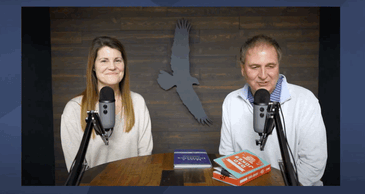
I've become more convinced than ever that the secret to a great trip isn't the destination... it's the expectations we bring with us.
Most vacations don't unravel because of bad weather, delayed flights, or even the occasional wrong turn. They struggle because everyone arrives with a different picture in their mind of what the "perfect vacation" should look like. One person wants adventure. Another wants rest. One wants to see everything. Another just wants to sit by the water. Neither is wrong, they're simply different.
The same principle is true in our relationships. Conflict often begins when we spend more time trying to control the situation than being flexible. Healthy relationships leave room for different personalities, different preferences, and different ways of enjoying life. They require self-awareness to recognize our own expectations and clear communication to express them. It means being curious to understand someone else's perspective, along with the willingness to be uncomfortable when things don't go exactly as we planned.
This week's episode of our Relationshifts podcast explores how to have a fun and successful vacation and more importantly, how to apply that to our relationships.
Whether you're traveling this summer or simply navigating everyday life, this conversation will help you enjoy both your vacation and those you care about a little more.
When we shift from controlling the experience to managing our expectations, it will make a difference in our vacations and our relationships.
[00:00:08] Well hello everybody I'm Larry Little and I'm Melissa Hamburg-Jackson and here we are I mean it we are in summer time. Don't you feel good? I love summer. I love the food of summer. I love the warmth until it gets like you know unbearable but we're right in the good place.
[00:00:28] Alright so you're grilling out it's summertime you know it's beautiful weather and your go-to on the grill hot dogs, hamburgers, what is it? What do you like? I like hamburgers. I like hot dogs too. I mean they're both really good. I like a hot dog that is a little burnt. How about you? Well you know I like that too. I'm a hamburger guy probably first just because I like a good hamburger. Who doesn't?
[00:00:56] But if the hot dog that we have this thing in our area I guess it's I guess it's everywhere but it's called Koneka. Yeah. Koneka sausage and their sausage and I love Koneka sausages on the grill and I don't know how to describe it. It's kind of like a little spicy sausage. Incredibly good and you put a little brown mustard and dip it in that. Do you put some cheese on the top of it and melted cheese on the grill too? I know. No. But I'm not a cheese guy but I'm sure a lot of people are. Is that what you do?
[00:01:26] That's true. You like the word cheese? Yeah and other things. I like vegetables on the grill. I like to grill vegetables. Well now you've gone into another genre so now we're looking at like what I would call an evening meal and so we're talking steak. We're talking a wonderful ribeye on the grill with grilled veggies. Come on. Man I'm hungry. Good. I need to eat.
[00:01:49] I will tell you and I'll you know we'll tell a little bit about our lifestyle here but we we make this thing in the summer because you have to do it outside. And you'll hear why we call it crack and we love it. It's crack because it's so addictive. It's so addictive. So you take green tomatoes, you take onion and okra, not oakree even though we're from the south, okra, take okra and you chop them all up, dice them up right?
[00:02:15] Right. And then you put flour and you shake them up and get flour real good and then you got this little and then you get a fry daddy and you know pour that oil in there, get it hot, sit it outside by the grill. And then so you know the idea is so you fry it, you fry that fried green tomato, you fry it over and then the idea is you have that along with your meal.
[00:02:38] It never happens like never because by the time they're coming out as soon as I can pop them in my mouth, I'm eating them like I don't think I've I don't know we've ever made it really to the table. Maybe we have but I love crack. So the summer food, I love crack. I'm addicted. What are we talking about? Well, this is this is timely because you just got back and I'm headed out and we're going to talk about vacation.
[00:03:03] Have you ever gone on a vacation and have you ever come back, you know, more tired than when you left? Oh, goodness. Where you need a vacation from the vacation. Yes. And I'm sure people can identify with that. They understand that. Yeah, there's always some some dynamics that go along with that. Hey, there there are. And, you know, it's it's kind of a something we don't talk about a lot.
[00:03:27] But but one of the things that we see, you know, that that we experience is vacations that don't meet our expectations. We come back maybe disappointed. Needs aren't met. Some people like to go and, you know, rest and renew. Some people like to go and see and getting all those different personalities built into this vacation. It can be quite complex. And what what we had had in our mind and vision is a wonderful, fun vacation for our family could turn into, boy, I don't want to do that again.
[00:03:57] You know, and when that happens, there is there is a tone set with everyone. Right. Yeah. And you're in that mode and you come back and you come back to reality of laundry and getting everybody back in a routine. And so, you know, you come back hitting the ground running and it's just relax. You haven't you haven't caught your breath. And they say when you come back, you pay for going on vacation. So, you know, now you're already coming back tired.
[00:04:27] At work, at home. Yeah. So there's some things that that we can do on the front end during the vacation to be able to to do that differently. Yeah, there are. And I'll tell you what's interesting to me is if you look at some stats around this, around around vacation, one in four Americans took no vacation in 2025, which goes back to what we were talking about, maybe it's because they know it's more trouble than it's worth.
[00:04:56] You know, which I think is interesting. They left workers left three hundred and twelve billion dollars on the table with unused PTO. Oh, wow. Wow. Isn't that interesting? In 2000. Yeah. Yeah. And look at this one. Nearly 60 percent of travelers report experiencing stress while planning or taking the vacation. So you're going to de-stress probably or you're wanting to kind of get away from everything and get in a different gear and relax.
[00:05:25] But then you experience all this stress while you're there while planning it. And you're just you're stressed. You know, and I get it. I mean, especially if you're flying or you're going to, you know, somewhere, you know, a way away. It is stressful getting there. Stressful the whole thing. It's just stress. Driving. Driving is stressful. Flying is stressful. Just both. Both are I mean, so I get I get it. It's not not surprising, but it's important.
[00:05:50] That's why it's critical that that we pay attention to this that differing expectations are among the leading causes of vacation conflict. Differing expectations. Yeah. So there are people have different expectations going into a vacation. They have different ways that they want to operate on the vacation. Isn't that interesting? And 54 percent of Americans reported returning from vacation feeling tired or exhausted. It's awful, isn't it? But I get it. I get it.
[00:06:19] Well, I think that, you know, returning from a vacation feeling tired or or exhausted. You know, there are specific places that I think about when when I see that. And, you know, the parents take their children to and they spend a lot of time. Yeah. It is the funnest place in the world. Yeah. And the parents come back exhausted being up in that hotel room with the kids and running all day and sweating and going.
[00:06:47] Makes me think about I was just returning from a trip and there was this family that they had the shirts on and everything. And there was a gentleman that was, you know, older behind me. And he said, look at them. Look at where they've been. I said, they have just been to the greatest place, you know, in the world. And he's like, some say. He's had an experience here, too. He's had an experience. Yeah.
[00:07:15] And that's why it's important when we go on vacation to think about the purpose of that vacation. You know, I'm about to take off for a vacation that is not about rest. It's not about sometimes, you know, my favorite place in the world is obviously, you know, what I think is the most beautiful place in the world. And that's the beach specifically down at Gulf Shores. Shout out. And I love to go down there. I love to work down there.
[00:07:42] I love I can rest and renew and go on long walks and just kind of renew my mind. And and it's just it's kind of it's my space. It's my place. This is not that, you know, we're about to take a trip. And this is about seeing seeing everything we can see in a week or so and putting putting all this, you know, you know, energy into experiencing new things and looking at new things.
[00:08:08] So it's quite different than when we go to the beach. Well, I like this concept we're headed and we're going to talk about because it's being intentional just to make sure everybody's on the same page. You know, it's not something that you think about when you're planning for a vacation or you're trying to get everybody packed, you know, and you're getting ready to go. And you're trying to make sure everything is taken care of in your home that you're leaving and all these details.
[00:08:37] And so it's not something that most of us spend energy forethought to think about. How do you talk about the expectation of your trip? How do you get on the same page for your trip so that everybody can have some fun? They have they can have some of their expectations. I think that's I think this is going to be relevant to all of us. Yeah. We think about, you know, you guys are headed out. You're going on vacation of some sort or going to the lake or going to the beach or going to wherever.
[00:09:06] It's really I think some of these things are going to help us. And and let's take a minute and look at these personality things again. And because different personalities, you know, they look at a trip differently. They need different things. Oh, they need different. Like I'll give you an example. So we're I told you we're about to leave head out to the trip. It's overseas. OK, so I have, you know, we get all this information from our person that's navigating all of the trip for us.
[00:09:34] And, you know, so we're just she sends us these these documents, documents, documents. The other day we got a document and she said, here, here are documents. We're in a group of friends. Here are here are the documents for your group. And, you know, I know I know some of you will read every detail. And then she says my wife's name, Melanie, because my wife, the camel, will read every detail of those documents. Now, would we like to hear how many documents I've read? But you're getting ahead of her and you are going to read everyone.
[00:10:04] It means so much to me, those details. Well, what you're saying, you know, so some people want an adventure on their vacation. Some people want to rest and kick it in neutral. Some people want to connect. They want to make sure they have time and energy for conversation. Some people want freedom. They want freedom from a schedule, from a watch, a time frame. Some people want to be alone, yeah. So everybody, you know, has something different. Yep, yep. So as we think about that, first, make sure we know our purpose of where we're going. Now we have our purpose aligned.
[00:10:33] You know, if we're going on a sightseeing trip is one thing. If we're going on a beach trip, it's a lake trip. It might be another. But let's look at how personalities might view or might jump into these trips that we're planning. So our competent camels, like I just mentioned too with my wife, they love, I mean, the whole thing about camels is they love the preparation for the trip. I mean, they love to think about it, read everything, prepare, get packed, get everything, I mean, everything, get organized.
[00:11:01] They have been, you know, if you're going on vacation, they start weeks ahead thinking about vacation planning. And, you know, they'll be packed early and, you know, processed in, structure. They want to know the plan. They need to know the plan. They need to feel like they know what's coming. And so they'll research things, you know, all these sites that we're, boy, we got research going on. We got all kinds. We need an attendry for every day and we need to be able to check that out. Well, the enjoyment is in the process.
[00:11:31] The enjoyment is in thinking about preparing this for who I'm going to be with and how can we enjoy that? Because I'm creating a process that is going to, you know, provide these memories. It's going to create a connection for our family. And so the details, the details, thinking through and, you know, as you're thinking about this, you're seeing these memories that are going to play out or form.
[00:12:01] And so, you know, camels love that. They love it. And, you know, I know you've experienced that in your family. You have a secondary camel in your house and I have a primary camel in mine. And on trips, they are our research person. They go after it. They plan it. They get our time. You know, and I appreciate that because if you're taking a train ride, you need to know, you know, the details around those things. If you're, you know, you're doing something, you don't want to just show up at the gate.
[00:12:31] And so it's super important. It's so nice. And it's very valuable and very energy saving because it's exhausting for me to think, you know, to do all those things. But the problem is now we kind of depend on them to do it all the time. So when they don't, we can be in trouble. But those camels are processes. Our leading lions, you know, for them, it's important that we have a big picture. Let's have some adventure. Let's have some fun. Let's go get some things, you know, let's get out and conquer the city. Let's go. Let's go. Let's do it.
[00:13:00] Hey, I want to back up for just a minute to you on those camels. So we're talking about, you know, what they enjoy about a vacation and that's the preparation and the planning. And so I think, you know, if we're talking about what they need to around that is they've done all the pre-work. And so I think it is important to be able to come back to those camels and make sure we appreciate all that they've put together to get the family where they need to go. You look.
[00:13:30] Okay. Camels, we appreciate you. I wish people could see his face. Thank you to all the camels. He's not with me. He hasn't gone back there with me. He's really struggling. He needs to validate the camels. Okay. You need to hear this. Thank you for all your detail. We appreciate it. We do appreciate them. Really. I'm serious. We do. Now he's placating us. He's placating us. So we should just move on. So back to those lions. Let's move to the lions. All right. Thank you, camels. One more time.
[00:14:00] Thanks to the camels. Shout out to all the camels. And that sounds very authentic, doesn't it? It's coming from a very sincere place. Just move on. Can we move now? Just move on. Do I need to validate again? No, we're good. We're good. Please don't do that. So let's talk about the lions. The lions. Yes. They want an adventure. Let's go. They want something that is going to be exciting and something that they maybe had a thought
[00:14:29] about and thought, well, wouldn't that be cool to go do? We should make that happen on a side trip, right? Look, lions just say, camels, look, this is a place where you can lead. I'm glad to be there. I got the big picture. I want to go see the whatever, but you tell me how we're going to get there. And that's called teamwork. And it works. They're going, let's go get it done. They may not have a clue about how to get there and the details and the timing it takes and all that. And that doesn't matter. Yeah, it really does. Not really. In fact, you know, that's like a little challenge.
[00:14:56] If I can, you know, I have only this amount of time and we can get from here to here. It's a challenge. And I am on board for that memory. I will say this. These lions also will tend to task, you know, even when they're supposed to be on vacation. So we have to kind of be aware of that. And there's some ways we can help manage that. But the lions are going to be checking their emails. They're going to be working a lot. I mean, even on vacation because they have things they need to get done.
[00:15:24] You know, and, you know, to understand that they need some of that, I think is important. They you kind of want them to do some of that because they're going to probably drive you crazy if they don't have something to accomplish. So it might look like part of the expectation is giving that person permission. But then also being able to talk about, you know, what else you want to create to give that lion, you know, some some verbal direct conversation.
[00:15:51] I am going to need you to come sit down for a little while and just hang out. And, you know, look at the water or whatever the case may be. I think you're right. I love that. What you said, verbal, the verbal expectations you're setting. We'll talk about expectations in a minute, too. I love that. And that helps them because then they can they can modify their behavior. They can get there and then it becomes a choice for them once they become aware. So that's great. That's a great word. People loving parents. Oh, this is an easy one. You know, what do they want to do?
[00:16:20] I mean, let's go have some fun. Let's have socialization. Let's laugh. Spontaneity. Oh, my gosh. And seeing something that together that we never even thought we could see. I want that parrot beside me because I want the parrot to start talking to the locals and find out the inside scoop on things if I'm interested in the culture or if I'm interested. Those parrots can get those conversations going and bring people into the experience. But you wouldn't have gotten there, Larry, if you didn't have the camel that helped you get there. I just want to plug that one more time. We're back to the camel. But anyway.
[00:16:50] Thank you, camels. We love you, camels. So in that parrot, you know, when you can kind of get there with them, you know, some of that fun, those are the memories you don't forget. Those are the things like you tell the story, you know, for years and years and years to come because it was probably like a little chaotic and fun. It was maybe a little crazy. Maybe, you know, it was something that creates this memory that lasts a lifetime. All right. I have to tell you a memory.
[00:17:20] So we were traveling with some friends and we were all friends. We were on a cruise ship, right? And we had docked for an excursion. And we all went to do this excursion. And a friend of mine and I, she was just a great friend. And we've been friends for years with our family. And she is the biggest parrot you've ever met in your life. I mean, she is a parrot. So I'm on vacation. I'm kind of in that parrot mode as well at that time. And so we start talking and we were talking about something and just laughing and having a great time.
[00:17:49] We're walking down the dock. We have to get in line and show your credentials to get back on the ship. We're all, we're just talking, talking to people around us, having a great time, asking them where they're from. We get up to the ship. You have to show your credentials. We reach out and put our credentials in the scanner. I mean, sirens go off. I mean, here comes security. I mean, everybody's looking at it. And come to find out, we were trying to get on the wrong ship.
[00:18:15] We had walked all the way down the pier, all the way into this ship. We had no idea. That was not our ship. It wasn't even our company. That's hilarious. And they were like, yeah, thank goodness they were gracious. And they did not arrest us on this wherever we were. But yeah, it's been a... I'll just pat you on the back. Hey, guys, your ship is like over there. You're not even in the same area. You don't know what y'all are doing. See, it's a great story. It's a great story, yeah. That is a great story. Everybody that you tell that to, I'm sure, enjoys that laughter and the humor.
[00:18:45] And so, you know, those parrots, they want to be able to create those new experiences. And so you got to have some of those. You got to have... And let's just go back and say camels would never do that. They would have... Not on their own. Another shout out to our camels. They would have had those details covered. They'd have been on the right ship every time. You know, but we all need each other. And those camels need those parrots for, you know, you remember that time? All right. Tranquil turtles. Talk about it. Yes.
[00:19:11] So the turtle needs on vacation to be a turtle. They need permission to be. They need permission to unwind, to just relax, to be able to catch their breath, you know, and to just kind of kick it in neutral. Yeah, I will tell you, this is a little inside baseball, I think, on how we travel or what we do.
[00:19:40] When I go on vacation, if I'm like traveling with somebody, especially if it's just like us and them, like another couple, man, it's important that that person be a turtle or at least know how to have turtle time. Because if I'm going to rest or renew, last thing I want is, you know, somebody causing chaos or thinking we have to be gone. So turtles are wonderful. They're great to travel with. They're fun to be with. They're very flexible. I like turtles. You know, I love turtles.
[00:20:07] And my turtle, so like when we go to the beach, it is so much fun because we like to have our morning time. And it takes a lot of, we have a lot of time. And we watch everybody go down and set up their chairs. And we watch the early risers. I mean, they get out there before. They're claiming their spot on the beach. I mean, and they, you know, people are fishing. It's like really early in the morning. But they're claiming, it might be raining.
[00:20:37] They're claiming their spot. And we're just sitting up there having our coffee. Going, look at that. You know what? Look at that happening. Look at that down there. Well, they got a good spot, didn't they? That's right. Well, look at that rain coming down. I had stopped that person. But in all seriousness, turtles, they, you know, they just want to be able to relax a little bit. I'm with you. You know, we need some turtle time. You got it.
[00:21:04] But it's the start of understanding those that you're on the vacation with, who they are and what they need. So everybody, everybody can have a piece of the vacation and, you know, get to get a chance to renew. So that's the key is setting appropriate expectations, knowing who they are, knowing their personalities, setting expectations around those.
[00:21:29] And I think when we do that, it really sets us up to, you know, if you're a lion to say, hey, guys, I'm going to be working, you know, at this part of the vacation. And it's not that I don't want to be on vacation. It's just going to need to work. And, boy, that allows everybody to kind of know. Same thing, you know, to know that that parrot needs some spontaneity. That turtle needs that early morning turtle time. That's a gift to your turtle to turtle, have that turtle time with him, to know that, you know, camels need to know, okay, what's going to be the plan for the second half of the day or the second half.
[00:21:59] So I think just knowing that and it really comes in, it comes down to choosing to reach out to others, you know, choosing to understand them and allowing ourselves maybe to be uncomfortable. Because we're, you know, it's parts of the vacation because it's not about us. It's about those we care about, those we're on vacation with. So here's the shift. I want to make sure we're giving a good shift for you to consider, to think about how do you adjust this? How do you adjust the scenario?
[00:22:28] How can you shift from making sure, you know, the experience is just what you want it to be? You're trying so hard, maybe controlling the experience to managing the expectation. And really to manage that expectation, it happens more on the front end of having some conversation, being able to start that conversation, no matter what your personality is. If you're a turtle, put the conversation out there.
[00:22:56] If you're a camera, whoever you might be, being able to create the conversation and help everybody get a little bit of what they need while they're on that vacation. It's so important to remember that, you know, everybody doesn't enjoy the same things that I do. They don't enjoy the same things in the same. So understanding that renewal looks different. Fun looks different to everybody. Each person. Different ages, different things. Yeah.
[00:23:22] But being able to have those kind of conversations and to see how does it impact how you feel after the vacation. Look, most disappointments in vacation come from unspoken expectations, not a bad destination. Say that again. Yeah. Most disappointments on vacation come from unspoken expectations, not bad destinations. How about that? It's good, isn't it? Yeah.
[00:23:49] So we want to challenge you to take that shift and do something different this time. Larry, how would you apply that shift? Well, I think it's time to shift right now. And we're going to shift to what everybody, they ask for. Have you really considered that? You know, we want to. It's the summertime and they're going on vacation. We want to send them off with a laugh. We want to send them off with a bang.
[00:24:15] So I've got a dad joke for us today. And are you ready for this dad joke? I'm not sure I am, but it looks like you are. Well, I am. What is it? Just lay it out there. So, you know, we talked about vacation. We talk about different personalities and how we can frustrate others. And, you know, we've talked about how, you know, we're all different in our personalities.
[00:24:42] And so this is this could really happen here. My wife, who is a camel, my wife was upstairs and she shouted down to me. She said, do you ever get a shooting pain across your body? Like someone's got a voodoo doll of you and they're stabbing it? No, I replied. There was a pause. And then she said, how about now?
[00:25:17] Make a little shift. There you go. Now will bring a big difference. Oh, my goodness. Yes, it is. Thank you for joining us. I hope you've laughed a little bit and had some fun and maybe had a thought or two about your vacation. You guys have a great summer. Thank you for making a difference in the lives of those you love, live with and lead. We'll see you next time on Relationships. Little shifts that make a big difference. Real shifts.
[00:25:44] Little shifts that make a big difference. Thank you for tuning in to the RelationShifts Podcast with Dr. Larry Little and Melissa Jackson. We hope today's conversation inspired you to make meaningful shifts in your personal and professional relationships. We want to hear from you. If you have a question for the author, Dr. Larry Little, about personalities or relationships, send in your questions to the link in the show notes.
[00:26:12] Stay connected with us online at Eagle Center for Leadership dot com and follow us at Eagle Center for Leadership on Facebook, Instagram and LinkedIn for more insights, resources and updates. Don't forget to subscribe to the Relationships Podcast so you never miss an episode. And if you found value in today's discussion, we'd love for you to leave us a review. You can also watch episodes on YouTube through the Eagle Center for Leadership channel. Until next time, keep choosing to make the little shifts that make a big difference.
[00:26:42] Thank you.